
Quick Outline (so you know where we’re heading)
- The old-school ice bath: simple, messy, inconsistent
- What exactly an ice bath chiller does
- Why athletes are making the switch (the real reasons, not just hype)
- Performance, recovery, and cost comparisons
- When ice still makes sense (yes, sometimes it does)
- Practical buying insights for serious users
- FAQs + how to get started with CHILLMEND
The End of the Ice Bag Era? Not Quite… But Close
Let’s be honest for a second.
If you’ve ever done an ice bath the traditional way—bags of ice, a tub, maybe a stopwatch—you already know the struggle. You dump in ice, wait, check the temperature, add more, overshoot it… and by the time you finally get in, it’s either too cold or not cold enough.
And athletes? They don’t have time for guesswork.
That’s exactly why more and more serious performers—runners, fighters, CrossFit athletes, even weekend warriors—are quietly moving toward ice bath chillers instead of relying on ice.
Not because ice stopped working. But because precision started to matter more.
What Is an Ice Bath Chiller, Really?
Think of it like upgrading from a manual treadmill to a smart one.
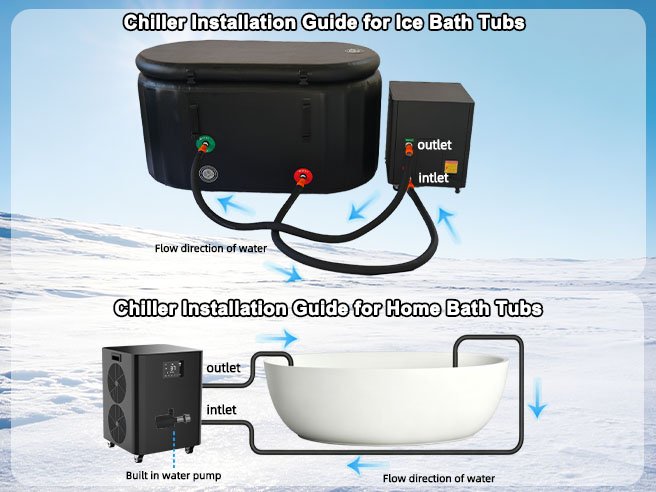
An ice bath chiller is a temperature-controlled cooling system that connects to your tub and keeps the water at a set temperature—automatically.
No ice. No refilling. No constant monitoring.
You set it (say, 8°C or 46°F), and it stays there.
That consistency? It’s the game-changer.
The Real Reasons Athletes Are Switching (It’s Not Just Convenience)
1. Precision = Better Recovery
Here’s the thing most beginners miss:
Cold therapy isn’t just about being cold. It’s about being consistently cold at the right range.
When you use ice:
- Temperature fluctuates constantly
- Melting ice changes exposure intensity
- You can’t really measure mid-session accurately
With a chiller:
- You lock in exact temperatures
- You repeat the same recovery protocol every time
- Your body adapts more efficiently
And for athletes chasing marginal gains? That repeatability matters—a lot.
2. No More Ice Logistics (Yes, This Is a Big Deal)
Let me paint a quick picture.
You finish a brutal training session. Legs are shot. You need recovery.
Now imagine:
- Driving to buy ice
- Carrying 10–20 kg bags
- Dumping them into water
- Cleaning up melted residue afterward
Honestly, it’s exhausting just thinking about it.
A chiller removes all of that friction. You just… get in.
That small change dramatically increases consistency—and consistency drives results.
3. Cost Over Time: Ice Isn’t Cheap
At first glance, ice looks cheaper. And short-term? It is.
But zoom out.
If you’re using:
- 10–20 kg of ice per session
- 3–5 sessions per week
That adds up fast.
Over months, even casual users end up spending more than they expect. Serious athletes? Even more.
A chiller is an upfront investment—but long-term, it often wins financially.
4. Hygiene and Water Quality
This one doesn’t get talked about enough.
When you use ice repeatedly:
- You’re introducing impurities into the water
- You’re often reusing stagnant water
- Bacteria can build up quickly
Most modern chillers include:
- Filtration systems
- Circulation pumps
- Optional sanitation (like UV or ozone)
So instead of sitting in questionable water… you’re actually maintaining a clean recovery environment.
And yeah—that matters for both performance and skin health.
5. Always Ready = More Discipline
You know what really separates elite athletes from casual ones?
It’s not motivation. It’s systems.
When your ice bath is:
- Cold
- Clean
- Ready anytime
You’re far more likely to use it consistently.
No setup. No delay. No excuses.
And over time, that consistency compounds into real performance gains.
Ice vs Ice Bath Chiller: A Straightforward Comparison
Let’s break it down simply:
Ice Bath (Traditional)
- Low upfront cost
- High ongoing effort
- Inconsistent temperature
- Time-consuming setup
- Limited scalability
Ice Bath Chiller
- Higher upfront investment
- Minimal ongoing effort
- Stable temperature control
- Always ready
- Ideal for frequent use
It’s not about one being “good” and the other “bad.”
It’s about frequency and seriousness.
But Wait—Is Ice Ever Still Worth It?
Actually… yes.
If you:
- Only do ice baths occasionally
- Are just testing cold exposure
- Don’t want a big upfront investment
Ice is totally fine.
In fact, it’s a great entry point.
But once you cross into regular use—say, 3+ times a week—the inefficiencies start to show.
And that’s usually when people begin looking for alternatives.
Performance Angle: Does a Chiller Really Improve Results?
Here’s where things get interesting.
The physiological benefits—reduced inflammation, faster muscle recovery, nervous system regulation—don’t come from the machine itself.
They come from consistent exposure to controlled cold temperatures.
And that’s exactly what a chiller enables.
So indirectly? Yes. It improves outcomes—because it removes variability.
It’s like training with a calibrated weight vs guessing.
A Slight Reality Check (Because It Matters)
Let’s not oversell it.
An ice bath chiller won’t:
- Make you recover instantly
- Replace proper sleep and nutrition
- Turn average training into elite performance
But it will:
- Support recovery more reliably
- Help you stick to a routine
- Reduce friction in your system
And honestly, those are the things that actually move the needle.
Choosing the Right Setup (Without Overcomplicating It)
If you’re thinking about upgrading, keep it simple.
Look for:
- Temperature range (can it go low enough?)
- Cooling speed (how fast it chills water)
- Filtration system
- Noise level
- Portability vs fixed setup
You don’t need the most advanced system—you need one that fits your routine.
So… Why the Shift Is Happening Now
There’s also a bigger trend at play.
Athletes today are:
- More data-driven
- More recovery-focused
- More willing to invest in longevity
Cold therapy isn’t new—but the way people approach it has changed.
It’s no longer “just endure the cold.”
It’s “optimize the process.”
And chillers fit that mindset perfectly.
FAQs: What People Still Wonder About
1. Are ice bath chillers better than ice for muscle recovery?
Yes, mainly because they maintain consistent temperatures. Stable cold exposure leads to more reliable muscle recovery compared to fluctuating ice baths.
2. How cold should an ice bath chiller be set for athletes?
Most athletes use 8–12°C (46–54°F). Advanced users sometimes go lower, but consistency matters more than extreme cold.
3. Is an ice bath chiller worth it for home use?
If you use cold therapy more than 2–3 times per week, a chiller is usually worth the investment due to convenience, consistency, and long-term cost savings.
4. Do ice bath chillers require a lot of maintenance?
Not really. Basic maintenance includes filter cleaning and occasional water treatment, but it’s far less effort than constantly buying and managing ice.
5. Can beginners start with a chiller instead of ice?
Absolutely. In fact, it can make the experience more controlled and less intimidating, since you can fine-tune the temperature.
Ready to Upgrade Your Recovery Game?
Here’s the thing—recovery isn’t optional anymore. Not if you’re training seriously.
If you’re still relying on bags of ice, you’re not doing it wrong… but you might be making it harder than it needs to be.
At CHILLMEND, we design ice bath chiller systems built for real athletes—people who care about performance, consistency, and long-term results.
Whether you’re setting up a home recovery station or equipping a professional facility, we’ll help you find the right solution.
Reach out to CHILLMEND today and start building a recovery system that actually works—day in, day out.