
Quick outline
- What each setup really is, and why people mix them up
- Upfront cost vs ongoing cost: where the money actually goes
- Efficiency in daily use: time, temperature control, cleanup, and consistency
- Who saves more with each option: casual users, athletes, gyms, and rehab settings
- The hidden costs people forget until month two
- A simple decision framework, plus FAQs
Cold therapy looks simple from the outside. Fill a tub, get it cold, get in, suffer a little, feel oddly proud after. Easy, right?
Well, not quite.
Once people move past the “I want an ice bath” stage, they usually run into the same question: should you keep things basic with a traditional ice tub, or move to an ice bath chiller system? That sounds like a gear question, but honestly, it’s more of a workflow question. Money matters, yes. So does efficiency. But what really decides it for most people is this: how often do you plan to use it, and how much hassle are you willing to tolerate before the routine falls apart?
Here’s the thing—both systems can work. A traditional ice tub is cheaper to start. An ice bath chiller usually costs more upfront, but it can save time, reduce daily friction, and keep water temperature steady with far less guesswork. And when cold-water immersion is used for recovery, many studies cluster around water temperatures in the 10°C to 15°C range, rather than “as cold as possible,” which makes control more important than a lot of beginners realize.
So let’s compare them properly—not just with rough internet opinions, but with practical numbers, real-world use cases, and the stuff people only discover after living with the setup for a while.
What are we really comparing here?
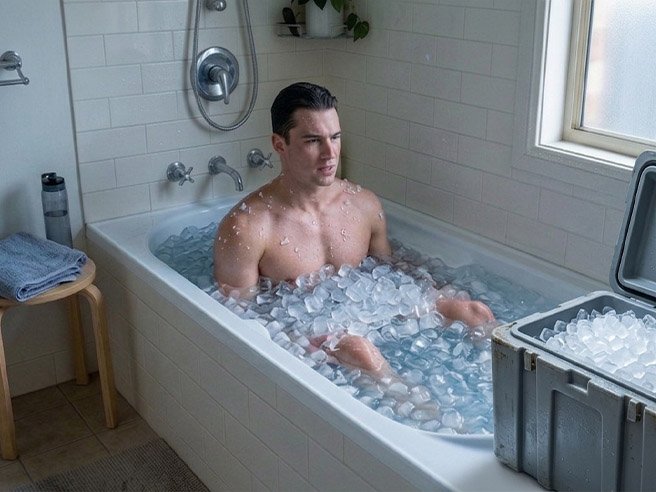
A traditional ice tub is the old-school setup: a tub or barrel filled with water, then cooled with bags of ice. Sometimes it’s a stock tank, sometimes an inflatable tub, sometimes a repurposed bath. It’s simple, accessible, and easy to understand. No compressor, no filtration loop, no app, no fancy extras. That simplicity is part of the appeal.
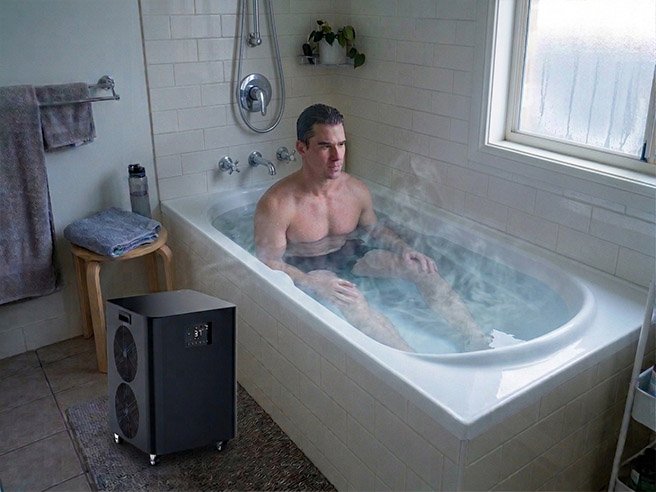
An ice bath chiller system is different. It usually pairs a tub with a cooling unit that circulates water, chills it, and often filters it too. Some systems also add sanitation features and temperature controls. Instead of buying ice every session, the machine keeps the water ready—or close to ready—on a regular schedule.
That difference changes almost everything.
With a traditional tub, your routine depends on buying, storing, carrying, and melting ice. With a chiller, your routine depends more on electricity, setup quality, and equipment maintenance. Neither route is magic. They just shift the burden from one place to another.
And that matters because consistency is a big part of cold therapy success. Research on post-exercise cold-water immersion shows benefits for muscle soreness and fatigue recovery, but those benefits come from using the method in a repeatable, controlled way—not from random water that’s “kind of cold today.”
Let’s talk money—because the sticker price lies a little
This is where most comparisons go off the rails.
People look at the upfront cost and stop there. Traditional tub: cheaper. Chiller: more expensive. Case closed.
But that’s only the first page of the story.
A traditional ice tub often wins on entry cost. If you already have a tub or buy a simple one, you can get started for relatively little money. That’s the reason so many first-time users begin there. It lowers the barrier. It feels low risk. And for someone testing whether cold exposure is even their thing, that’s reasonable.
But a traditional setup has a recurring expense that never really goes away: ice. If you use the tub once in a while, that may be fine. If you use it four, five, or six times a week, the cost stacks up fast. And it’s not only the purchase price of ice. It’s also travel time, storage space, freezer limits, and the occasional annoyance of realizing you forgot to buy any right when you planned to recover after training.
An ice bath chiller flips the equation. The upfront cost is higher, sometimes much higher, but the recurring cost is typically electricity, water care, and periodic maintenance rather than bags of ice every session. Electricity rates vary by region, of course, but U.S. EIA data shows residential electricity prices were around 15.34 cents per kWh in 2025 and January 2026 total average end-use electricity revenue was 14.17 cents per kWh, which gives a useful ballpark for operating-cost estimates.
So which is cheaper?
Honestly, it depends on frequency. That’s the pivot point.
If you only use cold therapy once a week—or less—a traditional ice tub often stays cheaper overall. If you use it nearly every day, a chiller starts to make more financial sense over time, especially when you count the cost of ice plus the time spent handling it. Time isn’t always listed on a spreadsheet, but it still has a price. Ask any coach or busy parent dragging ice bags around at 6 a.m.
The hidden cost of convenience is real—and so is the value of it
Convenience sounds soft. It isn’t.
It’s one of the hardest business metrics in consumer equipment, because it decides whether a routine sticks or fades. That’s true in fitness, rehab, and honestly, most habits.
A traditional ice tub can be efficient in a narrow sense: the equipment is simple, there’s less machinery to fail, and you don’t pay for a cooling unit sitting there. But in day-to-day life, it’s usually less efficient in labor. You need to source ice, add it, wait for the temperature to settle, sometimes stir the water, sometimes overshoot, sometimes undershoot, and then deal with the water quality if the tub is staying filled.
A chiller system usually reduces that friction. It can keep the bath near the target temperature, and many units circulate and filter water at the same time. That doesn’t just feel convenient; it changes the recovery workflow. Instead of building the bath each time, you’re maintaining a system. For regular users, that’s often a better trade.
You know what? This is where a lot of people quietly switch sides.
They start with a traditional tub because it seems practical. Then life gets busy. Ice runs out. Sessions get skipped. The “cheap” setup becomes expensive in missed use. Suddenly the chiller’s higher upfront cost doesn’t look so outrageous anymore.
Temperature control: the boring detail that actually matters
This part doesn’t get enough attention because it’s less exciting than product photos and before-and-after recovery stories.
But temperature control is the whole game.
Evidence reviews on cold-water immersion commonly report effective ranges around 10°C to 15°C, and one meta-analysis found moderate cold water in the 11°C to 15°C range showed better effects on some recovery outcomes than more severe cold exposure. Another review noted that roughly three-quarters of included studies used 10°C to 15°C water.
That matters because a traditional ice tub can drift all over the place. Maybe it starts too warm. Maybe you dump in too much ice and it gets colder than planned. Maybe ambient weather changes everything. Maybe half the ice melts before you even get in. It’s workable, but it’s not especially precise.
A chiller system is built for precision. Set the temperature, let it cycle, and the setup stays far more consistent. That’s a big deal for athletes who want repeatable protocols, facilities that serve multiple users, or anyone trying to build a stable recovery routine instead of guessing each day.
And yes, there’s a weird contradiction here: some people love the raw, improvised feel of a traditional ice tub because it feels more “hardcore.” But for actual efficiency, hardcore isn’t always smart. Repeatable beats dramatic most of the time.
Daily efficiency: setup time, waiting time, and cleanup
Let me explain the part people rarely calculate.
Say you train in the evening and want a 10-minute cold session after. With a traditional tub, you may need to:
- buy or make ice ahead of time,
- carry it to the tub,
- fill or top up the water,
- wait for it to cool,
- check temperature,
- clean up around the setup,
- and repeat the process tomorrow.
None of these tasks is huge on its own. Together, though, they can turn a 10-minute recovery tool into a 30- to 45-minute project.
That’s not efficient. It’s workable, sure. But not efficient.
With a chiller, most of that setup burden moves earlier—into installation, plumbing connections, positioning, and initial configuration. Once that’s done, daily use is usually simpler. The tub is there. The water is ready or nearly ready. You check, dip, recover, and move on.
For home users, that means better habit retention. For coaches, it means less staff time. For small training studios, it means smoother athlete flow. And for commercial wellness spaces, it can mean the difference between a professional-looking service and a patchwork one.
There’s also the water-quality angle. Chiller systems often include filtration or support it, which helps if the water stays in the tub between sessions. Traditional tubs can absolutely be managed well too, but they often demand more manual cleaning discipline, more frequent water changes, or more tolerance for hassle.
So which one is more energy-efficient?
Funny enough, this depends on what you’re measuring.
If you mean machine electricity alone, a traditional tub looks great because it doesn’t use a chiller compressor. In that narrow lane, it wins.
But if you mean total system efficiency in the real world, things get muddier. A traditional tub relies on external ice production, transportation, freezer storage, and repeated manual loading. The energy used to make and move ice doesn’t disappear just because it’s not plugged into your tub. It’s simply happening elsewhere in the chain.
A chiller centralizes that energy use in one system. Depending on climate, insulation, usage pattern, and target temperature, that can be a more stable and manageable setup—especially for high-frequency use. Electricity pricing data from EIA shows power costs remain a meaningful operating expense, so efficiency features such as insulation, timer scheduling, and good tub covers matter more than people think.
This is why the better question isn’t, “Does a chiller use electricity?” Of course it does. The better question is, “Does it reduce waste, labor, and recurring material cost enough to justify that electricity?” For many regular users, yes. For occasional users, maybe not.
That “maybe not” matters. Not everyone needs a machine.
Traditional ice tub: where it still wins, fair and square
It would be silly to pretend the traditional ice tub has no strong case. It does.
First, it’s usually the easiest way to start. If someone is new to cold therapy and doesn’t know whether they’ll stick with it, spending less upfront can be the smarter move. You can learn your preferences, test your tolerance, and figure out whether this is a weekly ritual or just a short-lived curiosity.
Second, it works well for low-frequency users. If you only want occasional sessions—say after very hard workouts, long weekend runs, or a brutal tournament block—you may never spend enough on ice to justify a chiller. In that case, the simple setup stays sensible.
Third, there’s less technical complexity. No compressor. Fewer components. Fewer things to troubleshoot. That simplicity has a charm, and not just emotionally. From a maintenance point of view, simple systems are often easier to live with.
Fourth, it can be portable. Some inflatable tubs paired with bagged ice are relatively easy to move, which suits temporary spaces, events, and users who don’t want a permanent footprint.
And yet—even while saying all that—I’d still add a caution. Traditional systems are cheap to start, but they can become annoying enough that usage drops. That’s the trap. Not always, but often.
Ice bath chiller: where the math starts to lean in its favor
Now the other side.
An ice bath chiller starts to make strong sense when usage is frequent, expectations are higher, or multiple people rely on the system. That includes serious home users, athletes in repeated training cycles, personal training studios, rehabilitation environments, sports clubs, and hospitality or wellness businesses.
Why? Because efficiency isn’t just about cash flow; it’s about reliability.
A chiller offers:
- steadier temperature control,
- less manual preparation,
- less dependence on ice supply,
- better routine consistency,
- and often better long-run usability for shared or repeated sessions.
That reliability fits what research suggests about recovery routines: protocols work better when they’re applied consistently and within sensible dose ranges. Cold-water immersion can help soreness and fatigue recovery, but it’s not a magic trick, and it’s not automatically better when colder or more extreme.
That last point matters in purchasing too. A chiller isn’t just a luxury item for people who like gadgets. In many cases, it’s a control system. It helps deliver the same environment again and again. For performance users, that’s valuable.
A good companion read here would be 《Why athletes are switching to ice bath chillers instead of ice》 and 《Do ice bath chillers really work? real data and case studies》.
Hidden costs people forget until later
This part is messy, human, and very real.
With a traditional ice tub, the forgotten costs usually include:
- repeated ice purchases,
- time spent shopping or freezing,
- lifting and handling ice,
- missed sessions because setup is a pain,
- warmer-than-expected water,
- and frequent water refreshes if sanitation is weak.
With a chiller, the forgotten costs look different:
- higher upfront investment,
- electricity use,
- maintenance parts or filters,
- cleaning the system properly,
- protecting the unit from the weather,
- and making sure installation is done right.
So no, a chiller is not “maintenance-free.” Not even close. But the maintenance is more planned, while the ice-tub hassle is more repetitive. One is periodic. The other is constant. That distinction shapes user satisfaction more than people expect.
Honestly, that’s why experienced buyers often ask a completely different question after they’ve owned one setup or the other for a few months. They stop asking, “Which is cheaper?” and start asking, “Which one fits my life without becoming a nuisance?”
That’s a better question.
Who should choose which setup?
Casual home user
If you’re curious about cold therapy and plan to use it once or twice a week, a traditional ice tub is often enough. It keeps risk low. It lets you test the habit. You’ll learn pretty quickly whether the routine suits you. For someone in this category, buying a chiller too early can be like buying race tires for a car you only drive to the grocery store.
Consistent athlete or serious fitness user
If you train hard several times a week, the value of temperature consistency and fast setup climbs sharply. The chiller starts to look less like a premium extra and more like a practical tool. Especially if your workouts are already scheduled tightly, saving recovery prep time matters. A lot.
Household with multiple users
Once two or more people share the tub, ice logistics get old fast. Very fast. A chiller can simplify scheduling, keep the water usable, and make the system feel more like a real household wellness setup rather than a recurring chore.
Coaches, gyms, and rehab settings
This one is easier. If the setup is client-facing or used repeatedly across the week, the efficiency argument strongly favors a chiller. Professional environments need repeatability, cleaner presentation, and less labor per session. Traditional ice loading in a business setting can work, but it often looks and feels temporary.
A simple cost-and-efficiency rule of thumb
Here’s the plain-English version.
Choose a traditional ice tub if:
- you’re new to cold therapy,
- you use it occasionally,
- budget is your biggest concern,
- and you don’t mind hands-on setup each time.
Choose an ice bath chiller if:
- you use cold therapy often,
- you want stable temperatures,
- you care about daily convenience,
- more than one person will use the system,
- or the setup needs to feel reliable and professional.
That’s it. Not glamorous, but honest.
A traditional tub is usually cheaper to enter. A chiller is usually easier to live with. Over time, “easier to live with” often becomes the more efficient option.
Final verdict: cost vs efficiency isn’t really a tie
If the contest is for the lowest starting cost, the traditional ice tub wins. Fairly clearly.
If the contest is daily efficiency, temperature consistency, and long-term convenience, the ice bath chiller wins just as clearly.
And if the contest is overall value? That depends on your usage pattern.
For occasional users, the traditional tub can be the sensible pick. For frequent users, athletes, and commercial buyers, the chiller usually pulls ahead because it reduces friction, helps maintain proper water temperature, and supports a routine people can actually keep. Research-backed cold-water immersion works best when it’s controlled and repeatable, and that’s exactly where chiller-based setups tend to shine.
So yes, the old-school tub still has a place. But when people ask which system is more efficient in real life—not just on the day they buy it—the answer usually leans toward the chiller.
And not by a little.
FAQs
1. Is an ice bath chiller cheaper than buying ice over time?
For light users, not always. A traditional ice tub may stay cheaper if you only use cold therapy once in a while. But for frequent users, the recurring cost of buying ice can add up quickly, while an ice bath chiller spreads the cost across electricity and maintenance instead of repeated ice purchases.
2. Which is better for athletes—ice bath chiller or traditional ice tub?
For most athletes, an ice bath chiller is better because it offers more stable temperature control and faster daily setup. Since recovery protocols often target a controlled cold-water range rather than random extremes, consistency can make a real difference in routine quality.
3. Does an ice bath chiller use a lot of electricity?
It uses electricity, yes, but the exact amount depends on climate, insulation, set temperature, and run time. The smarter comparison is total operating efficiency, including the time and repeat cost of producing, buying, transporting, and loading ice. Good insulation and a proper cover help keep operating costs lower.
4. Is a traditional ice tub harder to maintain?
It can be. The system itself is simple, but repeated ice handling, temperature inconsistency, and water management often make daily use more labor-heavy. A chiller has more equipment to maintain, yet many users find the routine easier overall because the water is more controlled.
5. What is the best ice bath setup for home recovery?
The best home recovery setup depends on frequency. A traditional ice tub suits beginners and occasional users. An ice bath chiller suits regular home use, shared households, and anyone who wants a more efficient cold therapy routine with less guesswork and more reliable temperatures.
If you’re comparing options for your home, gym, clinic, or recovery business and want a setup that’s easier to use day after day, contact CHILLMEND. We can help you choose the right ice bath chiller system based on your space, usage frequency, and budget—without turning the process into a headache.