
Quick Outline (So You Know Where We’re Headed)
- Why maintenance actually matters (more than you think)
- Understanding your chiller’s core components
- Filters: the unsung heroes of water quality
- Cleaning routines that don’t feel like a chore
- Common mistakes (yeah, we’ve all made them)
- Extending lifespan without overthinking it
- Seasonal care tips (because weather does matter)
- Troubleshooting early warning signs
- FAQs
- Final thoughts + how CHILLMEND can help
Why Isn’t Optional—It’s Performance Insurance
Let’s be honest. Most people buy an ice bath chiller thinking about recovery, not maintenance.
You want colder water, faster muscle recovery, maybe that mental edge athletes keep talking about. Maintenance? That feels like background noise.
But here’s the thing—ignore it, and your chiller quietly loses efficiency. Not dramatically at first. Just… gradually. A degree warmer. A bit slower. Slightly louder.
Until one day, it’s not doing its job.
Think of it like training. You wouldn’t skip recovery and expect peak performance, right? The same logic applies here. Your chiller needs care to deliver care.
What’s Actually Inside Your Ice Bath Chiller?
Before we get into filters and cleaning routines, it helps to understand what you’re working with.
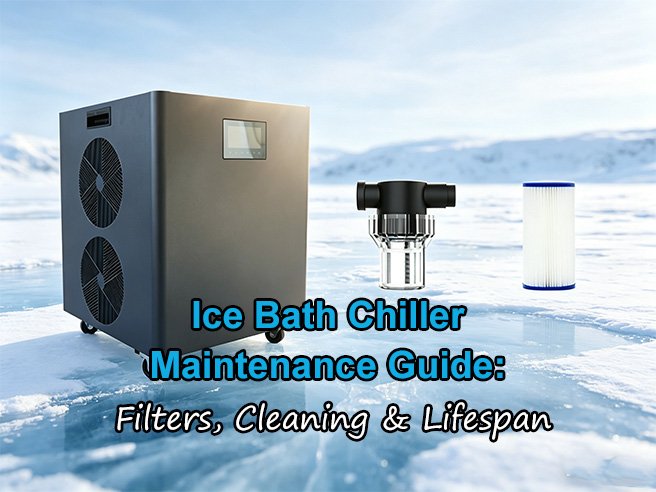
Most ice bath chillers are built around a few key components:
- Compressor (the powerhouse)
- Heat exchanger (where cooling happens)
- Water pump (keeps flow consistent)
- Filter system (keeps water clean)
- Tubing and connections (the circulation network)
Each part plays a role. And maintenance? It’s about keeping this system balanced.
Skip one area, and everything else works harder. That’s when wear starts creeping in.
Filters: The Small Part Doing the Heavy Lifting
Why Filters Matter More Than You Think
Filters don’t look impressive. No fancy tech. No moving parts you can admire.
But they’re doing the dirtiest job in your setup.
They catch:
- Skin particles
- Sweat residue
- Dust and debris
- Organic contaminants
Without a proper filter? That stuff circulates. Builds up. Eventually affects water quality—and worse, your chiller’s internal components.
Here’s the kicker: dirty water doesn’t just look bad. It reduces heat transfer efficiency. That means your chiller has to work harder to achieve the same temperature.
And over time? That adds up.
Types of Filters You’ll Typically Use
Not all filters are created equal. Depending on your setup, you might be using:
- Basic mesh filters – Good for large debris, but limited protection
- Paper cartridge filters – More effective for fine particles
- Advanced multi-layer filters – Best for consistent, long-term use
Honestly, if you’re serious about performance, upgrading beyond basic filters is worth it.
How Often Should You Replace Filters?
This is where people get lazy. Don’t.
A general rule:
- Light use (2–3 times/week): every 3–4 weeks
- Moderate use (daily): every 2–3 weeks
- Heavy/commercial use: weekly
But here’s a better question—how does the water look?
Cloudy? Slight smell? Slower flow?
Don’t wait for a schedule. Trust the signs.
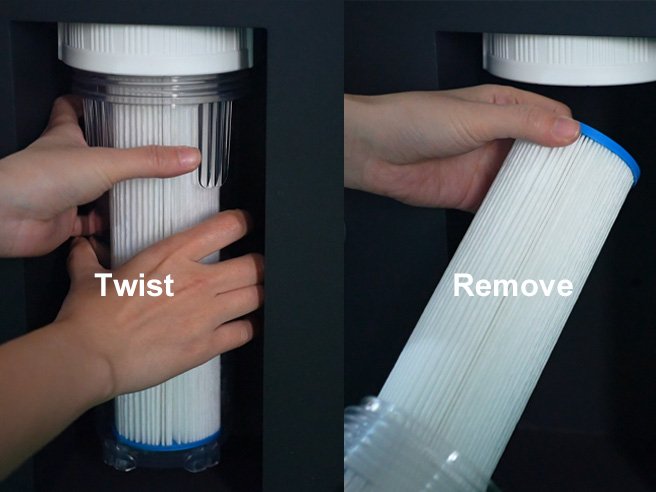
From numerous global after-sales service cases, CHILLMEND has concluded that in most instances, chiller shutdowns occur because users neglect to replace the filter screen. This results in impurities clogging the water circuit, causing the water pump to run dry and ultimately sustaining irreversible damage to the pump.
Installation Space & Water Circuit
The installation space must strictly comply with the requirements specified in the user manual, especially for indoor installation. Insufficient space will obstruct ventilation and heat dissipation of the ice bath chiller, resulting in elevated operating conditions and shortened service life of the unit. Proper ventilation is also an essential part of routine maintenance, which effectively extends the overall lifespan of the equipment.
Most suppliers provide water hoses with ample length for ice bath chillers. Honestly, this is a thoughtful design, yet improper installation often turns this advantage into a common trouble. Here is why: after connecting the chiller, the overlong hose tends to coil up. Many users fail to notice that the hose bends upward, which then causes equipment malfunctions. In such cases, users often panic and assume they have received a defective product, but that is not the case.
The actual cause is as follows: the upward bend of the connecting hose places the pipeline higher than the water outlet due to gravity. This prevents water from flowing into the chiller, blocks the water circuit, and ultimately leads to cooling failure. This small detail is overlooked by numerous users.
Therefore, always ensure unobstructed water flow when operating the ice bath chiller, and keep the water hoses as flat as possible.
Cleaning Your Ice Bath Chiller (Without Making It Complicated)
The “Keep It Simple” Cleaning Routine
You don’t need a full teardown every week. In fact, overcomplicating it can do more harm than good.
Stick to this rhythm:
Weekly (Quick Maintenance)
- Rinse or replace filter
- Wipe down tub interior
- Check water clarity
- Inspect hoses for buildup
Takes maybe 10 minutes. That’s it.
Monthly (Deeper Clean)
This is where you slow down a bit.
- Drain the system completely
- Flush with clean water
- Use a mild, non-corrosive cleaner
- Run the system briefly to circulate cleaning solution
- Rinse thoroughly (twice if needed)
It’s not glamorous, but it resets your system.
Every 3–6 Months (Full System Check)
Now we’re talking real maintenance.
- Inspect internal tubing for scale buildup
- Check pump performance
- Listen for unusual compressor noise
- Tighten connections
This step alone can prevent expensive repairs later.
Cleaning Products—What’s Safe?
Stick with:
- Mild disinfectants
- Diluted vinegar solutions (for scale)
- Manufacturer-approved cleaners
Avoid:
- Harsh chemicals (they damage seals)
- Bleach (too aggressive for most systems)
A good rule? If it smells too strong, it’s probably too strong.
Mistakes That Quietly Kill Your Chiller
Let me guess—you’ve probably done at least one of these.
- Skipping filter changes “just this once”
- Leaving water sitting for days (or weeks…)
- Using untreated tap water with high mineral content
- Ignoring small noise changes
Individually, they seem harmless.
Together? They shorten your chiller’s lifespan significantly.
And yeah, it’s frustrating—because the damage isn’t immediate. It creeps in.
Lifespan: How Long Should an Ice Bath Chiller Last?
The Honest Answer (Not the Marketing Version)
Most quality ice bath chillers last:
- 3–5 years with minimal maintenance
- 5–8 years with proper care
- 8+ years with consistent, attentive maintenance
That’s a big range.
And the difference? Not brand. Not price.
It’s maintenance habits.
What Actually Wears Out First?
Typically:
- Filters clog (obvious one)
- Pumps weaken over time
- Compressors degrade with overuse
But here’s something interesting—many compressor failures aren’t due to age. They’re due to overworking.
Dirty systems force compressors to run longer cycles.
Longer cycles = more heat = faster wear.
Seasonal Maintenance—Yes, It Matters
Summer: The Hidden Stress Test
Hot weather makes your chiller work harder.
- Cooling takes longer
- The compressor runs more frequently
- Water warms faster between sessions
What you should do:
- Increase filter checks
- Keep unit shaded if outdoors
- Ensure proper airflow around the chiller
- Use a lid on the ice bath tub to keep the cold temperature.
Winter: Not as Easy as You Think
You might think colder weather = less work.
Not entirely.
- Risk of freezing in hoses
- Condensation issues
- Reduced usage leading to stagnant water
Best approach:
- Keep water circulating occasionally
- Drain system if not in use
- Store indoors if possible
Early Warning Signs You Shouldn’t Ignore
Your chiller talks. Not literally—but it gives signals.
Watch for:
- Water not reaching the set temperature
- Longer cooling times
- Unusual vibrations or noise
- Reduced water flow
- Slight odor in water
Ignore these, and you’re basically scheduling a repair.
Address them early, and it’s usually a quick fix.
A Quick Reality Check (Because It Helps)
Here’s something people don’t love hearing:
Even the best chiller won’t save you from poor maintenance.
It’s like buying premium running shoes and never cleaning them after muddy trails. Eventually, they break down faster than expected.
Same idea.
But the upside? Maintenance isn’t hard. It’s just… consistent.
FAQs: Real Questions People Actually Ask
1. How often should I clean my ice bath chiller system?
For most users, a weekly light clean and a monthly deep clean is enough. If you’re using your ice bath daily, increase frequency slightly. Consistency matters more than intensity.
2. What type of filter is best for ice bath chillers?
A multi-layer or fine cartridge filter works best for long-term use. It captures smaller particles and keeps water clearer, which helps maintain cooling efficiency.
3. Can I use tap water in my ice bath chiller?
Yes, but it depends on your water quality. Hard water can cause mineral buildup over time. Using filtered or treated water reduces scaling and extends system lifespan.
4. Why is my chiller not cooling as effectively as before?
Common reasons include clogged filters, dirty internal components, or reduced airflow. Start with cleaning and filter replacement—it solves most cases.
5. How can I extend the lifespan of my ice bath chiller?
Stick to regular maintenance, avoid overworking the system, keep filters clean, and monitor performance changes early. Small habits make a big difference over time.
Final Thoughts: Keep It Running Like Day One
You bought your ice bath chiller for performance, recovery, maybe even a bit of mental toughness.
Maintenance? It’s what keeps all of that working.
Not perfectly. Not effortlessly. But reliably.
And honestly, once you build the habit, it becomes second nature—like stretching after a workout.
Ready to Upgrade Your Setup?
If you’re serious about long-term performance and want a system that’s easier to maintain, more efficient, and built for real-world use, it might be time to talk to CHILLMEND.
Whether you’re setting up your first ice bath or refining a high-performance recovery system, CHILLMEND offers solutions designed with durability and simplicity in mind.
Reach out today and get expert guidance tailored to your setup. Your recovery routine deserves equipment that keeps up.