
Quick Outline
- Why traditional ice baths become expensive over time
- Where most people waste money without realizing it
- How a chiller system changes long-term operating costs
- Real-world cost comparison: ice vs chiller
- Choosing the right chiller size for efficiency
- Small habits that lower energy and maintenance costs
- Commercial gym and wellness center savings
- Common mistakes that quietly increase expenses
- Is a DIY setup actually cheaper?
- Long-term ownership math most buyers ignore
- FAQs
- Final CTA
How to Reduce Ice Bath Costs with a Chiller System
Cold therapy has gone mainstream. Not just among elite athletes either. Weekend runners, busy office workers, CrossFit members, physical therapists, wellness clubs — everybody seems to be talking about recovery, inflammation, and cold plunges lately.
But here’s the thing nobody mentions enough.
Ice gets expensive. Fast.
A lot of people enter the cold plunge world thinking the tub itself is the big expense. Honestly, it usually isn’t. The real money drain often starts afterward — daily ice purchases, water replacement, maintenance headaches, inconsistent temperatures, and wasted electricity from poorly matched cooling systems.
That’s exactly why more users are switching to dedicated ice bath chiller systems instead of relying on bags of ice.
And no, it’s not only about convenience.
It’s about lowering long-term ownership costs while getting a more reliable recovery setup.
If you’ve been wondering whether a chiller system actually saves money, the answer is yes — but only if the system is designed correctly.
Let me explain.
Why Traditional Ice Baths Quietly Become Expensive
At first, buying ice seems cheap.
A few bags from the grocery store. No big deal.
Then winter ends.
Then usage becomes daily.
Then somebody in the family starts using it too.
Suddenly, you’re spending money every single week just trying to maintain water temperature. It adds up in a sneaky way, kind of like a leaking faucet you ignore for months.
Many home users spend anywhere from $10 to $40 per session on ice, depending on climate, tub size, and target temperature. In hotter regions, the number can climb even higher because the water warms back up quickly.
And commercial facilities? That’s a different animal entirely.
Gyms and wellness centers sometimes burn through hundreds of pounds of ice per week. Storage becomes a problem. Staff time becomes a problem. Consistency becomes a problem.
Then there’s water waste.
Traditional setups often require frequent draining because melting ice changes water balance quickly and introduces contaminants from bag handling and repeated refilling.
You know what? Most people never calculate the hidden labor cost either.
Driving to buy ice.
Carrying ice.
Waiting for cooling.
Cleaning melted residue.
Monitoring temperature.
It sounds minor until you repeat it hundreds of times.
That’s where a dedicated chiller system starts making financial sense.
The Biggest Cost Mistakes People Make
Oddly enough, the most expensive setups are not always the best-performing ones.
People overspend in weird ways.
Some buy oversized chillers “just to be safe,” which can increase energy use unnecessarily. Others buy underpowered systems that run nonstop and still fail to reach target temperature.
A few common mistakes show up again and again:
- Using indoor chillers outdoors in direct sunlight
- Choosing weak insulation
- Ignoring filtration quality
- Running the system 24/7 without scheduling
- Buying a cheap DIY cooling solution that fails within months
- Using oversized tubs for single-user recovery
It’s a little like buying a race car for grocery shopping.
More power doesn’t automatically mean lower operating cost.
The goal is balance.
A properly matched ice bath chiller should cool efficiently, cycle intelligently, and maintain stable temperatures without constantly overworking the compressor.
That balance matters more than flashy marketing claims.
So, How Does a Chiller System Actually Reduce Costs?
Here’s the core idea.
A chiller system replaces repeated ice purchases with controlled refrigeration.
Instead of throwing away melting ice every session, the system continuously maintains your desired water temperature.
The savings happen in several ways at once.
Lower Daily Operating Costs
Once water reaches target temperature, most quality chillers switch into maintenance mode rather than full-power cooling.
That means the compressor cycles on and off intelligently.
A properly insulated tub paired with an efficient chiller can maintain cold temperatures surprisingly cheaply — especially compared to buying ice every day.
For many home users, electricity costs become dramatically lower than recurring ice purchases within just a few months.
Less Water Replacement
Modern chiller systems often include:
- Multi-stage filtration
- UV sterilization
- Circulation systems
This helps keep water cleaner for longer periods.
And cleaner water means fewer full drains.
That reduces both water costs and maintenance time.
Better Temperature Stability
Here’s something athletes notice quickly.
Recovery quality changes when water temperature swings constantly.
One day the plunge is 39°F.
The next day it’s 52°F because the ice melted too fast.
A stable chiller system maintains consistency, which improves the user experience and reduces wasted cooling effort.
Consistency sounds boring, honestly. But it’s one of the biggest reasons serious recovery users stop using bagged ice.
Ice vs Chiller: A Realistic Cost Comparison
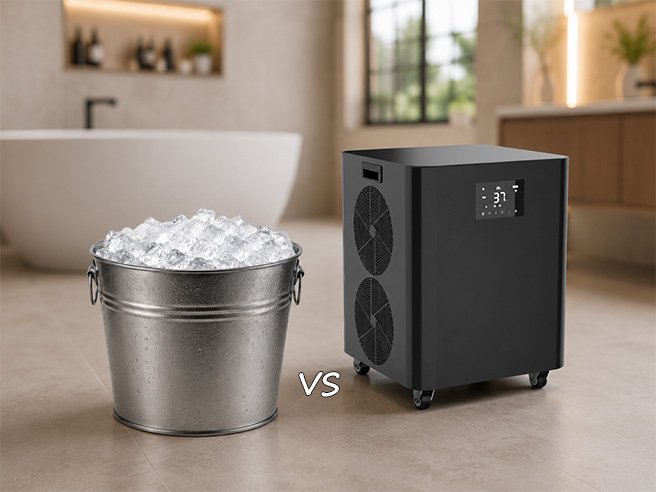
Let’s keep this practical.
Imagine a home user doing cold plunges five times per week.
Traditional Ice Method
Average ice needed per session:
- 40–80 lbs, depending on climate and tub size
Average cost per bag:
- $3–$6
Estimated monthly ice cost:
- Roughly $200–$600+
And that doesn’t include transportation, melting losses, or time.
Now compare that with a dedicated chiller system.
Chiller System Method
Typical operating costs include:
- Electricity
- Occasional filter replacement
- Minor maintenance
For efficient systems with good insulation, monthly operating costs may fall dramatically below ongoing ice purchases.
Especially for frequent users.
Commercial environments see even larger differences because chillers eliminate massive recurring ice logistics.
Honestly, the break-even timeline surprises many buyers.
Some systems effectively pay for themselves within one year, depending on usage frequency and local ice pricing.
Choosing the Right Chiller Size Matters More Than People Think
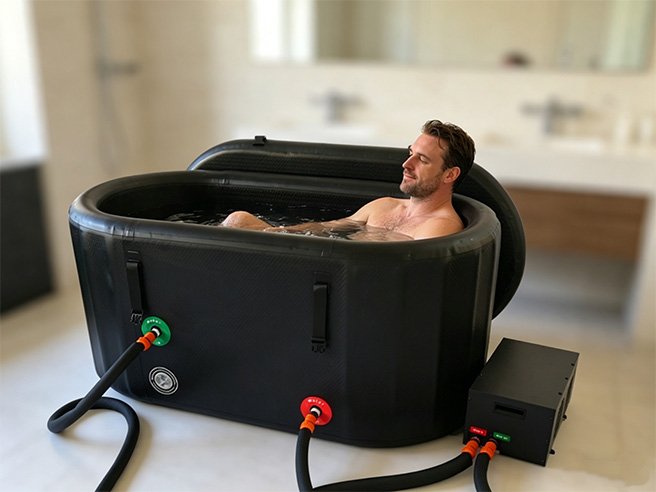
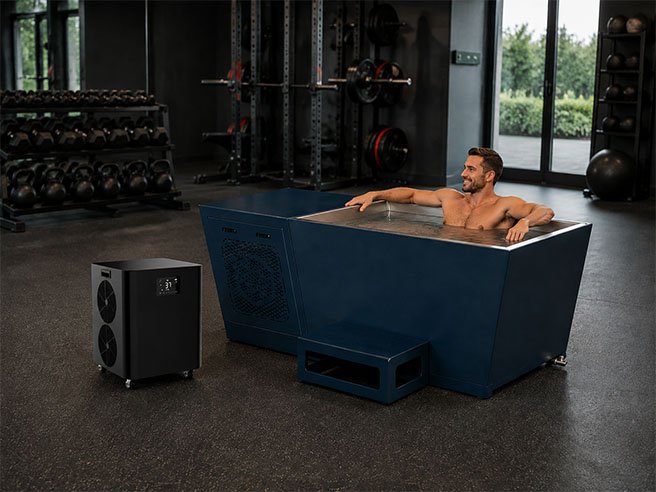
This part gets overlooked constantly.
Not every ice bath needs a massive high-horsepower system.
The correct size depends on:
- Water volume
- Ambient temperature
- Indoor vs outdoor placement
- Frequency of use
- Desired recovery temperature
- Number of daily users
For example:
Small Home Setups
A smaller 1/3 HP or 1/2 HP unit may work perfectly for:
- Single-user recovery
- Indoor installations
- Moderate climates
- Smaller tubs
Commercial or High-Demand Use
Larger systems like 1 HP or higher are often better for:
- Gyms
- Clinics
- Outdoor heat exposure
- Heavy daily usage
- Large water volume
But bigger isn’t always better.
An oversized system can operate inefficiently. Meanwhile, an undersized system may run continuously, which increases wear and energy consumption.
It’s a little like air conditioning in a house. Proper sizing changes everything.
That’s why many buyers now work directly with manufacturers before choosing a system.
For example, companies like CHILLMEND help customers match cooling capacity to actual usage conditions rather than simply pushing the largest model.
That approach usually saves more money long term.
Insulation: The Quiet Hero Nobody Talks About
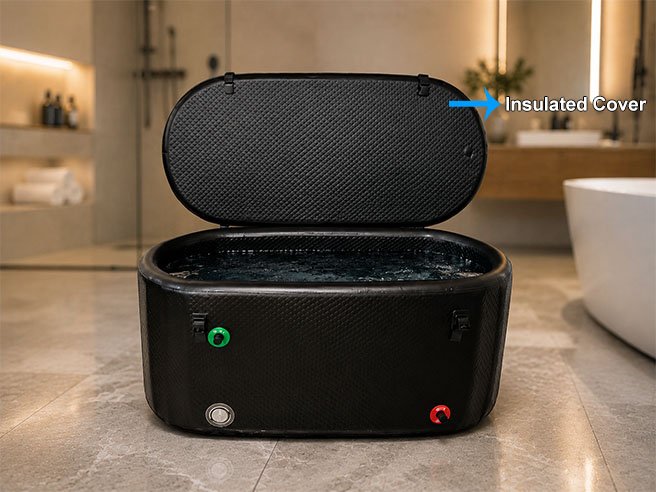
You can buy the most efficient chiller in the world.
But if your tub insulation is terrible, your operating cost will still climb.
Heat enters water constantly from:
- Sunlight
- Air temperature
- Ground temperature
- Wind exposure
Good insulation reduces compressor workload dramatically.
This is why many experienced users prioritize:
- Insulated lids
- UV-resistant covers
- Thick-wall tubs
- Shaded placement
- Indoor installation when possible
You know what’s funny?
Some people spend thousands on advanced cooling systems and then leave the tub uncovered all afternoon outdoors.
That’s basically like running your home AC with the windows open.
Simple insulation improvements can reduce cooling cycles noticeably.
And fewer cooling cycles usually mean:
Smart Scheduling Can Cut Electricity Use
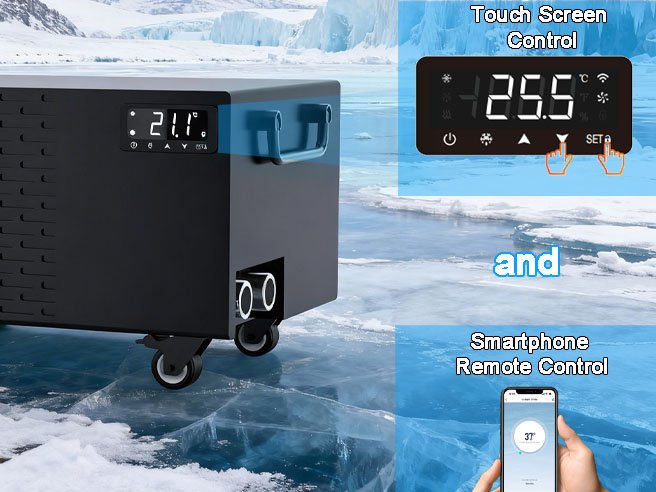
A lot of modern ice bath chillers now include app control or programmable timing.
That feature matters more than it sounds.
Instead of running continuously at maximum cooling, the system can maintain lower activity during unused hours and prepare the tub before scheduled sessions.
For example:
- Morning athlete? Cool overnight.
- Evening recovery user? Reduce daytime operation.
- Commercial gym? Match peak member traffic.
This reduces unnecessary compressor runtime.
And compressors are usually the largest energy consumers in a chiller system.
Some advanced systems even support remote monitoring, fault alerts, and OTA updates, which help prevent performance loss over time.
It feels surprisingly modern for something that basically makes water cold.
But smart control genuinely improves long-term efficiency.
Why Filtration Reduces Costs Too
Most people focus only on cooling.
That’s understandable.
But water quality plays a major role in operating costs.
Without proper filtration, users often replace water far too frequently.
A quality filtration setup helps:
- Reduce debris
- Limit bacterial growth
- Improve water clarity
- Lower chemical demand
- Extend water lifespan
Some systems also include UV sterilization, which helps reduce microbial buildup naturally.
That means fewer deep cleanings and fewer emergency maintenance sessions.
Commercial operators especially appreciate this because downtime costs money.
A wellness center with an unavailable cold plunge station during peak hours? Not ideal.
Reliable filtration keeps operations smoother and more predictable.
DIY Ice Bath Chillers: Are They Really Cheaper?
This topic gets emotional online.
Some people love DIY setups.
And honestly, a few are pretty creative.
Modified aquarium chillers, chest freezers, homemade circulation systems — there’s no shortage of experiments.
But long-term cost is not just about the initial price.
DIY systems often run into problems like:
- Weak cooling performance
- Poor insulation
- High electricity consumption
- Safety concerns
- Water leakage risks
- Lack of waterproofing
- No certifications
- Difficult maintenance
Then replacement parts start adding up.
Or worse, the entire system fails during summer.
For occasional hobby use, DIY can work.
But for consistent long-term recovery — especially commercial use — professionally engineered systems usually become more cost-effective over time because they’re designed for continuous cooling workloads.
That durability matters.
Especially when the compressor runs daily.
Commercial Facilities See the Biggest Savings
Home users save money.
Commercial facilities save headaches.
That distinction matters.
Gyms, recovery studios, hotels, sports centers, and wellness clubs often face problems beyond electricity:
- Ice storage logistics
- Staff labor
- Sanitation consistency
- User scheduling
- Water turnover
- Equipment downtime
A properly designed commercial chiller system streamlines all of it.
And because usage frequency is higher, return on investment often arrives faster.
Many facilities also notice another benefit.
Member perception.
A professional cold plunge system simply feels more premium than dumping bags of melting ice into a tub.
That experience affects retention more than people realize.
Especially in luxury wellness spaces.
Maintenance Habits That Keep Costs Low
Even the best system needs basic care.
Thankfully, maintenance usually isn’t complicated.
A few habits make a huge difference:
Clean Filters Regularly
Dirty filters force pumps and compressors to work harder.
That increases electricity use and system wear.
Keep Airflow Open
Outdoor debris or blocked ventilation reduces cooling efficiency.
Give the unit room to breathe.
Use a Cover
Seriously, this alone can reduce unnecessary heat gain dramatically.
Monitor Water Chemistry
Balanced water reduces corrosion, scaling, and pump strain.
Avoid Extreme Temperature Changes
Trying to crash-cool warm water instantly stresses the system.
Steady maintenance temperatures are usually more efficient.
Little habits. Big difference.
Kind of boring advice, maybe.
But boring maintenance usually prevents expensive repairs.
The Long-Term Math Most Buyers Ignore
People often compare the purchase price only.
That’s understandable because the upfront number feels important.
But cold plunge ownership is really about lifetime cost.
A cheaper system with:
- Weak efficiency
- Poor insulation
- Low-quality compressors
- No filtration
- High maintenance needs
…can become far more expensive after a year or two.
Meanwhile, a well-designed chiller system may reduce:
- Monthly operating costs
- Water waste
- Replacement frequency
- Downtime
- Maintenance labor
That’s why experienced buyers increasingly ask deeper questions:
- How energy efficient is the system?
- Is it designed for indoor or outdoor use?
- Does it include filtration?
- Can it maintain temperature consistently?
- Is remote monitoring available?
- What certifications support reliability?
Those questions matter far more than flashy advertising.
And honestly, they usually lead to smarter purchasing decisions.
Why More Users Are Switching Away From Ice
The shift is happening for a reason.
People want recovery systems that feel sustainable — financially and practically.
Nobody enjoys constantly buying ice.
Nobody enjoys temperature inconsistency.
And commercial operators definitely don’t enjoy operational chaos.
Modern chiller systems solve many of those frustrations simultaneously.
Better efficiency.
Cleaner water.
Lower long-term cost.
More predictable recovery.
Less hassle.
Simple.
Well… simpler, anyway.
Cold therapy probably shouldn’t feel like a part-time job.
FAQs
1. Does an ice bath chiller really save money compared to buying ice?
Yes, especially for frequent users. A dedicated chiller system reduces recurring ice purchases and helps maintain consistent temperatures with lower long-term operating costs. Heavy users and commercial facilities usually see the biggest savings.
2. What size ice bath chiller is most energy efficient?
The most efficient size depends on tub volume, climate, and usage frequency. Smaller home tubs may only need a 1/3 HP system, while larger outdoor or commercial setups often require 1 HP or more for stable cooling performance.
3. How can I reduce electricity costs for my cold plunge setup?
Use proper insulation, keep the tub covered, clean filters regularly, and schedule cooling cycles during off-peak hours. Matching the correct chiller size to the tub also helps reduce unnecessary compressor runtime.
4. Is a DIY ice bath chiller cheaper long term?
Not always. DIY systems may have lower upfront costs, but they often consume more energy, require more maintenance, and may fail earlier than professionally engineered systems.
5. How often should ice bath water be replaced with a chiller system?
With proper filtration and UV sanitation, water can stay clean much longer than traditional ice-only setups. Actual replacement frequency depends on usage volume, hygiene practices, and water maintenance.
Ready to Build a More Efficient Ice Bath Setup?
If you’re planning a home recovery space, commercial wellness studio, gym, or professional cold plunge project, choosing the right chiller system can dramatically reduce long-term costs while improving performance and reliability.
CHILLMEND provides factory-direct ice bath chiller systems designed for home users, gyms, wellness centers, and OEM/ODM partners worldwide. From energy-efficient cooling systems to integrated filtration and outdoor-ready designs, the goal is simple: stable cold therapy without the constant expense and hassle of traditional ice setups.
Whether you need a compact residential system or a high-performance commercial solution, CHILLMEND can help match the right cooling capacity to your actual usage conditions — so you avoid overspending while getting dependable recovery performance.
Sometimes the cheapest setup upfront becomes the most expensive one later.
A properly designed chiller system changes that equation.
Compare Capital and Ownership Costs
See the equipment and landed cost guide and learn why a low initial price may increase total cost of ownership.