
Quick Outline
- Why commercial gyms are investing in cold recovery systems
- What makes a gym-grade ice bath chiller different from a home setup
- Key features that actually matter in busy recovery environments
- Common mistakes gyms make when buying chillers
- Recommended chiller sizes by use case
- Indoor vs outdoor installation considerations
- Water hygiene, maintenance, and operating costs
- Why reliability matters more than headline specs
- Choosing the right supplier for long-term support
- FAQs
- CTA
Best Ice Bath Chiller for Gyms & Recovery Centers
Cold recovery used to feel like a niche thing. A few professional athletes, some hardcore runners, maybe a sports rehab clinic with a tiny plunge tub hidden in the back room. That was the old picture.
Now? Walk into almost any modern training facility, and you’ll probably spot an ice bath setup sitting somewhere near the stretching area, sauna room, or recovery lounge. Even boutique fitness studios are adding cold therapy zones because members expect them.
And honestly, expectations have changed fast.
People no longer want to dump bags of ice into a bathtub and hope the water stays cold for twenty minutes. Gym owners definitely don’t want that mess either. They want stable temperatures, clean water, low noise, and equipment that can survive heavy daily use without becoming a maintenance nightmare.
That’s exactly where a commercial ice bath chiller comes in.
But choosing the best ice bath chiller for gyms and recovery centers is not as simple as picking the biggest horsepower number online. A lot of facilities make that mistake. They buy a system that looks powerful on paper, then six months later, they’re dealing with overheating, poor filtration, noisy compressors, or members complaining that the water feels warm by lunchtime.
So let’s break this down properly — from the perspective of real commercial use.
Why Gyms Are Suddenly Obsessed With Cold Recovery
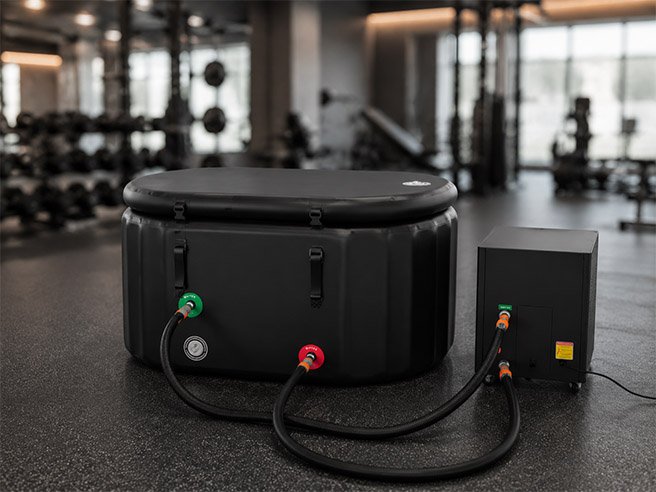
There’s a reason recovery spaces are becoming the “must-have corner” inside modern gyms.
Members today aren’t just chasing workouts anymore. They’re chasing the full performance lifestyle. Strength training, sleep tracking, mobility work, sauna sessions, breathwork, recovery protocols — it’s all connected now.
Cold plunges fit naturally into that ecosystem.
Athletes often use ice baths after intense training blocks to help reduce soreness and support recovery routines. Wellness-focused members use them for mental clarity, mood regulation, and stress management. Some people simply enjoy the shock factor. Others swear by the post-plunge energy boost.
And here’s the interesting part: many gym owners say the ice bath area becomes one of the most photographed parts of the facility. Social media changed everything. A clean recovery room with a sleek tub and commercial chiller almost markets itself.
Still, behind the Instagram videos, there’s a practical business question:
Can the system handle continuous use?
That’s where commercial-grade chillers separate themselves from smaller residential models.
Home Chillers vs Commercial Chillers — They’re Not Playing the Same Game
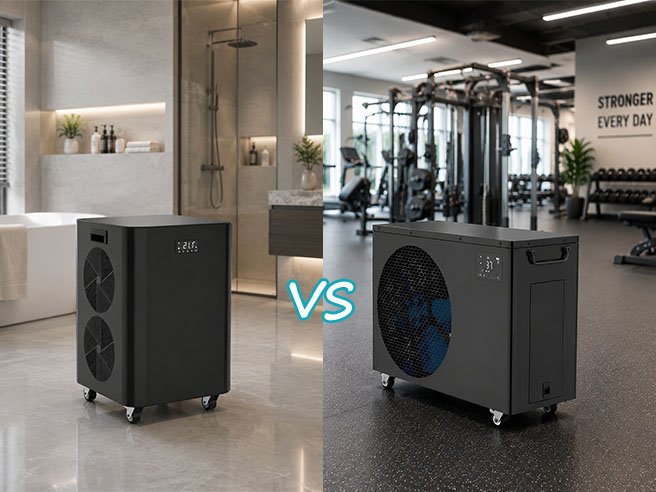
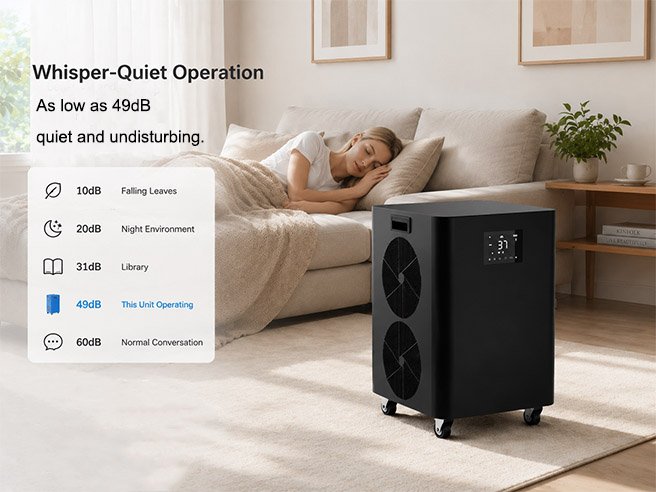
This part matters more than most buyers realize.
A home user might run their ice bath once or twice a day. Maybe three times on a busy weekend.
A gym? Completely different story.
A commercial recovery center may have:
- 20 to 80 users per day
- Constant temperature cycling
- Long operating hours
- Higher ambient temperatures
- Shared water systems
- Continuous filtration demands
- Heavy wear on pumps and compressors
That changes everything.
A small DIY setup that works perfectly in someone’s garage can struggle badly in a commercial environment.
You know what happens a lot? Gym owners buy a low-cost chiller marketed as “commercial” when it’s really designed for light home use. At first it seems fine. Then summer arrives.
Suddenly, the water temperature creeps upward during peak hours. The compressor runs non-stop. Noise levels increase. Cooling slows down. Members notice.
Commercial ice bath chillers need stronger cooling systems, better heat dissipation, higher-quality compressors, and far more reliable circulation systems.
That’s why the best ice bath chillers for gyms are designed around stability, not just raw cooling claims.
The Features That Actually Matter in a Gym Environment
Let me explain something that surprises a lot of first-time buyers.
The “coldest temperature” is usually not the most important spec.
Reliability is.
A gym owner doesn’t care if a unit can theoretically hit 37°F once during a marketing demo. They care whether the system can consistently maintain stable temperatures every day with minimal downtime.
So what should you really look for?
Cooling Capacity That Matches Real Usage
Horsepower matters — but context matters more.
A compact 1/3 HP system may work for a single-user home setup, but larger commercial environments often need 1 HP, 1.5 HP, or even 2 HP systems depending on:
- Tub volume
- Daily user count
- Indoor vs outdoor placement
- Climate conditions
- Desired recovery temperature
For example, a small recovery studio with one insulated tub indoors may perform perfectly with a 1 HP commercial unit.
But a busy athletic facility in a hot climate running multiple sessions daily? That usually needs more cooling headroom.
Underpowered chillers don’t just cool slower. They also run harder and wear out faster.
It’s a bit like driving a tiny car uphill all day with a trailer attached.
Strong Water Filtration — Because Shared Water Gets Dirty Fast
This part gets overlooked constantly.
Commercial recovery systems absolutely need proper filtration.
Sweat, skin oils, dirt, lotions, magnesium products, and debris all enter the water throughout the day. Without filtration, water quality drops quickly.
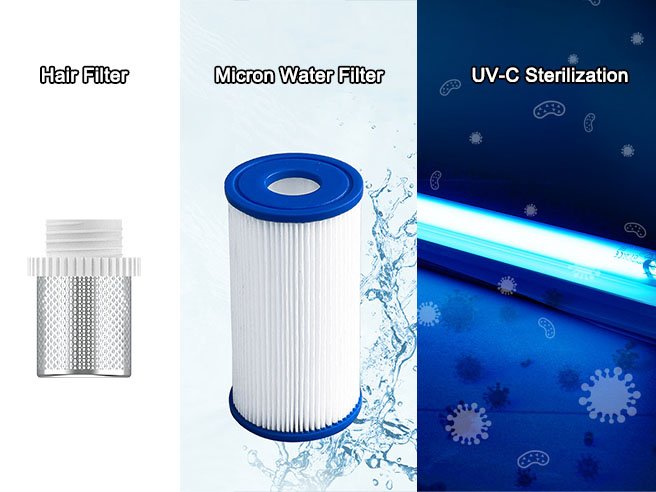
A proper commercial ice bath chiller should include:
- Multi-stage filtration
- Replaceable filters
- Strong circulation flow
- UV sterilization support
- Easy maintenance access
Honestly, water cleanliness affects the user experience more than many gym owners expect.
People may tolerate slightly warmer water. They won’t tolerate cloudy water.
That’s why many professional facilities now prefer systems with built-in UV sterilization and three-stage filtration. It helps reduce maintenance pressure while improving hygiene standards.
Noise Levels Matter More Than You Think
Here’s one of those things buyers often realize too late.
Noise changes the entire recovery atmosphere.
Recovery rooms are supposed to feel calm. Controlled. Focused.
If the chiller sounds like a construction compressor rattling in the background, it kills the experience instantly.
Commercial facilities should pay close attention to:
- Compressor quality
- Fan design
- Ventilation layout
- Vibration isolation
- Indoor acoustic impact
This becomes especially important in:
- Wellness clubs
- Boutique studios
- Physical therapy clinics
- Spa-style recovery centers
- Luxury gyms
A quieter unit usually reflects better engineering overall.
Not always, sure. But often.
Energy Efficiency Starts to Matter When the Unit Runs All Day
A home user might ignore electricity costs.
Commercial operators cannot.
If a chiller runs 10 to 18 hours daily, efficiency becomes a real operating expense.
This is why modern gym-focused chillers increasingly emphasize:
- Better compressor efficiency
- Smarter temperature cycling
- Insulated water systems
- Energy-saving standby logic
- Reduced idle power draw
And honestly, insulation is a bigger deal than many people think.
A well-insulated tub reduces compressor workload dramatically. In some setups, better insulation saves more electricity than upgrading to a larger chiller.
That’s a little counterintuitive, but true.
Indoor or Outdoor Installation? That Changes the Recommendation
Not every recovery space looks the same.
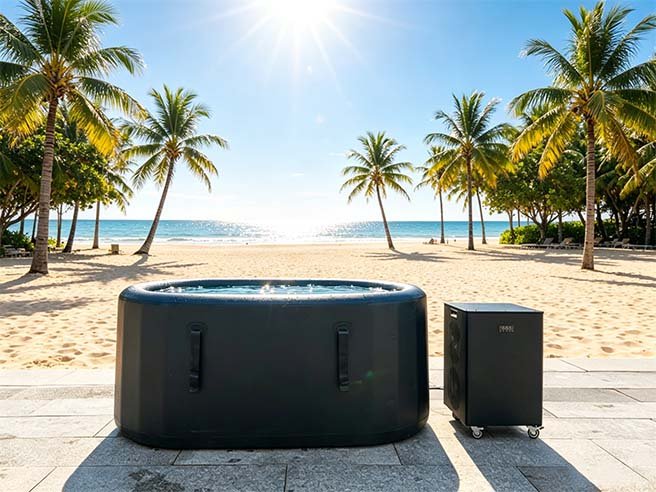
Some gyms build premium indoor recovery lounges. Others place plunge tubs outdoors near saunas, rooftop terraces, or functional training zones.
Outdoor installation introduces several additional factors:
Weather Resistance
Commercial chillers placed outdoors should ideally include:
- Waterproof protection
- Corrosion resistance
- Stable airflow design
- Durable housing materials
Many commercial buyers now specifically ask for IPX5-rated systems because outdoor exposure is increasingly common.
Ambient Temperature
A chiller working outdoors in hot summer conditions has a much harder job.
High ambient temperatures reduce cooling efficiency. That means underpowered systems struggle even more.
This is another reason commercial facilities often size up instead of choosing the absolute minimum cooling capacity.
The Truth About Maintenance — Simple Systems Usually Win
Some buyers chase ultra-complicated feature lists.
Touchscreens. Fancy lighting. Ten app integrations. Voice controls. Automated this, automated that.
Honestly? Most gyms eventually prioritize simplicity.
Because the best commercial recovery systems are the ones staff can maintain easily.
Good commercial chillers should make these tasks straightforward:
- Filter replacement
- Water draining
- Cleaning access
- Temperature adjustments
- Pump inspection
- Error diagnosis
This matters because commercial facilities rarely have dedicated ice bath technicians.
Usually, the gym manager, maintenance staff, or front desk team handles basic upkeep.
The easier the system is to maintain, the more consistently it gets maintained.
And consistency keeps equipment alive.
What Size Ice Bath Chiller Does a Gym Actually Need?
This is probably the most common commercial buying question.
And the answer depends heavily on usage.
Here’s a general commercial guideline:
Small Boutique Studio
Recommended range:
- 1 HP commercial chiller
- Single insulated tub
- Moderate daily traffic
- Indoor installation preferred
Typical use:
- Yoga studios
- Small wellness clubs
- PT clinics
- Private training facilities
Mid-Sized Commercial Gym
Recommended range:
- 1 HP to 1.5 HP
- Heavier user turnover
- Longer operating hours
- Higher cooling demands
Typical use:
- Functional fitness gyms
- Cross-training facilities
- Recovery-focused clubs
- Team training centers
High-Traffic Recovery Centers
Recommended range:
- 1.5 HP to 2 HP
- Multiple daily users
- Outdoor or warm-climate installation
- Continuous operation requirements
Typical use:
- Professional athletic facilities
- Commercial wellness chains
- Sports performance centers
- Luxury recovery lounges
Of course, tub insulation and room temperature still matter.
A properly insulated setup with good airflow can sometimes outperform a larger, poorly designed system.
Common Buying Mistakes Gym Owners Make
Some mistakes show up again and again in commercial recovery projects.
Let’s save you the headache.
Mistake 1: Buying Based Only on Price
Cheap commercial chillers often become expensive later.
Lower-quality compressors, weak circulation pumps, poor filtration, and inconsistent cooling performance usually appear after several months of heavy use.
Commercial environments expose weaknesses fast.
Mistake 2: Ignoring After-Sales Support
This is huge.
A gym can’t afford long downtime.
If something fails, response time matters. Remote diagnostics matter. Replacement part availability matters.
Many serious buyers now prioritize suppliers that provide:
- Technical support
- Remote troubleshooting
- Spare parts access
- OTA system updates
- AI fault warnings
That support structure becomes part of the investment.
Mistake 3: Choosing the Smallest Possible Unit
People try to save money up front by minimizing horsepower.
Then the unit runs constantly, struggles during summer, and ages faster.
A slightly oversized commercial chiller often performs more efficiently because it doesn’t need to work at maximum output all day.
Mistake 4: Forgetting Water Hygiene
Recovery spaces are shared environments.
Water quality affects user trust immediately.
The cleaner and more professional the system feels, the more premium the facility appears.
Why More Commercial Buyers Are Choosing Full Ice Bath Systems
Years ago, many facilities built custom setups piece by piece.
Separate tub. Separate pump. Separate filtration. Independent plumbing.
That still works sometimes.
But integrated systems are becoming more popular because they simplify installation and reduce compatibility problems.
A complete commercial package typically includes:
- Chiller unit
- Recovery tub
- Pump system
- Filtration system
- Water hoses
- Temperature controls
- Sterilization support
For gyms, an easier setup usually means faster deployment.
And fewer installation surprises.
Recovery Spaces Have Become a Branding Tool
This part is interesting.
A well-designed recovery room doesn’t just support athletes. It changes how members perceive the entire gym.
Cold recovery areas create a “high-performance” identity.
Even casual members often associate ice bath systems with:
- Premium training environments
- Serious athletic preparation
- Advanced wellness culture
- Modern fitness trends
That perception matters.
In competitive urban markets, recovery amenities can influence membership decisions more than another row of cardio machines.
Honestly, many gyms already have enough treadmills.
What they lack is differentiation.
So, What’s the Best Ice Bath Chiller for Gyms?
The best commercial ice bath chiller is usually the one that balances five things well:
- Stable cooling performance
- Reliable long-term durability
- Efficient filtration and hygiene
- Low maintenance requirements
- Strong after-sales support
That combination matters far more than flashy marketing claims.
For most gyms and recovery centers, commercial-grade systems with:
- 1 HP to 2 HP cooling capacity
- Multi-stage filtration
- UV sterilization
- Energy-efficient compressors
- Outdoor-safe protection
- Quiet operation
…tend to provide the best long-term experience.
Especially when paired with insulated tubs and professional installation planning.
And honestly, choosing the right supplier matters almost as much as choosing the right machine.
Because commercial recovery equipment isn’t just a product purchase.
It’s an operational system.
FAQs
1. What is the best ice bath chiller size for a commercial gym?
Most commercial gyms perform well with 1 HP to 2 HP ice bath chillers, depending on user traffic, tub size, and installation conditions. High-traffic recovery centers generally require larger systems to maintain stable temperatures throughout the day.
2. Can a home ice bath chiller work in a gym?
A home ice bath chiller may struggle in commercial environments with continuous use. Gyms typically need stronger cooling systems, better filtration, and more durable compressors designed for long operating hours.
3. How cold should a gym ice bath be?
Most commercial recovery centers operate between 39°F and 55°F, depending on user preference and recovery protocols. Athletes often prefer colder temperatures, while wellness-focused users may choose slightly warmer settings.
4. Are outdoor ice bath chillers reliable?
Yes — if they are designed for outdoor use. Commercial outdoor chillers should include waterproof protection, corrosion resistance, and strong airflow systems to handle changing weather conditions.
5. How often should commercial ice bath water be cleaned?
Commercial ice bath systems should use continuous filtration and regular water maintenance schedules. Filter cleaning frequency depends on usage volume, but busy gyms often inspect and maintain systems weekly.
Ready to Build a Professional Recovery Space?
A reliable ice bath chiller can completely change how members experience your gym or wellness center. The right system creates a cleaner recovery environment, reduces maintenance stress, and delivers stable cooling day after day — even under heavy commercial use.
CHILLMEND specializes in commercial ice bath chillers designed for gyms, recovery studios, wellness centers, and professional athletic facilities. From energy-efficient cooling systems to UV sterilization, outdoor-safe construction, and factory-direct OEM/ODM support, our systems are built for long-term performance.
If you’re planning a new recovery room or upgrading an existing cold plunge setup, contact CHILLMEND today to discuss the right commercial ice bath chiller solution for your facility.