
Quick Outline
- Why choosing the right ice bath chiller matters
- The biggest mistake buyers make
- Cooling power: more important than most people think
- Temperature stability vs peak cooling claims
- Filtration and water quality systems
- Energy efficiency and operating costs
- Noise levels for home and commercial use
- Smart controls and remote monitoring
- Indoor vs outdoor durability
- Maintenance and serviceability
- Matching the chiller to your tub size
- Common features that sound impressive but rarely matter
- Final buying checklist
- FAQs
Ice Bath Chiller Buying Guide
The cold plunge market has exploded over the last few years. Professional athletes use it. Wellness clubs promote it. Homeowners are installing cold plunge systems in garages, patios, and backyard recovery spaces.
Yet many buyers still make the same mistake.
They focus on marketing buzzwords instead of the features that actually affect performance, reliability, and long-term ownership costs.
A sleek touchscreen looks nice. Fancy lighting can catch your eye. But neither of those features will help when your water struggles to stay cold during summer or when maintenance becomes a headache after a few months.
So what really matters when buying an ice bath chiller?
Let’s break it down.
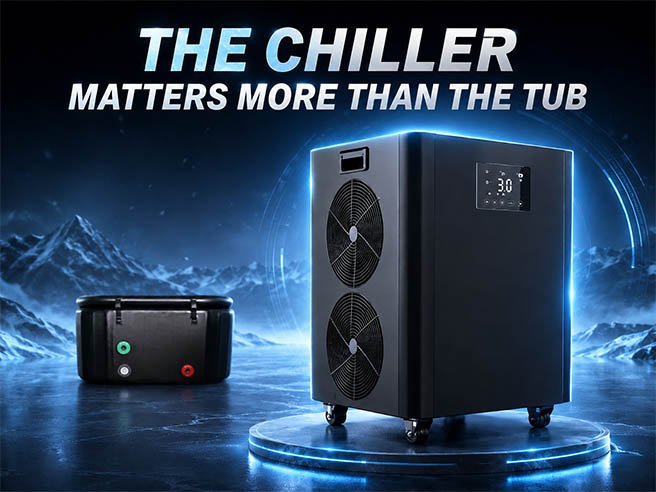
Why Your Chiller Matters More Than the Tub
Here’s something many first-time buyers don’t realize.
The tub is mostly a container.
The chiller is the engine.
Think of it like buying a car. The seats, paint color, and dashboard matter, but the engine determines how the vehicle actually performs day after day.
The same applies to cold plunge systems.
A high-quality ice bath chiller controls:
- Cooling speed
- Temperature consistency
- Water cleanliness
- Operating costs
- Noise levels
- Long-term reliability
You can pair an average tub with an excellent chiller and still enjoy a fantastic recovery experience. The opposite is rarely true.
That’s why experienced gym owners, recovery studios, and sports teams often evaluate the chiller first and the tub second.
The Biggest Buying Mistake: Looking Only at Price
Everyone has a budget.
That makes sense.
But choosing solely based on the lowest price often leads to higher costs later.
A cheaper unit may:
- Use lower-efficiency compressors
- Consume more electricity
- Cool more slowly
- Require more maintenance
- Produce excessive noise
- Have limited replacement part availability
Interestingly, the cheapest chiller can become the most expensive system over a two- or three-year period.
A slightly higher initial investment often delivers:
- Better cooling performance
- Lower electricity consumption
- Fewer service interruptions
- Longer equipment lifespan
For commercial facilities running cold plunges every day, the difference becomes even more noticeable.
Cooling Power: The Feature You Should Never Ignore
Let’s start with the heart of the system.
Cooling power determines how quickly the unit removes heat from the water.
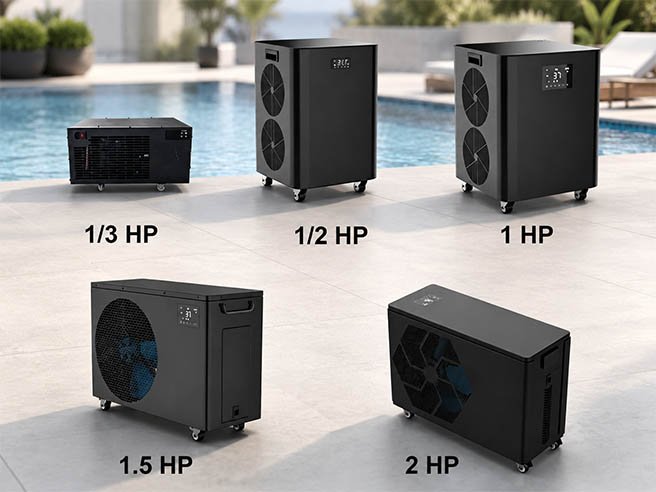
Many buyers focus on horsepower ratings alone:
While horsepower is useful, it doesn’t tell the entire story.
A properly engineered 1 HP system can outperform a poorly designed unit with similar specifications.
When evaluating cooling performance, consider:
Tub Volume
A 200-liter tub requires less cooling capacity than a 600-liter commercial plunge.
Ambient Temperature
A unit operating in a cool indoor room faces a completely different workload compared to one sitting outdoors in a 35°C summer environment.
User Frequency
One daily session is very different from ten athletes using the plunge throughout the day.
As a general rule:
- Smaller personal tubs typically work well with 1/3 HP to 1/2 HP systems.
- Daily home users often benefit from 1/2 HP to 1 HP chillers.
- Commercial facilities usually require 1 HP or larger systems.
Cooling power isn’t about achieving low temperatures once.
It’s about maintaining them consistently.
And that’s where the next feature becomes critical.
Temperature Stability Beats Extreme Cooling Claims
Many advertisements highlight minimum temperatures.
2°C.
1°C.
Even 0°C.
Those numbers grab attention.
But here’s the thing.
Most users spend far more time at temperatures between 3°C and 10°C than they do at absolute minimum settings.
What matters most is temperature stability.
A quality ice bath chiller should maintain water temperature within a narrow range instead of constantly fluctuating.
Why?
Because consistent temperatures create predictable recovery sessions.
Imagine setting your plunge to 5°C.
You expect 5°C every morning.
Not 3°C one day and 8°C the next.
Professional recovery facilities understand this well. Stability often matters more than chasing the lowest possible number.
Look for systems designed to maintain accurate temperatures rather than simply advertise impressive minimum limits.
Clean Water Isn’t Optional: Filtration Matters
Cold water doesn’t automatically mean clean water.
In fact, without proper filtration, water quality can deteriorate surprisingly quickly.
Hair.
Skin particles.
Dust.
Outdoor debris.
Body oils.
All of these accumulate over time.
A quality ice bath chiller system should include effective water management features.
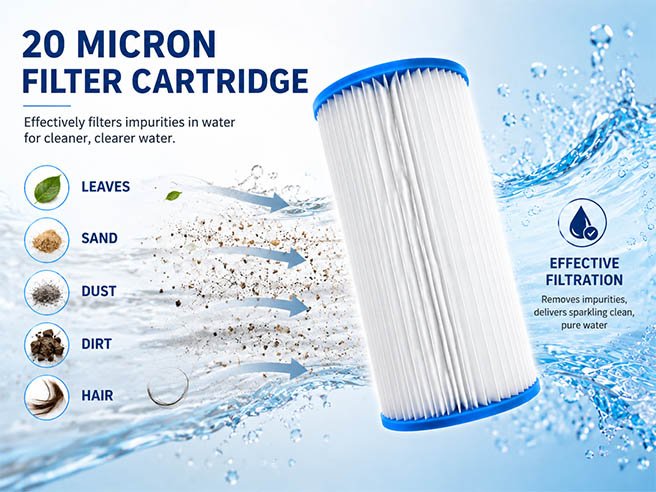
Mechanical Filtration
A fine filter captures physical contaminants before they circulate through the system.
Many commercial users prefer replaceable cartridge filters because they are easy to maintain.
UV Sterilization
UV systems help reduce microbial growth and improve overall water quality.
This feature is particularly useful for:
- Shared facilities
- Gyms
- Wellness clubs
- Sports recovery centers
Hair and Debris Collection
Often overlooked, these simple components can significantly reduce maintenance requirements.
Good filtration extends water life, reduces cleaning frequency, and improves the overall user experience.
Energy Efficiency Saves More Money Than You Think
A chiller isn’t a one-time expense.
It’s an operating expense.
That’s why energy efficiency deserves serious attention.
Let’s say two chillers cost roughly the same amount.
One consumes noticeably less power throughout the year.
The savings accumulate month after month.
Especially for:
- Commercial gyms
- Hotels
- Recovery centers
- Wellness clubs
Features that often contribute to efficiency include:
- High-quality compressors
- Effective insulation
- Intelligent temperature control
- Optimized airflow systems
- Variable operating cycles
You know what?
Many buyers obsess over purchase price but barely consider operating costs.
Yet electricity expenses continue long after the initial purchase is forgotten.
Noise Levels Can Make or Break the Experience
This topic doesn’t receive enough attention.
Until the first night.
Imagine placing a cold plunge beside a bedroom, home office, wellness room, or relaxation area.
Suddenly, noise matters.
A lot.
Recovery environments are supposed to feel calm.
Constant compressor noise can work against that goal.
For home installations, quieter systems generally provide a better overall experience.
For commercial facilities, lower noise levels help create a more premium atmosphere.
When evaluating noise performance, look beyond marketing claims and focus on:
- Compressor quality
- Fan design
- Internal insulation
- Vibration control
- Cabinet construction
A well-engineered system often sounds significantly quieter than a budget alternative, even when cooling at similar capacities.
Smart Controls: Useful, But Not the Most Important Feature
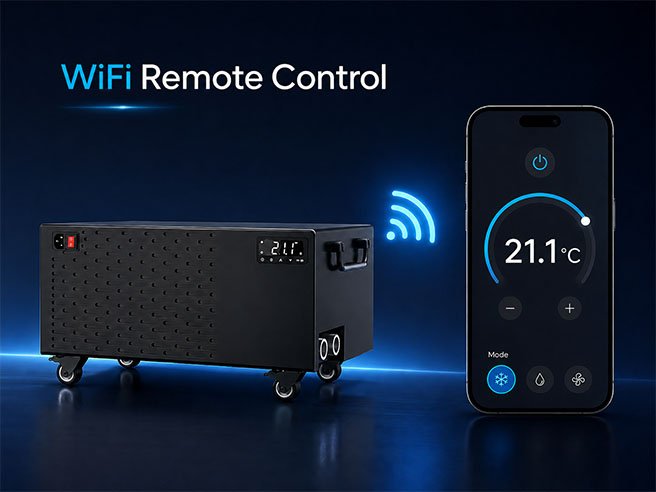
WiFi control has become increasingly common.
And honestly, it can be very convenient.
Imagine adjusting your plunge temperature from your phone before arriving home from work.
That’s useful.
Smart features may include:
- Mobile app control
- Scheduling
- Remote temperature adjustment
- Firmware updates
- Performance monitoring
- Error notifications
However, smart controls should never compensate for weak cooling performance.
A poorly cooling chiller with a great app is still a poorly cooling chiller.
Prioritize performance first.
Then enjoy the convenience features.
That’s usually the smarter approach.
Indoor or Outdoor? Durability Changes Everything
Where the system operates matters.
A chiller designed primarily for indoor use may struggle when exposed to:
- Rain
- Humidity
- UV exposure
- Dust
- Temperature swings
Outdoor installations require stronger protection.
Look for features such as:
Weather Resistance
Appropriate enclosure protection helps prevent moisture-related issues.
Corrosion Resistance
Materials exposed to outdoor environments should resist rust and degradation.
Durable Heat Exchangers
Titanium heat exchangers are commonly preferred because of their resistance to corrosion and long service life.
Quality Cabinet Construction
A sturdy cabinet protects internal components and improves overall durability.
If your system will spend years outdoors, durability isn’t a luxury.
It’s a requirement.
Maintenance Should Be Simple, Not Complicated
Here’s a question many buyers forget to ask:
“What happens when I need service?”
Every machine eventually requires maintenance.
The difference lies in how easy that maintenance becomes.
A well-designed chiller should allow straightforward access to:
- Filters
- Pumps
- Electrical components
- Cooling system parts
Commercial operators especially appreciate modular designs because repairs are faster and downtime is reduced.
Before buying, consider:
- Availability of replacement parts
- Technical support
- Warranty coverage
- Maintenance requirements
- Service accessibility
The goal isn’t avoiding maintenance entirely.
The goal is to make it manageable.
Matching Chiller Size to Tub Capacity
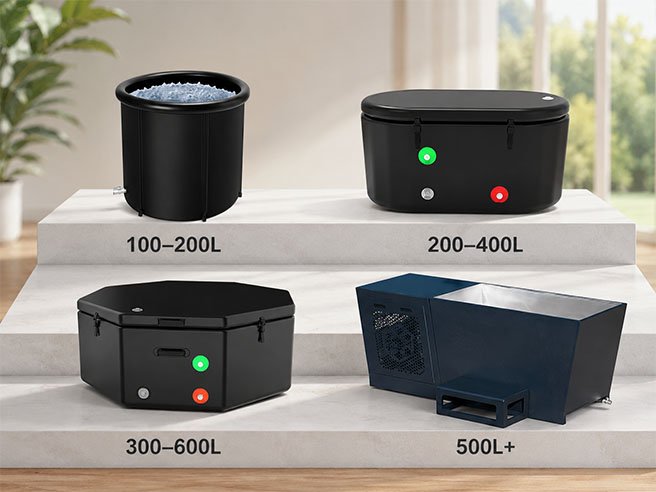
A mismatch between tub size and cooling capacity creates problems.
Too little cooling power and the system struggles continuously.
Too much cooling power isn’t always ideal either, particularly for smaller applications.
As a general guideline:
| Tub Size | Typical Chiller Range |
|---|---|
| 100–200L | 1/3 HP |
| 200–400L | 1/2 HP |
| 300–600L | 1 HP |
| 500L+ Commercial Use | 1.5 HP – 2 HP |
These are broad estimates.
Environmental conditions and usage frequency can shift requirements significantly.
For example, a busy gym operating all day typically requires more cooling capacity than a home user with the same water volume.
That’s why professional sizing recommendations remain valuable.
Features That Sound Impressive but Often Matter Less
Marketing departments are creative.
Sometimes very creative.
Not every advertised feature deserves equal attention.
Some extras are nice to have, but they shouldn’t drive purchasing decisions.
Examples include:
- Decorative lighting
- Oversized display screens
- Cosmetic cabinet styling
- Excessive app functions
- Unnecessary accessories
Do these features add value?
Sometimes.
Do they matter as much as cooling performance, filtration, efficiency, and reliability?
Usually not.
Focus on the fundamentals first.
Everything else comes afterward.
A Practical Ice Bath Chiller Buying Checklist
Before making a final decision, ask yourself these questions:
✓ Does the cooling capacity match my tub size?
✓ Can the system maintain stable temperatures?
✓ What filtration features are included?
✓ Is the unit energy efficient?
✓ Will noise levels suit my environment?
✓ Is it designed for indoor or outdoor use?
✓ Are replacement parts readily available?
✓ Is maintenance straightforward?
✓ Does the manufacturer provide technical support?
✓ Is the system built for my actual usage frequency?
If you can confidently answer “yes” to most of these questions, you’re probably looking at a solid investment.
The Bottom Line
Buying an ice bath chiller shouldn’t be about finding the cheapest option or the one with the longest feature list.
The best systems focus on fundamentals:
- Reliable cooling power
- Stable temperature control
- Effective filtration
- Energy efficiency
- Quiet operation
- Durable construction
- Easy maintenance
Those are the features that affect your experience every single day.
Everything else is secondary.
Whether you’re building a home recovery setup, outfitting a professional gym, or creating a premium wellness facility, focusing on these core factors will help you choose a system that performs consistently for years rather than months.
FAQs: Ice Bath Chiller Buying Guide
1. What size ice bath chiller do I need for a 400-liter tub?
For most 400-liter cold plunge tubs, a 1/2 HP to 1 HP ice bath chiller is recommended. The ideal choice depends on ambient temperature, usage frequency, and whether the system is installed indoors or outdoors.
2. Is a 1 HP ice bath chiller worth the extra cost?
A 1 HP ice bath chiller is often worth the investment for users who need faster cooling, better temperature recovery, and more consistent performance. It is particularly suitable for larger tubs, daily users, and commercial recovery environments.
3. What filtration system should an ice bath chiller have?
The best ice bath chiller filtration systems typically include mechanical filtration, debris collection, and UV sterilization. This combination helps maintain cleaner water and reduces maintenance requirements.
4. How much electricity does an ice bath chiller use?
Ice bath chiller energy consumption varies based on horsepower, climate, insulation, and operating time. Energy-efficient models with quality compressors and smart temperature control generally consume less power over the long term.
5. Can an outdoor ice bath chiller stay outside year-round?
Many outdoor-rated ice bath chillers are designed for year-round operation, but they should feature weather-resistant construction, corrosion-resistant components, and proper environmental protection to ensure long-term reliability.
Ready to Choose the Right Ice Bath Chiller?
Finding the right chiller is easier when you work with a manufacturer that understands both performance and real-world recovery needs. Whether you’re looking for a compact home system, a high-capacity commercial unit, or a complete cold plunge solution, CHILLMEND can help you identify the ideal configuration based on your tub size, climate, and usage requirements. Contact CHILLMEND today to discuss your project, request expert recommendations, and receive a customized solution built for long-term recovery performance.