
Article Outline
- Why cold plunge brands are growing fast
- What kind of cold plunge brand should you build?
- How to define your target customers
- Product strategy: tub, chiller, or full system?
- Why the ice bath chiller matters most
- OEM/ODM manufacturing: what to prepare
- Branding, packaging, and product positioning
- Quality, certifications, and after-sales support
- Common mistakes new cold plunge brands make
- Launch checklist
- FAQs
- CTA: work with CHILLMEND
Summary
Launching a cold plunge brand sounds exciting — and honestly, it is. But it’s not just about putting a logo on a tub and posting cool videos on Instagram. A serious cold plunge brand needs a clear market position, reliable cooling technology, stable manufacturing, good after-sales planning, and products that customers can use every day without headaches.
The cold plunge market is no longer a tiny niche for elite athletes. It’s moving into gyms, recovery studios, hotels, spas, wellness clubs, home gyms, and even luxury residential projects. Market reports estimate continued growth for cold plunge tubs from 2026 onward, with wellness, sports recovery, and home recovery demand driving much of that momentum.
So, how do you launch your own cold plunge brand the right way? Let’s walk through it like a real business, not a shiny trend.
Why Cold Plunge Is No Longer Just a “Crazy Athlete Thing”
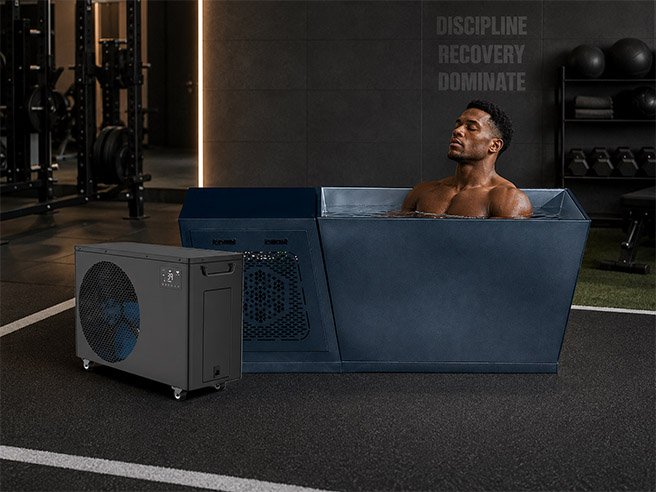
A few years ago, cold plunging looked a little extreme. A person sitting in icy water, breathing through the shock, trying not to jump out after ten seconds — that was the image.
Now? It’s become part of the recovery conversation.
Athletes use cold water immersion after tough sessions. Fitness enthusiasts use it for routine recovery. Wellness studios pair cold plunge tubs with saunas, breathwork, compression therapy, and red light therapy. Homeowners are even turning garages, patios, and spare rooms into wellness corners with cold plunges and saunas. Recent wellness coverage has highlighted this shift toward home recovery spaces and social recovery studios, showing that cold plunge culture is spreading beyond pro sports.
Here’s the thing: this growth creates room for new brands.
But not every new brand survives.
Some brands launch with good marketing but weak machines. Some pick beautiful tubs but ignore cooling speed. Some sell low-cost products, then drown in support messages when customers complain about leaks, noise, unstable temperature, or poor filtration.
That’s the not-so-glamorous side. And it matters.
A cold plunge brand is not only a wellness brand. It’s also a hardware brand. You’re selling comfort, recovery, design, safety, and engineering — all in one package.
That means your product must look good, yes. But it also has to cool well, run safely, stay clean, and keep working after the excitement of the first week fades.
First, Decide What Kind of Cold Plunge Brand You Want to Build
Before you choose a supplier, logo, color palette, or product model, ask one blunt question:
Who are we selling to?
Not everyone needs the same cold plunge system. A home user wants something simple, quiet, and easy to maintain. A commercial gym wants durability, cooling power, and fast water temperature recovery. A hotel or spa may care more about appearance, user comfort, and long service life. A recovery center needs hygiene, filtration, stability, and easy maintenance access.
You know what? This is where many new brands get stuck. They want to sell to everyone.
That sounds smart, but it usually makes the brand blurry.
A stronger approach is to begin with one clear direction:
- Home recovery brand: compact tubs, quiet chillers, easy setup, clean design, lower energy cost.
- Commercial recovery brand: stronger chillers, durable tubs, all-day operation, filtration, spare parts, service support.
- Luxury wellness brand: premium materials, elegant design, spa-friendly appearance, high-end user experience.
- Mobile recovery brand: portable tubs, trolley-style chillers, event-friendly setup, quick installation.
- OEM/ODM distribution brand: product line built for resale, dealer pricing, regional support, custom packaging.
Each path can work. But each path needs a slightly different product strategy.
A home recovery brand can’t feel like industrial equipment. A gym product can’t behave like a delicate home appliance. A luxury spa product can’t look like it belongs in a warehouse corner.
Brand position comes first. Product choices come second.
Know Your Buyer: They’re Not Just Buying Cold Water
Cold plunge buyers say they want cold water. But that’s not the full story.
A home user may actually be buying discipline. A gym owner may be buying a premium recovery service. A hotel may be buying a better wellness package. A distributor may be buying a product line they can sell without constant complaints.
That’s why your cold plunge brand should speak to the real reason behind the purchase.
For example, sports enthusiasts may care about:
- faster recovery after training
- stable water temperature
- repeatable cold exposure
- less hassle than ice bags
- simple cleaning and filtration
Fitness equipment users may care about:
- easy installation
- clear product specs
- noise level
- daily running cost
- whether it fits their tub, garage, patio, or recovery room
B2B customers care about even more:
- product reliability
- certification documents
- spare parts availability
- MOQ
- branding support
- packaging
- production lead time
- warranty terms
- technical service response
See the pattern? Cold plunge branding is emotional, but cold plunge buying is practical.
A strong brand has both.
It makes people feel, “This looks like the recovery lifestyle I want.” Then it helps them think, “Yes, this product can actually work for me.”
Tub, Chiller, or Full Cold Plunge System?
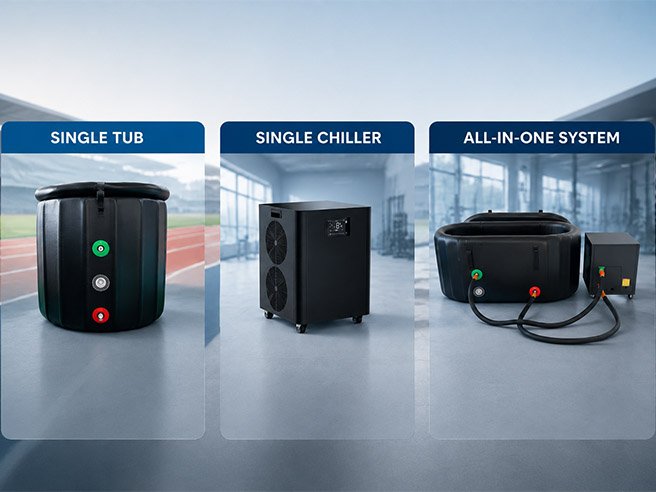
When launching your own cold plunge brand, you usually have three product paths.
1. Sell Cold Plunge Tubs Only
This is the simpler route. You can sell inflatable tubs, freestanding tubs, stainless steel tubs, cedar tubs, or premium all-in-one tubs.
The good part? Tubs are easier for customers to understand. They’re visual. They photograph well. They fit social media.
The hard part? Without a chiller, customers still need ice. That means they may face temperature swings, daily hassles, and extra costs over time. If your brand promises a premium recovery experience but customers still carry bags of ice every day, there’s a gap.
2. Sell Ice Bath Chillers Only
This is a smarter technical route, especially for B2B brands, distributors, gyms, and existing tub sellers.
An ice bath chiller turns a regular tub into a controlled cold therapy system. It gives customers stable temperature, cleaner water circulation, and better repeatability. For users who already own tubs, it’s a natural upgrade.
But chiller-only brands need stronger technical messaging. You must explain cooling power, filtration, water pump setup, hose compatibility, ambient temperature, water volume, and maintenance.
It’s a bit less “pretty lifestyle photo,” a bit more “real engineering.” And that’s okay. Good engineering sells when the buyer understands the value.
3. Sell Complete Cold Plunge Systems
This is often the strongest long-term brand strategy.
A complete cold plunge system can include:
- cold plunge tub
- ice bath chiller
- external pump
- filter
- hoses
- quick connectors
- insulated cover
- accessories
- user manual
- branded packaging
This gives customers a smoother experience. They don’t have to guess which chiller fits which tub. They don’t have to buy random fittings. They don’t have to ask, “Will this actually work together?”
For B2B brands, complete systems also create higher-order value and better brand control.
The catch? It requires better supply chain planning. Your supplier must understand both tubs and chillers, not just one side.
That’s where a manufacturer like CHILLMEND ice bath chiller OEM/ODM becomes useful, because your product line can be planned around cooling performance, tub size, hose connection, filtration, and commercial use — not just appearance.
The Ice Bath Chiller Is the Heart of the Brand
Let’s be honest. A cold plunge tub can look beautiful, but if the chiller fails, the whole experience falls apart.
The chiller controls the thing customers feel every day: water temperature.
If it cools too slowly, users complain.
If it’s too loud, home users stop using it.
If it can’t handle hot weather, commercial buyers lose confidence.
If filtration is weak, water quality becomes a headache.
If maintenance is difficult, the after-sales cost goes up.
That’s why your chiller choice is not a small detail. It’s the engine under the hood.
A good ice bath chiller for a serious cold plunge brand should focus on:
Stable Cooling Performance
Customers don’t want cold water once. They want cold water again and again. Stable cooling matters more than a flashy spec sheet. For home use, the system should maintain the target temperature without noisy, wasteful operation. For gyms and recovery rooms, the chiller must recover water temperature quickly after repeated use.
Proper Cooling Power for Water Volume
A 1/3HP chiller may work for small home setups. A 1HP chiller is often better for regular cold plunge tubs. Commercial setups may need 1.5HP or 2HP cooling depending on water volume, ambient temperature, user frequency, and target temperature. Bigger is not always better, but too small is painful. It’s like putting a scooter engine in a delivery truck.
Filtration and Water Circulation
Cold plunge water must move. Still water gets dirty faster and cools unevenly. A smart product system should include a pump, filter, and clean hose layout. For commercial buyers, this is not a luxury; it’s part of the operating cost.
Noise Control
Home users care about sound more than many brands expect. A chiller sitting on a patio, balcony, bathroom corner, or garage should not sound like a construction site. Commercial spaces also need controlled noise, especially spas and wellness clubs.
Maintenance Access
Here’s a small detail with big business value: can parts be checked, cleaned, and replaced easily? New brands sometimes forget this. Then, six months later, every support case becomes expensive.
A cold plunge brand grows faster when the product keeps working quietly in the background. No drama. No weird noise. No angry emails. Just cold water, day after day.
OEM vs ODM: Which Manufacturing Route Fits You?
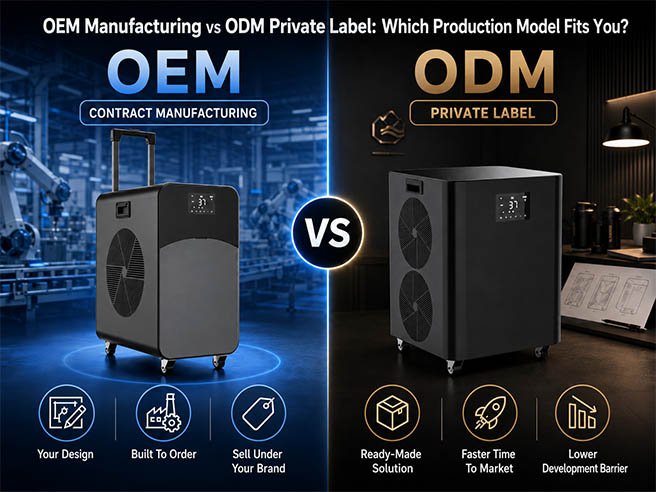
When building your own cold plunge brand, you’ll hear two common terms: OEM and ODM.
They sound similar, but they are not the same.
OEM Cold Plunge Manufacturing
OEM means you already have your own product idea, design, or specification, and the manufacturer produces it for you.
This works well if you have:
- your own industrial design
- custom metal housing concept
- unique brand appearance
- specific parts requirements
- private mold plans
- detailed performance targets
OEM gives you more control. But it also asks more from you. You’ll need clearer drawings, more testing time, and stronger project management.
ODM Cold Plunge Manufacturing
ODM means the manufacturer has already developed product models, and you customize them with your branding, packaging, color, logo, accessories, and sometimes function choices.
This is usually better for new brands.
Why? Because you can launch faster, lower development risk, and test the market before investing in custom molds.
A smart approach is simple: start with ODM to validate demand, then move into deeper OEM development once your sales data proves which product direction works.
That’s not slow. That’s grown-up business.
Many successful equipment brands begin with reliable base models, then build exclusive designs later. First, prove the customer. Then refine the machine.
What to Prepare Before Talking to a Cold Plunge Manufacturer
A good supplier can help you, but they can’t read your mind. The clearer you are, the better the product plan.
Before contacting an ice bath chiller manufacturer, prepare these details:
Your Target Market
Are you selling to home users, gyms, hotels, recovery centers, spas, sports teams, or distributors? Each group needs different cooling power, design language, price range, and support materials. A home brand may care about compact design and quiet operation. A commercial brand may care about 24/7 use, fast cooling recovery, and replaceable parts. If you tell the manufacturer “we want a good chiller,” that’s too vague. Say where it will be used, how often, and by whom.
Your Water Volume
Water volume affects cooling time, energy use, and customer satisfaction. A chiller that works nicely for 200L may struggle with a much larger tub under heavy use. Share tub dimensions, water capacity, indoor/outdoor use, and expected ambient temperature. Don’t hide these details to get a cheaper quote. That usually backfires. The right manufacturer will size the chiller around real working conditions, not fantasy lab conditions.
Your Target Temperature
Some brands only need 5°C to 10°C cold therapy. Others want near-freezing performance for advanced users or commercial recovery. Lower target temperature requires stronger cooling design, better insulation, and more careful system planning. If your brand wants to market “ice-free cold plunge,” be clear about the actual target temperature and environment.
Your Branding Needs
Do you need logo printing, custom color, custom control panel, branded manual, carton design, product label, or private packaging? Do you need metal housing? LED logo? App interface support? These choices affect MOQ, cost, sampling time, and production planning.
Your Sales Channel
Amazon, Shopify, offline distributors, gyms, hotels, and wellness studios all need different product support. Online retail needs strong packaging and clear manuals. B2B distribution needs spare parts and technical documents. Commercial projects need more installation guidance. Your sales channel should shape the product, not the other way around.
This is where many new founders say, “Wow, there’s more to it than I thought.”
Yes. There is. But that’s also the opportunity. Most people won’t do the hard parts well.
Build a Product Line, Not Just One Product
One product can start your brand. A product line builds trust.
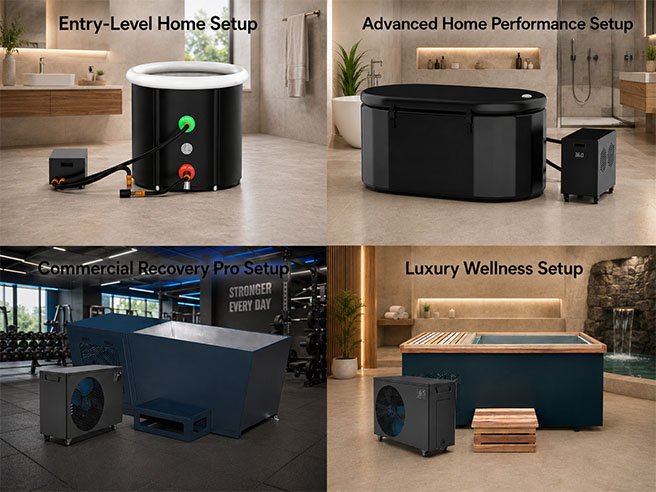
For cold plunge brands, a clean product line may look like this:
Entry Home Setup
A compact inflatable tub paired with a 1/3HP or 1HP chiller. This is for beginners, home gyms, small patios, and users who want cold therapy without daily ice. Keep it simple. Make setup easy. Keep the copy friendly.
Performance Home Setup
A stronger 1HP chiller with better filtration, quiet cooling, and a more durable tub. This is for serious fitness users, athletes, and biohacking buyers. They want better temperature control and a premium daily routine.
Commercial Recovery Setup
A 1HP Pro, 1.5HP, or 2HP chiller paired with a robust tub system. This is for gyms, recovery centers, sports teams, studios, and wellness clubs. Focus on heavy use, stable temperature, easy maintenance, and spare parts support.
Luxury Wellness Setup
A cedar tub, stainless steel inner tank, or premium freestanding design paired with a quiet chiller. This fits hotels, villas, spas, and high-end home wellness spaces. Appearance matters here. A lot. The product should feel calm, clean, and expensive without shouting.
This structure helps customers choose. It also helps Google understand your website.
For example, your website can separate pages like:
- home ice bath chiller
- commercial ice bath chiller
- cold plunge tub with chiller
- OEM ice bath chiller manufacturer
- 0°C ice bath chiller technology
That way, each page has a clear job. No keyword fighting. No messy overlap.
Your Brand Story Should Feel Real, Not Like a Catalog
People don’t remember specs alone.
They remember a reason.
Maybe your brand helps busy professionals build a recovery habit at home. Maybe you serve gyms that want a serious recovery room. Maybe you help hotels create spa experiences that guests actually talk about. Maybe you focus on athletes who need reliable cold water after every brutal session.
Whatever the story is, keep it real.
A cold plunge brand can talk about performance, but it shouldn’t sound like a robot wrote the label on a refrigerator. A little warmth helps.
For example:
“Built for daily recovery after hard training.”
That feels better than:
“Designed for cold water therapy application scenarios.”
See the difference?
Technical content matters, but the language should still breathe.
Your product pages should explain:
- What the product does
- Who is it for
- Why does the chiller power matter
- How the installation works
- What maintenance looks like
- What support does your brand provide
And your visuals should match the buyer. Home setups need lifestyle photos. Commercial setups need a gym, spa, recovery room, and sports team scenes. B2B buyers want factory photos, certification documents, packaging details, and real product shots.
A brand is not just a logo. It’s proof repeated many times.
Certifications, Safety, and Compliance Are Not Boring
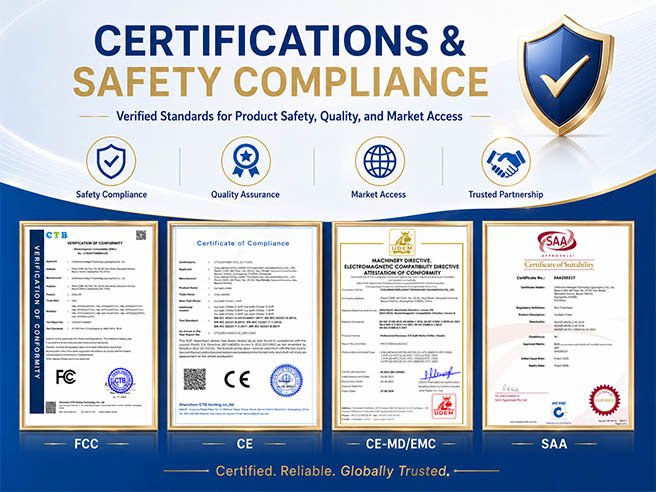
Okay, maybe they sound boring.
But for B2B cold plunge brands, certifications can make or break the deal.
If you plan to sell in the United States, Europe, Australia, or other regulated markets, buyers may ask about electrical safety, product labels, plug types, voltage, waterproof rating, and testing documents.
For cold plunge chillers, common concerns include:
- electrical safety
- leakage protection
- waterproof design
- compressor reliability
- refrigerant type
- temperature control safety
- pump and water circulation safety
- overheat protection
- spare parts support
A serious manufacturer should understand these questions.
This is especially important for distributors and commercial buyers. A gym owner doesn’t want a product that creates safety worries. A hotel doesn’t want equipment that looks risky near water. A brand owner doesn’t want customs or compliance issues after placing a bulk order.
So yes, certifications and test reports are not sexy. But they help you sleep at night.
And sleep is underrated.
Plan Your After-Sales Before Your First Sale
New brands love launch day.
They imagine the first orders, the first customer reviews, the first beautiful photos.
But the real test comes later.
A customer messages: “The water is not cooling.”
Another says: “The pump is noisy.”
Another asks: “How do I clean the filter?”
A gym says: “We need replacement hose connectors quickly.”
Now what?
If your after-sales plan is weak, your brand reputation gets bruised fast.
Before launch, prepare:
- user manuals
- installation videos
- troubleshooting guides
- spare parts list
- filter replacement instructions
- warranty policy
- response templates
- product serial number system
- packaging damage process
- maintenance schedule
A good cold plunge supplier should help with technical documents and spare parts planning. This is one of the big differences between buying a random machine and building a brand with a real manufacturing partner.
For B2B brands, after-sales is not a side task. It’s part of the product.
A machine that is easy to repair is more valuable than a machine that only looks good in the first photo.
Pricing: Don’t Race to the Bottom
The cold plunge market has low-cost products. That’s normal.
But building your brand around being the cheapest is risky. Someone can always go cheaper.
And in cold plunge equipment, cheap can quietly become expensive.
A low-cost chiller may use weaker parts, poor insulation, noisy fans, thin housing, unstable controls, or poor filtration. The customer doesn’t see all of that on day one. But they feel it later.
Better pricing strategy:
- Define your customer level
- Choose a reliable product of quality
- Explain the long-term value
- Offer clear warranty support
- Show what is included
- Avoid confusing package options
If your product costs more, explain why in plain language.
For example:
“Designed for daily cold plunge use, with stable cooling, water circulation, filtration, and replaceable parts support.”
That’s much stronger than “premium quality.”
Premium means nothing unless you prove it.
Common Mistakes New Cold Plunge Brands Make
Let’s save you a few headaches.
Mistake 1: Choosing Products Only by Appearance
A beautiful tub can attract clicks, but performance keeps customers. If the chiller is weak, the brand suffers. Always test cooling speed, temperature stability, noise, filtration, hose connection, and ease of maintenance before scaling sales.
Mistake 2: Selling One Setup to Everyone
A home user and a commercial recovery room are not the same customer. Don’t force one product to serve every scenario. Build clear use cases: home, gym, spa, hotel, sports team, mobile recovery, and premium wellness.
Mistake 3: Ignoring Packaging
Cold plunge equipment is bulky. Shipping damage can eat profit like a hungry bear. Packaging should be tested for cartons, foam, wood crates, accessories, manuals, and spare parts. A broken product is not just a logistics problem; it’s a brand problem.
Mistake 4: Underestimating Customer Education
Many buyers are new to cold plunge systems. They need to know how to connect hoses, fill water, clean filters, set temperature, drain the tub, and maintain the system. Good education reduces support pressure.
Mistake 5: No Spare Parts Plan
This one hurts. If you sell machines but can’t provide filters, pumps, hoses, connectors, control panels, or replacement parts, you’re not building a long-term brand. You’re just moving boxes.
A Simple Launch Checklist for Your Cold Plunge Brand
Before you launch, check these items:
- Brand position is clear: home, commercial, luxury, mobile, or distributor-focused.
- The product line includes at least one strong hero product.
- Tub and chiller compatibility has been tested.
- Cooling power matches real water volume and ambient temperature.
- Filtration, pump, hoses, and connectors are included or clearly specified.
- Packaging is designed for international shipping.
- Manuals, videos, and troubleshooting guides are ready.
- The warranty and spare parts policy are written clearly.
- Product photos show real use cases.
- Website pages target different keywords without overlap.
- The supplier can support OEM/ODM branding.
- Sample testing is completed before the bulk order.
- Lead time and MOQ are confirmed.
- Certifications and documents are prepared for your target market.
Not glamorous. Very useful.
And honestly, this checklist separates serious brand builders from quick sellers
Why Work With an Ice Bath Chiller Manufacturer Instead of a General Supplier?
A general supplier may offer tubs, chillers, accessories, and many other products. Sometimes that’s fine for basic sourcing.
But if you want to launch your own cold plunge brand, you need more than a price list.
You need product thinking.
An experienced ice bath chiller manufacturer can help you answer questions like:
- Which chiller power fits my tub size?
- How fast can it cool under real conditions?
- Can it run for commercial daily use?
- What filter system should I use?
- Can we customize the logo, color, app, or package?
- What spare parts should I stock?
- How do we reduce installation confusion?
- Which products fit home use versus gym use?
- Can we build a full cold plunge system instead of separate parts?
That guidance matters.
Because your customer won’t blame the factory. They’ll blame your brand.
So choose the manufacturer behind your brand carefully.
Where CHILLMEND Fits Into Your Cold Plunge Brand Plan
CHILLMEND focuses on ice bath chillers and cold plunge system manufacturing for brands, distributors, gyms, spas, recovery centers, and wellness projects.
Instead of simply selling machines, CHILLMEND supports B2B customers with product matching, cooling system planning, OEM/ODM branding, tub and chiller integration, and commercial recovery solutions.
For a new cold plunge brand, that can include:
- professional ice bath chillers
- home and commercial cooling systems
- cold plunge tubs
- chiller + tub packages
- filtration and circulation systems
- logo and packaging customization
- OEM/ODM product support
- technical guidance for product matching
- spare parts and after-sales planning
This is useful when you want to build a real product line, not just import one random model and hope it sells.
Cold plunge is a fun category, sure. But behind the fun is engineering. Stable cooling, clean water, safe wiring, durable parts, and good support — that’s what turns a wellness idea into a repeatable business.
And repeatable business is the goal.
FAQs About How to Launch Your Own Cold Plunge Brand
1. How much does it cost to launch a cold plunge brand?
The cost depends on your product type, MOQ, branding level, packaging, shipping method, and whether you choose OEM or ODM manufacturing. A simple ODM cold plunge chiller brand usually needs less upfront investment than a fully custom OEM cold plunge system. For most new B2B buyers, it’s smarter to start with tested models, order samples, validate your market, then expand into custom designs.
2. Should I sell cold plunge tubs, ice bath chillers, or complete systems?
If you want a simple visual product, cold plunge tubs are easier to market. If you want a stronger technical product, ice bath chillers offer good B2B value. If you want higher-order value and a better customer experience, complete cold plunge systems are usually the strongest choice. A full system reduces compatibility issues because the tub, chiller, pump, filter, and hoses are planned together.
3. What should I look for in an OEM ice bath chiller manufacturer?
Look for stable cooling performance, real product testing, OEM/ODM branding support, spare parts availability, clear warranty terms, technical communication, and experience with home and commercial cold plunge applications. A good OEM ice bath chiller manufacturer should help you match cooling power to tub size, target temperature, ambient temperature, and user frequency.
4. Can I launch a cold plunge brand without designing my own product?
Yes. Many new brands start with ODM cold plunge products. This means you use proven base models and customize the logo, color, packaging, manual, accessories, and product package. It’s a practical way to enter the market faster while reducing development risk. Later, once sales are stable, you can create a more custom OEM cold plunge product line.
5. What is the biggest challenge when building a cold plunge brand?
The biggest challenge is not marketing. It’s product reliability. Customers may love your photos, but they will judge your brand by cooling speed, noise, water cleanliness, maintenance, and after-sales response. That’s why choosing the right cold plunge chiller supplier is so important. A reliable manufacturer helps you avoid weak cooling, poor filtration, confusing setup, and expensive support problems.
Ready to Build Your Own Cold Plunge Brand?
If you’re planning to launch a cold plunge brand, expand your wellness product line, or create a custom ice bath chiller series for your market, CHILLMEND can help you build it from product idea to production. Contact CHILLMEND for OEM/ODM ice bath chiller solutions, commercial cold plunge systems, and complete recovery product support for your brand.