
Building a DIY water chiller for an ice bath sounds smart at first.
You buy a chiller, grab a pump, connect a few hoses, fill the tub, and boom — cold plunge heaven, right?
Well… kind of.
Here’s the thing: DIY can save money only if you know what you’re doing. For some handy users, it’s a fun weekend project. For others, it turns into a messy chain of leaks, weak cooling, noisy operation, poor filtration, and extra parts that quietly eat the budget.
And honestly, that’s where the real story begins.
A DIY ice bath chiller is not just “a cheap chiller plus a tub.” It’s a small water-cooling system. Like a mini gym recovery station. You need cooling power, water flow, filtration, sanitation, insulation, electrical safety, and daily convenience. Miss one piece, and the “cheap setup” may become more expensive than expected.
The Quick Skeleton Before We Get Our Hands Wet
A DIY ice bath water chiller usually includes:
- A water chiller unit
- A circulation pump
- Hoses and fittings
- A filter
- Tub or plunge tank
- Insulation
- Waterproof electrical setup
- Cleaning supplies
- Replacement filters
- Time, testing, and troubleshooting
Basic aquarium or hydroponic chillers can sometimes be found at lower prices, with some 1/3 HP units listed around a few hundred dollars on large retail platforms. Dedicated cold plunge chillers and complete systems often cost much more, commonly reaching $2,000+ depending on features and build quality.
So yes, DIY looks cheaper.
But cheaper at checkout doesn’t always mean cheaper after three months.
The First Cost: The Chiller Itself
The chiller is the heart of the system. No surprise there.
Most DIY builders start by searching for an aquarium chiller, hydroponic water chiller, or small industrial water chiller. These machines are designed to cool water, but not always designed for human cold plunge use.
That’s an important difference.
An aquarium chiller may be built for stable fish tank temperatures, not repeated cold plunge sessions with a large tub, body heat, outdoor heat, dirty water, sweat, and changing water volume. Some listings mention 1/10 HP, 1/4 HP, or 1/3 HP units for aquariums and hydroponics, while cold plunge users often need stronger cooling depending on tub size and climate.
A small chiller may cool water, sure. But will it cool fast enough? Will it hold 39–50°F in summer? Will it keep up if two athletes use the tub back to back?
That’s where people get caught.
Hidden Cost 1: Undersized Cooling Power
This is the classic DIY mistake.
Someone buys a small chiller because the price looks good. Then the water takes all night to cool. Or worse, it never reaches the target temperature.
A 1/10 HP chiller may work for a small fish tank. But an ice bath tub with 60–100 gallons of water is a different beast. Add warm weather, poor insulation, and frequent use, and the chiller starts working like a tired cyclist climbing a hill with a flat tire.
You may then need to upgrade.
And upgrading means:
- Buying a bigger chiller
- Replacing hoses
- Adjusting pump flow
- Rebuilding the whole setup
- Selling the old unit at a loss
That “cheap” first chiller becomes tuition. Painful tuition.
Hidden Cost 2: The Pump Is Not Optional
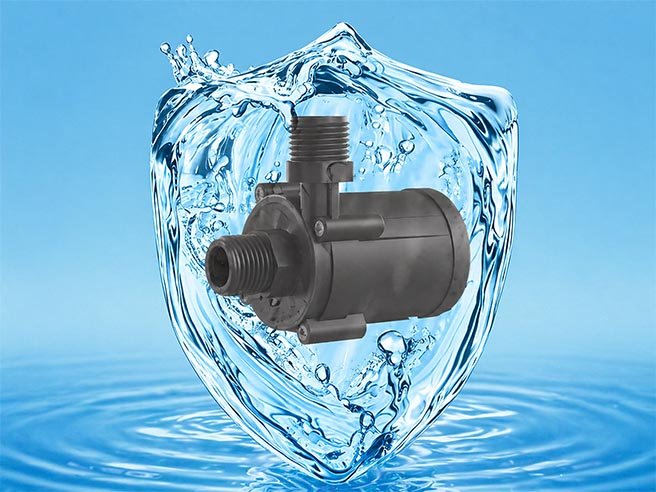
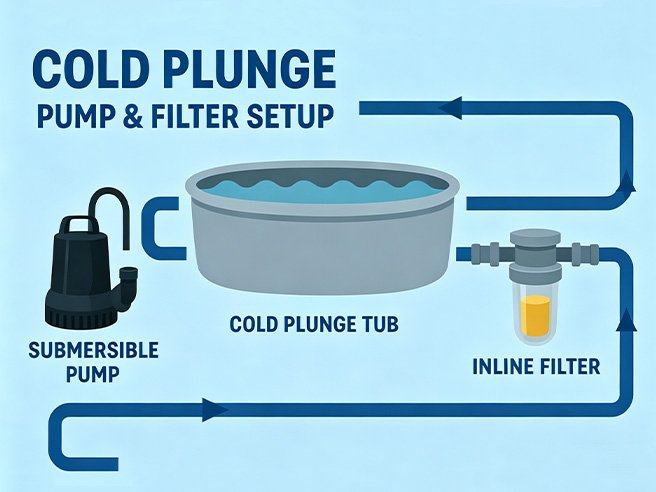
A chiller doesn’t magically pull water through itself. You need a pump.
And not just any pump.
The pump must match the chiller’s flow requirements. Too weak, and the chiller may not cool efficiently. Too strong, and you may create pressure problems, leaks, or filter issues.
Here’s the annoying part: pump specs often look simple, but real water flow changes once you add hose length, bends, filters, height difference, and fittings.
It’s like planning a road trip by only checking the distance, then forgetting traffic, tolls, hills, and that one friend who needs coffee every 40 minutes.
A decent pump adds cost. A quiet pump costs more. A reliable pump costs even more.
Hidden Cost 3: Hoses, Fittings, Clamps, and “One More Adapter”
This is where DIY gets sneaky.
You think you need two hoses.
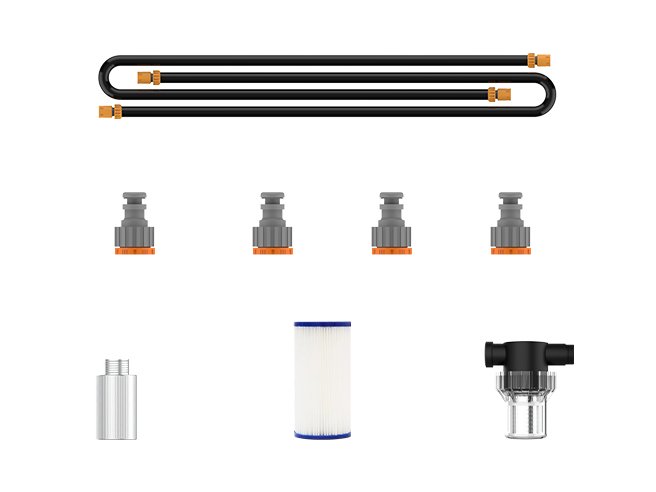
Then you realize the chiller outlet size doesn’t match the pump. The pump doesn’t match the filter. The tub needs bulkhead fittings. The hose kinks. The clamp leaks. The thread type is wrong.
So you buy:
- Extra tubing
- Hose clamps
- Thread adapters
- Waterproof sealant
- Bulkhead fittings
- Quick disconnects
- Replacement gaskets
- Teflon tape
- Drain valve parts
None of these are huge expenses alone.
But together? They add up fast.
And they also add frustration. A small leak near electrical equipment is not just annoying — it’s dangerous.
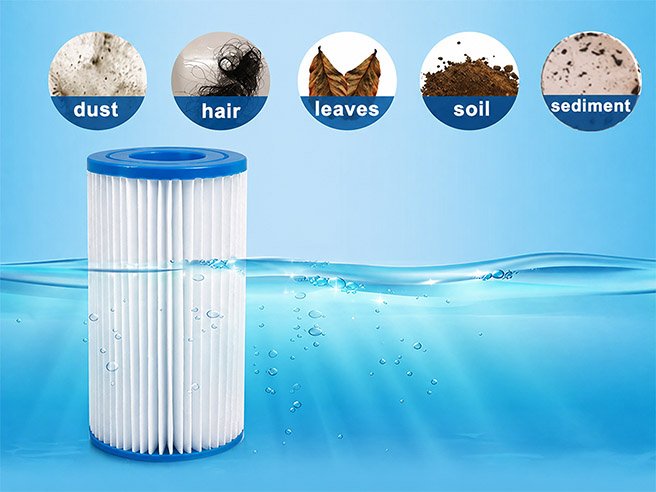
Hidden Cost 4: Filtration, Because Human Water Gets Gross Fast
Let’s say it plainly: ice bath water gets dirty.
Even clean athletes bring sweat, skin oils, lotion, sunscreen, hair, dirt, and bacteria into the tub. That’s normal. Bodies are bodies.
A DIY setup without filtration may look fine for a day or two, then smell stale, turn cloudy, or feel slimy. Not a great recovery vibe.
At minimum, you’ll need a filter. Better setups may include:
- Sediment filter
- Inline water filter
- Pump pre-filter
- UV sanitation
- Ozone or other sanitation method
- Regular cleaning schedule
A ready-made ice bath chiller may include filtration or sanitation features. Many DIY builds don’t. So the “missing” part becomes another purchase.
Hidden Cost 5: Water Treatment Supplies
Cold water slows some growth, but it doesn’t make water magically clean.
You still need to manage hygiene.
Depending on your setup, you may need cleaning tablets, oxidizers, filter replacements, or periodic draining. Some users try to run a tub with no sanitation and just hope for the best.
Bad idea.
That water touches your skin, your mouth by accident, and sometimes small cuts or irritated skin. A clean cold plunge feels crisp and refreshing. A dirty one feels like a science project with handles.
A DIY water chiller for ice bath use should include a real cleaning plan. Otherwise, the cost comes later — in water waste, bad smells, and constant maintenance.
Hidden Cost 6: Insulation Makes or Breaks the Setup
A chiller cools water.
Insulation helps keep it cold.
Without insulation, your chiller works harder, runs longer, uses more electricity, and wears faster. This matters even more if the tub sits outdoors, in a garage, or near sunlight.
You may need:
- Insulated tub cover
- Foam insulation
- Thermal blanket
- Wind protection
- Shaded placement
- Insulated hoses
It’s not glamorous. Nobody brags about hose insulation on Instagram.
But it matters.
A well-insulated setup can feel calm and efficient. A poorly insulated setup feels like leaving the refrigerator door open and wondering why the milk is warm.
Hidden Cost 7: Electricity Use
A DIY ice bath chiller runs on electricity, and electricity is not free.
The actual cost depends on your chiller size, local power rate, water volume, ambient temperature, insulation, and how often you plunge.
A small chiller may run longer because it struggles. A larger chiller may use more power per hour but cool faster. There’s a balance.
This is why buying the cheapest chiller can backfire. If it runs all day to hold the temperature, your monthly cost rises. Even worse, the compressor works harder, which may shorten its lifespan.
In simple words: weak cooling can become expensive cooling.
Hidden Cost 8: Noise
DIY systems can be noisy.
The chiller compressor hums. The pump vibrates. Water flows through hoses. If the setup sits in a bathroom, apartment balcony, garage gym, or shared training space, noise suddenly matters.
You may need:
- Rubber vibration pads
- A quieter pump
- Better placement
- Longer hoses
- Sound control
- Outdoor housing
Again, small things. But small things stack.
If you plan to use your cold plunge early in the morning, after training, or near living areas, don’t ignore sound. Recovery should feel peaceful, not like sitting beside a mini construction site.
Hidden Cost 9: Time
Time is the cost people forget because it doesn’t show up on a receipt.
DIY takes time to research, buy, install, test, fix, clean, and adjust.
You may spend hours figuring out:
- Why the water is not cooling fast
- Why the pump loses flow
- Why the filter clogs
- Why a fitting leaks
- Why the chiller shuts off
- Why condensation is pooling on the floor
- Why the tub smells strange after one week
Some people enjoy that. Really. They like tinkering.
But if you’re a coach, gym owner, athlete, or busy recovery user, your time has value. A DIY setup that saves $500 but eats 20 hours may not feel like a win.
Hidden Cost 10: Safety and Electrical Protection
Water and electricity are not a casual mix.
A DIY water chiller for ice bath use needs careful electrical planning. You should think about outlet protection, dry placement, cable management, splash control, grounding, and weather exposure.
This is not the place for “good enough.”
If the setup is outdoors, the risks grow. Rain, condensation, puddles, and extension cords can create problems. Even indoors, water can splash during entry and exit.
A safer setup may require:
- GFCI/RCD protection
- Outdoor-rated outlet
- Waterproof cable covers
- Elevated chiller placement
- Drip loops
- Professional electrical help
That last one matters. If you’re unsure, get help from a qualified electrician.
Saving money should not mean gambling with safety.
Hidden Cost 11: Condensation and Water Damage
Cold water creates condensation.
That sounds harmless until your floor gets wet. If the tub sits indoors, condensation can affect wood flooring, gym mats, walls, or nearby equipment.
You may need:
- Floor mat
- Drain tray
- Better ventilation
- Dehumidifier
- Outdoor placement
- Waterproof base
Some commercial cold plunge systems are designed with this in mind. DIY setups often are not.
It’s one of those boring details that suddenly becomes very interesting when water appears where it shouldn’t.
Hidden Cost 12: No Real Warranty for the Whole System
This is a big one.
When you build a DIY system, each part may have its own warranty. The chiller has one. The pump has another. The filter has another. The tub may have no meaningful support at all.
But nobody warranties the full system.
If the chiller fails because the pump flow was wrong, who is responsible? If the pump burns out because the filter clogged, is that covered? If water leaks because of a fitting you installed, who helps?
Usually, the answer is: you.
That doesn’t mean DIY is bad. It means you become the system designer, installer, service team, and warranty department.
Hidden Cost 13: Poor User Experience
This one sounds soft, but it matters.
A cold plunge should be easy enough that you use it often. If every session requires checking hoses, topping water, cleaning filters, resetting the chiller, and worrying about leaks, the habit starts to fade.
And let’s be honest — recovery tools only work when people use them.
A clunky DIY setup can slowly become garage furniture. Expensive garage furniture.
A good ice bath setup should feel simple:
Fill. Cool. Plunge. Recover. Repeat.
That’s the dream.
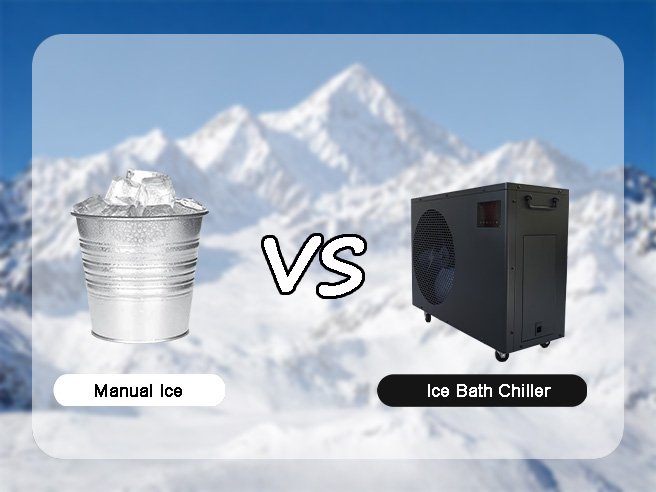
DIY vs Ready-Made Ice Bath Chiller: The Real Difference
A DIY chiller setup can be cheaper upfront.
A purpose-built ice bath chiller usually costs more upfront, but it may include better matching between cooling power, pump flow, filtration, sanitation, fittings, support, and daily use.
That’s the trade.
DIY gives flexibility. Ready-made gives convenience.
DIY gives lower entry cost. Ready-made gives fewer surprises.
DIY gives control. Ready-made gives peace of mind.
Neither is always right. The right choice depends on your use case.
When DIY Makes Sense
DIY may be a good fit if you:
- Enjoy building and troubleshooting
- Have basic plumbing and electrical knowledge
- Use the ice bath only occasionally
- Have a small tub
- Live in a cooler climate
- Don’t mind slower cooling
- Want the lowest possible starting cost
- Accept that support may be limited
For a hobby user who likes projects, DIY can be satisfying. You learn the system. You control the parts. You can upgrade over time.
There’s a certain pride in that.
When DIY Starts to Look Risky
DIY may not be the best choice if you:
- Need reliable daily cold plunges
- Run a gym, spa, recovery center, or sports club
- Want clean water with less effort
- Need fast cooling
- Have multiple users
- Use the tub outdoors in hot weather
- Care about warranty and service
- Don’t want to deal with leaks and wiring
For serious recovery, the system needs to behave like equipment, not a weekend experiment.
That’s especially true for commercial spaces. If customers are paying for cold plunge sessions, reliability is not a luxury. It’s the whole point.
The “Cheap” DIY Setup Can Still Cost More Than Expected
Let’s build a rough example.
You buy a low-cost chiller. Then add a pump, filter, hoses, fittings, insulation, sanitation supplies, waterproof electrical accessories, and replacement parts. Then maybe you replace the pump because it’s too loud. Then maybe you upgrade the filter. Then maybe the chiller cools too slowly, so you start shopping again.
Suddenly, the DIY setup doesn’t feel so cheap.
Not because you made a bad decision. Because water systems have layers.
And those layers cost money.
The Most Overlooked Question: How Cold Do You Actually Need It?
Many people chase the coldest possible temperature.
But colder isn’t always better.
For most recovery users, consistency matters more than extreme cold. A stable, repeatable temperature helps you build a habit and track how your body responds.
If your DIY chiller can only reach your target after 12 hours, that may be fine for one morning plunge. But if you train at different times, share the tub, or live somewhere warm, cooling speed becomes a real issue.
The better question is not “Can it cool water?”
The better question is: “Can it cool my water, in my tub, in my climate, on my schedule?”
That’s the question that saves money.
Don’t Forget the Tub
A DIY water chiller needs a tub that works with it.
A thin inflatable tub may lose cold faster. A basic plastic stock tank may need drilling. A bathtub may need creative hose routing. A wooden or acrylic tub may need proper fittings.
The tub affects:
- Water volume
- Cooling time
- Heat loss
- Comfort
- Cleaning
- Drainage
- Durability
- Installation difficulty
A great chiller connected to a poor tub still gives a poor experience.
Cold plunge systems are team sports. The chiller, pump, tub, filter, and insulation all need to work together.
What About Using Ice Instead?
Ice is simple.
You buy it, dump it, plunge, and repeat.
But over time, ice becomes expensive and annoying. You need storage, transport, bags, cleanup, and constant buying. For occasional users, ice may be fine. For frequent users, a chiller usually makes more sense.
Still, DIY chillers are not automatically better than ice. A poorly built DIY setup may cost more and frustrate you more than simply buying ice once in a while.
So again, it comes back to frequency.
If you plunge once a month, don’t overbuild.
If you plunge four times a week, think long term.
A Smarter Way to Compare Costs
Don’t compare only the chiller price.
Compare the total setup cost.
Ask:
- What is the water volume?
- What temperature do I want?
- How fast should it cool?
- Will it be indoors or outdoors?
- How many people will use it?
- What filtration is included?
- What sanitation is included?
- What parts are missing?
- Who fixes it if something fails?
- How much time will I spend maintaining it?
That list may feel slightly annoying.
Good. It should.
Because those questions reveal the real cost.
The Bottom Line: DIY Can Work, But It’s Not “Free Savings”
A DIY water chiller for ice bath use can be a smart project. It can save money. It can teach you a lot. It can work well when sized and installed correctly.
But the hidden costs are real.
Cooling power, pump flow, filtration, fittings, sanitation, insulation, electricity, safety, noise, condensation, and maintenance all matter. Ignore them, and the low upfront price may turn into a long, soggy headache.
So before you build, do the math. Not just the purchase price — the full system cost.
That’s where the truth lives.
FAQS:
1. Is a DIY Water Chiller for Ice Bath Cheaper Than Buying One?
A DIY water chiller for ice bath use is usually cheaper upfront, especially if you use a basic aquarium or hydroponic chiller. But the final cost can rise once you add a pump, filter, hoses, fittings, insulation, sanitation supplies, and safety upgrades. For light home use, DIY may save money. For daily or commercial use, a purpose-built ice bath chiller may offer better long-term value.
2. What Size DIY Water Chiller Do I Need for an Ice Bath?
The right DIY water chiller size depends on tub volume, target temperature, room temperature, insulation, and usage frequency. Small chillers may cool slowly or struggle in warm weather. For larger tubs or frequent cold plunge sessions, stronger cooling power is usually needed. A system that looks fine on paper may still underperform if the tub is poorly insulated or used outdoors.
3. Can I Use an Aquarium Chiller for a Cold Plunge Tub?
Yes, some people use aquarium chillers for cold plunge tubs, but it depends on the model and setup. Aquarium chillers are often designed for smaller, cleaner, more stable water environments. Ice bath water has more body heat, sweat, movement, and sanitation needs. If you use one, make sure the cooling capacity, flow rate, filtration, and safety setup match your cold plunge use.
4. What Are the Biggest Hidden Costs of a DIY Ice Bath Chiller Setup?
The biggest hidden costs of a DIY ice bath chiller setup are usually the pump, filter, fittings, hoses, insulation, sanitation supplies, electrical safety upgrades, and replacement parts. Time is another major cost. Testing leaks, fixing weak flow, cleaning filters, and adjusting cooling performance can take more effort than expected.
5. Is a Ready-Made Ice Bath Chiller Better Than DIY?
A ready-made ice bath chiller is often better for users who want reliable cooling, cleaner water, easier setup, and stronger support. DIY can work well for hands-on users who enjoy building and adjusting systems. For gyms, wellness centers, recovery rooms, and serious athletes, a purpose-built chiller is usually the safer and more practical choice.
For a cleaner, safer, and easier cold plunge setup, contact CHILLMEND to learn about professional ice bath chiller solutions built for real recovery use — not guesswork, leaks, and weekend frustration.