
Quick Outline (So You Know Where We’re Going)
- Why setup matters more than you think
- What you need before you start
- Step-by-step installation (simple, no guesswork)
- Common mistakes (and how to avoid them)
- Pro tips for performance and longevity
- FAQs
- Final thoughts + how CHILLMEND can help
Ice Bath Chiller Setup: Installation Guide
Let’s be honest—buying a cold plunge chiller is the easy part. Setting it up? That’s where things either click… or quietly go wrong.
You might be thinking: “It’s just plug-and-play, right?”
Well, yes—and no.
A proper setup doesn’t just get your system running. It determines cooling speed, water cleanliness, and even how long your machine lasts. Mess it up, and you’ll feel it—slow cooling, strange noises, maybe even maintenance headaches down the line.
So let’s walk through this like we’re setting it up together in your garage or gym.
Before You Even Touch the Chiller… (Prep Matters More Than You Think)
Here’s the thing—most setup problems don’t start during installation. They start before.
Take five minutes to check these basics:
- Flat, stable ground
Your chiller isn’t a fan of wobbling. Uneven surfaces can affect internal components over time. - Proper ventilation space
Leave at least 60–100cm(24-29 inches) around the unit. These machines need airflow like athletes need oxygen. - Power supply check
Make sure your voltage matches. (This sounds obvious… but it’s one of the most common mistakes.) - Water source nearby
You’ll be filling, draining, and maybe refilling occasionally. - Tub compatibility
Not all tubs are created equal. Ensure your inlet/outlet ports align with your chiller connections.
Honestly, skipping this step is like building a house without leveling the foundation.
Step 1: Position the Chiller (Location = Performance)
Place your chiller close to your ice bath tub—but not too close.
Why?
- Too far → reduced flow efficiency
- Too close → awkward hose bending and airflow restriction
Aim for about 1–1.5 meters distance.
Also, keep it:
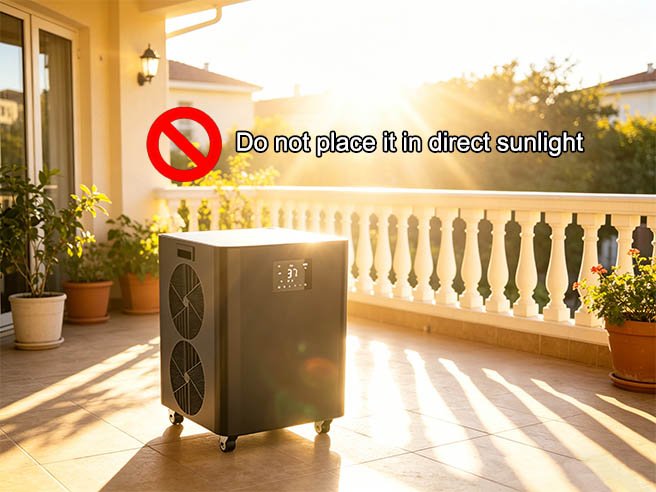
- Out of direct sunlight
- Away from rain (unless it’s rated for outdoor use). All CHILLMEND models are designed for outdoor use, and the radiator can be directly rinsed without damaging the unit.
- In a well-ventilated area
You know what? Think of it like parking a high-performance car—you wouldn’t leave it in a cramped, overheated corner.
Step 2: Connect the Water Hoses (Simple but Critical)
This is where things start to feel real.
Most systems have:
- Water OUT (from chiller → tub)
- Water IN (from tub → chiller)
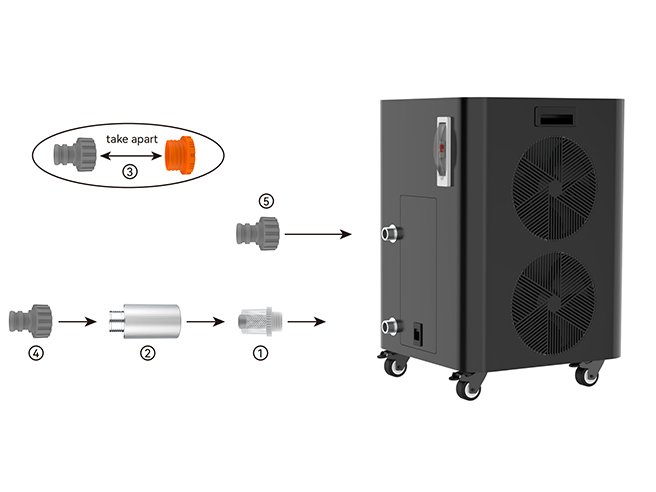
- CHILLMEND ice bath chillers cleverly integrate an impurity filter at the water inlet. This unique design greatly enhances convenience for the water purification system, and is exclusive in the industry.
Here’s the flow logic:
Tub → Chiller → Tub
Sounds obvious—but people still reverse it.
Installation tips:
- Tighten connections firmly (but don’t overdo it)
- Use sealing tape if needed
- Avoid sharp bends in hoses
A kinked hose is like a blocked artery—your system can’t circulate properly.
Step 3: Fill the System with Water
Now fill your tub.
But here’s the detail many skip:
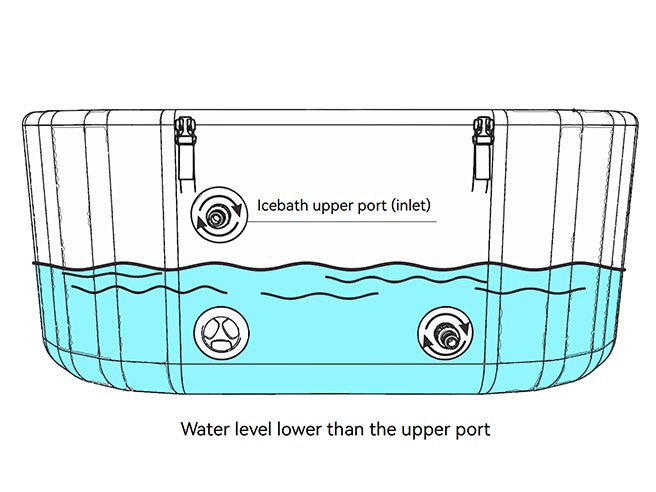
Fill until water fully covers the inlet/outlet ports
If not, air gets into the system—and that leads to:
- Poor circulation
- Pump strain
- Weird noises
Take your time here. This step sets the tone for everything else.
Step 4: Prime the System (Yes, This Matters)
Before turning on cooling, you need to ensure water is flowing properly.
How to do it:
- Turn on the pump only (if separate)
- Let water circulate for 1–2 minutes
- Check for bubbles or interruptions
No flow = stop immediately and recheck connections.
Think of this like warming up before a workout. Skip it, and things don’t perform the same.
Step 5: Power On the Chiller
Now comes the satisfying part.
- Plug in the unit
- Turn on the system
- Set your target temperature
Most users go for:
- 8–12°C (46–54°F) for recovery
- Lower if you’re more experienced
Don’t expect instant results. Depending on your setup, it may take:
- 30 minutes to a few hours
And that’s normal.
Step 6: Monitor the First Cooling Cycle
Stay with your system for the first run.
Look for:
- Smooth water flow
- No leaks
- Stable temperature drop
- Normal sound levels
If something feels off, trust your instinct.
A well-set system feels… effortless. No drama, no surprises.
Common Setup Mistakes (Let’s Save You the Headache)
You’d be surprised how often these happen:
Reversed water flow
Leads to inefficient cooling—or no cooling at all.
Poor ventilation
Overheating = reduced lifespan.
Air trapped in the system
Causes noise and weak performance.
Using the wrong hose size
Affects flow rate and efficiency.
Ignoring water quality
Dirty water = clogged filters = maintenance issues.
Honestly, most “chiller problems” aren’t product issues—they’re setup issues.
Pro Tips (This Is Where You Get Ahead)
Let me share a few things experienced users do differently:
Add a filtration system
Keeps water clean longer and reduces maintenance.
Use a cover for your tub
Less heat gain = faster cooling cycles.
Keep ambient temperature in mind
Hot environment? Your chiller works harder.
Slightly oversize your chiller
Especially for commercial use—it gives you breathing room.
Regularly check connections
Small leaks turn into big problems if ignored.
It’s like maintaining gym equipment—you don’t wait until it breaks.
Why Setup Quality Affects Long-Term Performance
Here’s something people don’t talk about enough.
A properly installed system:
- Cools faster
- Uses less energy
- Requires less maintenance
- Lasts longer
A poorly installed one?
It works… but never quite right.
Kind of like running in shoes that don’t fit—you can do it, but you’ll feel it every step.
FAQs
1. How long does it take to set up an ice bath chiller system at home?
Most users can complete a full ice bath chiller setup in 20–40 minutes, depending on experience and equipment. The key is careful hose connection and proper system priming.
2. Do I need a professional to install an ice bath chiller?
No, most modern systems are designed for easy DIY installation. However, commercial setups or high-power units may benefit from professional assistance.
3. Why is my ice bath chiller not cooling efficiently after setup?
This often comes down to air in the system, incorrect hose connections, or poor ventilation. Double-check flow direction and ensure proper circulation.
4. What is the ideal temperature setting for recovery using an ice bath chiller?
For most users, 8–12°C (46–54°F) provides effective recovery benefits without excessive discomfort.
5. Can I install an ice bath chiller outdoors?
Yes, but only if the unit is rated for outdoor use. Otherwise, protect it from rain, dust, and direct sunlight to maintain performance and lifespan.
Final Thoughts (And a Straightforward Next Step)
Setting up an ice bath chiller isn’t complicated—but doing it right makes all the difference.
You’re not just installing a machine. You’re building a recovery system. One that should work quietly, efficiently, and reliably every single day.
And if you’re thinking:
“I’d rather not figure this out alone…”
That’s exactly where CHILLMEND comes in.
We don’t just supply ice bath chillers—we help you set up systems that actually perform the way they should. Whether you’re a gym owner, distributor, or serious athlete, we’ll guide you from selection to installation and beyond.
Ready to build a reliable ice bath setup that works from day one? Reach out to CHILLMEND and let’s get your system dialed in properly.