
Brief Outline
- Why power and size matter
- How HP affects cooling
- Tub volume matching
- Home vs gym choices
- Filtration and safety
- Buying checklist
- Mistakes to avoid
- FAQs
- CTA
Water Chiller for Cold Plunge: Shop by Power & Size
Buying a water chiller for ice bath recovery sounds simple at first. You pick a machine, connect it to a tub, set the temperature, and enjoy cold water without bags of ice.
Nice idea, right?
But here’s the thing: not every ice bath chiller fits every tub, every climate, or every user. A small home cold plunge on a balcony does not need the same cooling power as a busy recovery center with athletes jumping in all day. A 100L tub behaves very differently from a 400L commercial plunge. Water volume matters. Ambient temperature matters. Usage frequency matters too.
So, instead of shopping only by price, shop by power and size. That’s where the real value sits.
For a full product overview, you can also visit CHILLMEND Ice Bath Chiller.
Why Power and Size Matter More Than Most People Think
A water chiller for ice bath use has one main job: to pull heat out of water and keep the water cold. Sounds basic. But cold water is stubborn. Once the tub is filled, every person entering it adds body heat. Warm weather adds heat. Sunlight adds heat. Even the tub material can affect temperature holding.
That’s why chiller power is not just a number on a product page.
A lower-power chiller may be fine for occasional home use. It can keep a small tub cold and save energy when demand is light. But ask that same unit to cool a large tub in a hot gym room, and it may run too long, cool too slowly, or fail to hold the target temperature during peak use.
A higher-power chiller gives faster cooling and stronger temperature recovery. It’s like using a stronger air conditioner in a bigger room. You don’t always need the biggest one, but you do need the right one.
Shop by Power: What HP Really Means
Most ice bath chillers are described by horsepower, often written as HP. Common options include 1/3 HP, 1/2 HP, 1 HP, and higher commercial levels.
Here’s a simple way to think about it:
- 1/3 HP ice bath chiller: Good for small home tubs, light use, and users who do not need very fast cooling.
- 1/2 HP ice bath chiller: A balanced choice for many home users who want better cooling speed and more stable temperature.
- 1 HP ice bath chiller: Better for larger tubs, warm climates, gyms, wellness studios, and users who want professional-grade recovery.
- 1.5 HP to 2 HP ice bath chiller: Built for commercial or high-volume use, especially when the tub is large or used many times per day.
Honestly, many buyers make the mistake of buying too small. They think, “Cold is cold.” But no. Cooling water is a workload. If the chiller is underpowered, the machine works harder, runs longer, and may not give the smooth recovery experience you expected.
For commercial users, check Commercial Ice Bath Chiller Solutions.
Shop by Tub Size: Match the Chiller to Water Volume
Tub size is one of the easiest ways to choose the right water chiller for ice bath use.
A small portable tub may only hold 100–150L of water. A larger cold plunge may hold 200–350L. Commercial tubs may go even higher, especially if they are designed for tall athletes or frequent use.
As a rough guide:
- Under 150L: 1/3 HP can work for personal use.
- 150–250L: 1/2 HP or 1 HP gives better comfort and speed.
- 250–400L: 1 HP is usually the safer choice.
- 400L+ or commercial use: 1.5 HP or 2 HP may be needed.
But size is only half the story. A 250L tub indoors in a cool room is easier to manage than a 250L tub outdoors in summer heat. So, if your setup will be on a balcony, patio, garden, or gym floor with heavy foot traffic, give yourself more cooling capacity.
That extra power is not wasted. It’s breathing room.
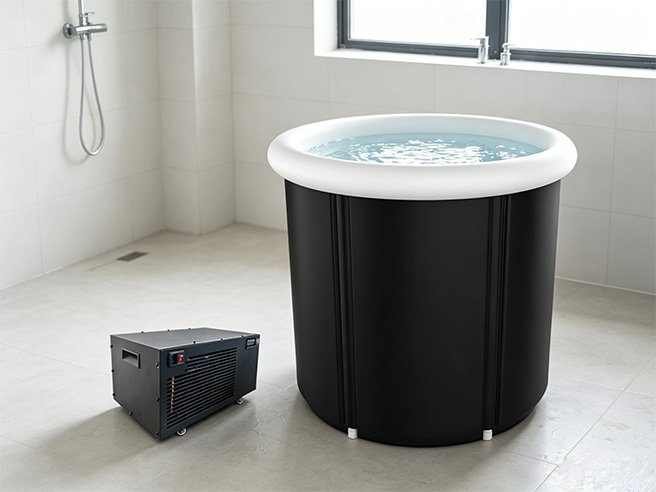
Home Users: Don’t Overbuy, But Don’t Go Too Small
For home recovery, the best water chiller for ice bath use should feel easy. You want quiet operation, stable temperature, clean water, and simple maintenance.
If you use cold therapy three to five times per week, a compact unit may be enough. If you train daily, live in a hot area, or prefer colder settings around 3–8°C, a stronger chiller makes more sense.
You know what? Comfort matters here. Not soft comfort, but practical comfort. Nobody wants to wait half a day for water to cool. Nobody wants cloudy water. Nobody wants a machine that sounds like workshop equipment next to the bathroom.
For home buyers, look for:
- Proper cooling power for your tub volume.
- Built-in filtration or easy filter connection.
- Safe waterproof design for indoor or outdoor use.
- Quiet operation if used near bedrooms, bathrooms, or living areas.
- App control or timer settings if you want hands-off use.
If you want a full system instead of matching parts yourself, see Ice Bath Tub with Chiller Packages.
Gym and Recovery Center Buyers: Think About Recovery Speed
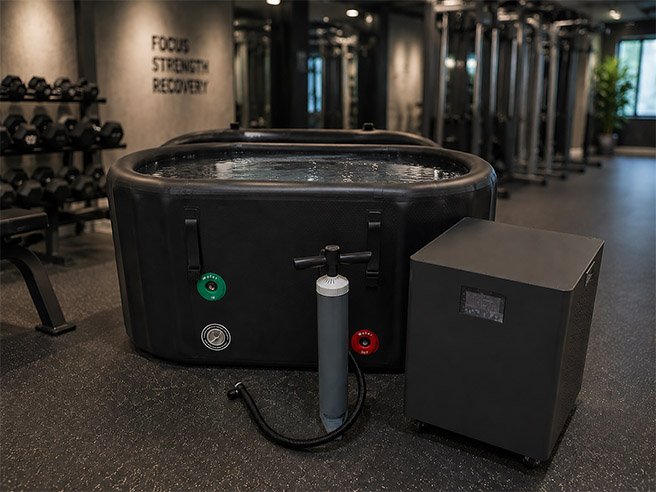
For gyms, spas, sports clubs, and recovery centers, the chiller has to do more than cool water once. It must recover temperature again and again.
That’s the difference.
One athlete gets in. The water warms slightly. Then another athlete gets in. Then another. If the chiller is weak, the tub slowly drifts warmer. By the afternoon, your “cold plunge” may feel more like a cool bath. Not great for the customer experience.
A 1 HP or higher ice bath chiller is usually better for commercial setups because it can handle larger water volumes and heavier heat loads. It also gives staff fewer headaches. The system runs, filters, cools, and keeps the experience consistent.
For business buyers, the right chiller protects your brand image. Clean, cold, stable water feels professional. Warm, cloudy, unstable water does not.
Simple as that.
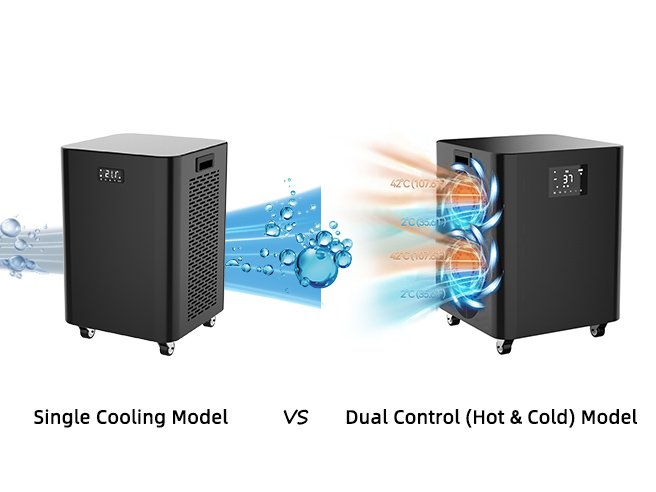
Cold-Only or Hot-and-Cold Chiller?
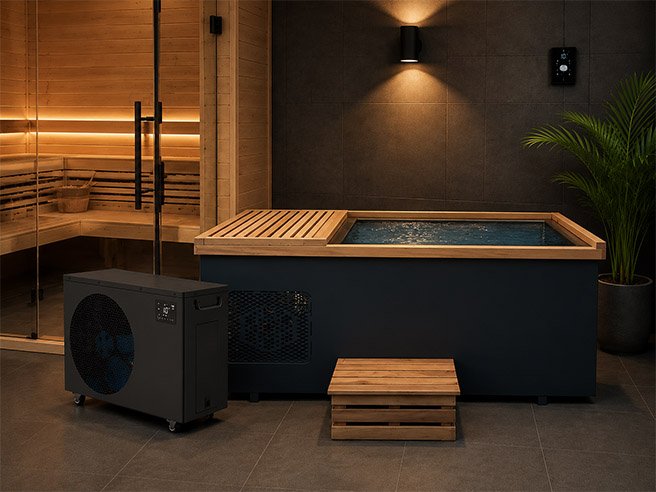
Some water chillers are cold-only. Others offer both cooling and heating. Which one should you choose?
A cold-only chiller is often enough if your brand focuses only on cold immersion, athletic recovery, or contrast with a separate sauna. It can be simpler and cost-effective.
A hot-and-cold system gives more flexibility. It can support cold plunges, warm water sessions, contrast therapy, and seasonal use. For wellness centers and hotels, that flexibility may create more service options.
For home users, hot-and-cold can also be convenient in winter. Not everyone wants freezing water every day. Sometimes you want control, not punishment.
Filtration Is Not a Bonus — It’s Part of the System
A good water chiller for ice bath use should not only cool the water. It should help keep the water clean.
Cold water still needs filtration. Sweat, hair, skin oils, dust, and outdoor particles can enter the tub. Without filtration, water quality drops fast. This matters even more for shared tubs.
Look for systems with:
- Particle filtration.
- Hair trap or pre-filter.
- UV sterilization is available.
- Easy drain and cleaning design.
- Clear maintenance access.
CHILLMEND ice bath chiller systems can include advanced filtration options, UV sterilization, and smart control, depending on the model. For users who care about long-term operation, these details matter more than a shiny product photo.
Indoor vs Outdoor Use: Size Up Carefully
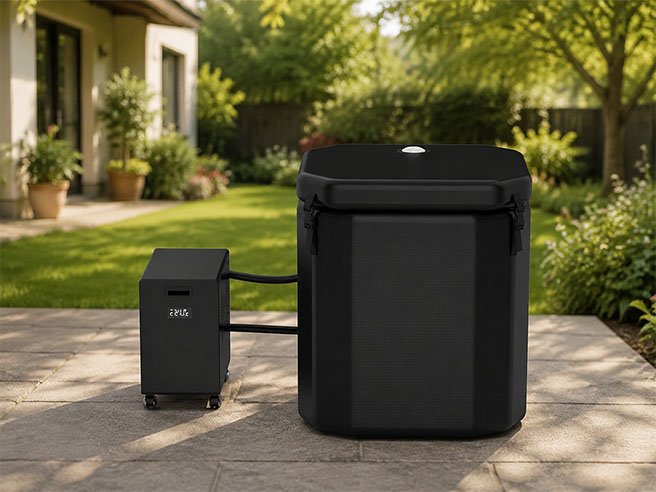
Outdoor setups are popular. A cold plunge in the garden, on a balcony, or beside a sauna looks great. But outdoor use brings extra pressure.
Sunlight warms the tub. Wind carries dust. Summer air pushes the chiller harder. Rain and splash risk also matter.
If you plan outdoor use, choose a chiller with proper waterproof protection and enough power for your climate. A small chiller that works indoors may struggle outside during hot months.
For outdoor and semi-outdoor buyers, consider a stronger unit than the minimum recommendation. It’s a bit like buying shoes for hiking. City sneakers might work on a flat path, but once the trail gets muddy, you’ll wish you had better gear.
Energy Efficiency: Bigger Is Not Always More Expensive
Here’s a mild contradiction: a larger chiller can sometimes be the smarter energy choice.
Why? Because an underpowered chiller may run for a long time. A properly sized chiller can cool faster, reach the target temperature sooner, and then cycle more efficiently. Of course, this depends on insulation, ambient temperature, water volume, and settings.
So don’t judge energy use by HP alone. Judge it by workload.
A well-matched water chiller for ice bath use should cool efficiently, hold temperature steadily, and avoid constant overwork. Good insulation also helps a lot. A covered tub loses less cold, keeps water cleaner, and reduces machine stress.
Common Buying Mistakes
The biggest mistake is buying only by price.
A cheap chiller that cannot cool your tub properly is not cheap. It becomes expensive through frustration, slow cooling, poor user experience, and possible early wear.
Other common mistakes include choosing a chiller without checking tub volume, ignoring local climate, forgetting filtration, using poor hose connections, placing the unit in a tight space with poor airflow, and expecting a home-use unit to perform like a commercial machine.
Let me explain that last one. A small home chiller is not bad. It’s just built for a lighter job. Problems start when the job is bigger than the machine.
Quick Buying Checklist
Before buying, ask:
- How many liters of water does my tub hold?
- Will I use it indoors or outdoors?
- How often will people use it each day?
- What temperature do I want to maintain?
- Is this for personal recovery or commercial use?
- Do I need heating too?
- Does the chiller include filtration and UV?
- Is the unit easy to clean and maintain?
- Does the supplier offer OEM or ODM support if I’m building a brand?
For brand owners, gyms, and distributors, CHILLMEND also supports OEM and ODM Ice Bath Chiller Manufacturing.
Final Recommendation: Match the Machine to the Real Job
If your setup is small, personal, and indoors, a compact water chiller may be enough. If your tub is larger, your climate is hot, or your usage is frequent, move up in power.
For most serious home users, 1/2 HP to 1 HP is a safer range. For gyms and recovery centers, 1 HP and above usually makes more sense. For commercial, multi-user, or large-volume setups, don’t guess. Match the chiller to water volume, use frequency, and cooling target.
Cold therapy works best when the system feels reliable. Set it. Chill it. Use it. Repeat.
That’s the goal.
FAQs:
1. What size water chiller for ice bath do I need for home use?
For most home ice bath setups, a 1/3 HP to 1/2 HP water chiller can work well for smaller tubs under 200L. If your tub is larger, used daily, or placed outdoors, a 1 HP ice bath chiller gives faster cooling and better temperature stability.
2. Is a 1 HP water chiller enough for a commercial ice bath?
Yes, a 1 HP water chiller is often suitable for commercial ice bath use, especially for 200–350L tubs in gyms, spas, and recovery centers. For larger tubs or heavy daily use, a 1.5 HP or 2 HP model may be a better long-term choice.
3. How do I choose an ice bath chiller by tub size?
Start with your tub volume. Small tubs under 150L may use 1/3 HP. Medium tubs around 150–250L may need 1/2 HP or 1 HP. Large tubs above 250L usually perform better with 1 HP or higher, especially in warm rooms or outdoor spaces.
4. Does a stronger ice bath water chiller cool faster?
Yes, a stronger ice bath water chiller usually cools faster because it removes heat from the water more quickly. Cooling speed also depends on water volume, starting temperature, room temperature, insulation, and whether the tub has a cover.
Should I buy a cold-only or hot-and-cold water chiller for ice bath recovery?
Choose a cold-only water chiller if your main goal is cold plunge recovery. Choose a hot-and-cold ice bath chiller if you want more flexible use, seasonal comfort, or contrast therapy options for a gym, spa, wellness center, or premium home setup.
Ready to choose the right power and size for your cold plunge project? Contact CHILLMEND to compare ice bath chiller models, match your tub volume, and build a reliable recovery system for home, gym, spa, or OEM/ODM business use.