
An ice bath feels simple from the outside. Cold water, tired legs, deep breath, maybe a little regret in the first ten seconds.
But behind that clean recovery moment, there’s one practical question every smart buyer asks:
How much electricity does an ice bath chiller actually use?
Fair question.
Whether you’re setting up a cold plunge at home, running a gym recovery room, or planning a full wellness center, energy consumption matters. It affects your monthly cost, your machine choice, your tub size, and even how often you’ll use the system. A chiller that looks cheap on day one can become expensive if it runs too hard every day.
So let’s break it down in plain English.
An ice bath chiller does not use the same amount of power all day. It works harder when cooling warm water down, then uses less energy once the water reaches the set temperature. Think of it like a refrigerator. The first cooling phase takes effort. Holding cold temperature is much easier — as long as the system is sized correctly.
If you’re still comparing models, start with this related guide: <Water Chiller for Ice Bath>.
Brief Outline
- Energy consumption basics
- What affects power use
- HP vs kW
- Real cost examples
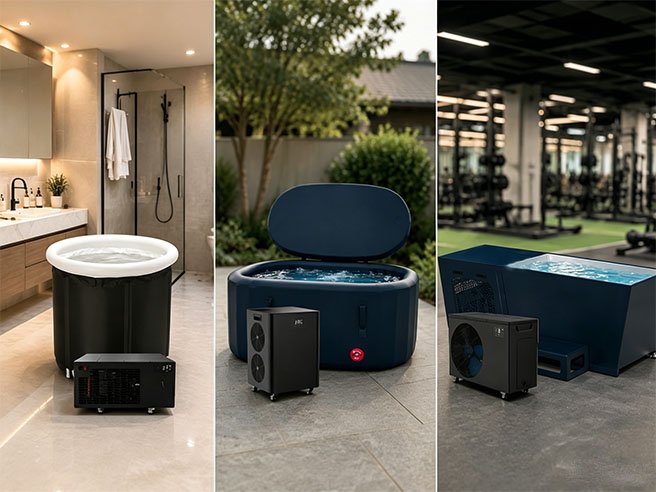
- Home vs gym use
- Cooling vs maintaining temperature
- How to reduce electricity costs
- Buying checklist
- FAQs
- CHILLMEND CTA
What Does Ice Bath Chiller Energy Consumption Really Mean?
Ice bath chiller energy consumption means how much electricity the unit uses during operation. Usually, this is measured in watts, kilowatts, and kilowatt-hours.
Here’s the simple version:
- Watts (W) show how much power the chiller draws while running.
- Kilowatts (kW) are watts divided by 1,000.
- Kilowatt-hours (kWh) show how much electricity is used over time.
For example, if a chiller uses 800 watts for one hour, it uses 0.8 kWh. If your electricity rate is $0.20 per kWh, that one hour costs about $0.16.
Not scary, right?
But here’s the thing. The real cost depends on how often the compressor runs, how large your tub is, how warm the room is, and what temperature you set. A 1 HP ice bath chiller in a hot outdoor area may use far more energy than the same unit inside a cool recovery room.
That’s why energy consumption is never just one number. It’s a behavior pattern.
Cooling Down vs Holding Cold: The Big Difference
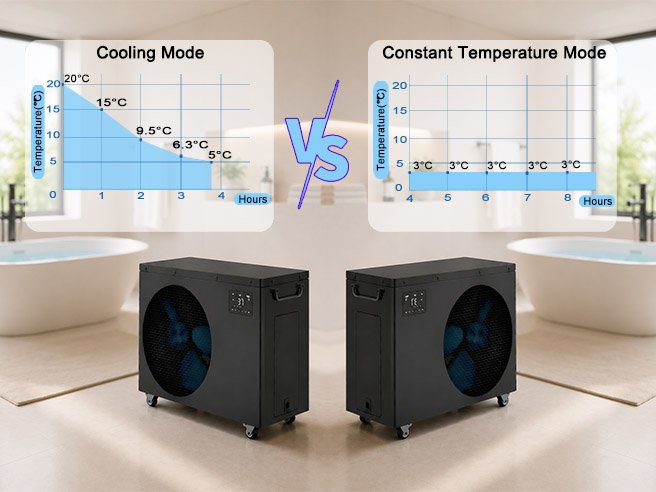
This is where many buyers get confused.
An ice bath chiller has two main jobs:
- Pull heat out of warm water
- Keep the water cold after it reaches the target temperature
The first job uses more energy. The second job uses less.
Let’s say your tub has 300L of water at 25°C, and you want to bring it down to 10°C. The chiller has to remove a lot of heat. During this stage, the compressor may run for hours.
Once the water reaches 10°C, the chiller only needs to fight against heat coming from the room, sunlight, tub wall, hoses, pump movement, and user body heat. That holding stage is usually much lighter.
Honestly, this is why a well-sized chiller feels so different from an underpowered one. A weak unit runs and runs, like a small scooter trying to tow a truck. A properly sized unit cools faster, rests more often, and keeps the water stable.
For sizing help, see <What Size Ice Bath Chiller Do You Need>.
How Much Power Does an Ice Bath Chiller Use?
Most ice bath chillers fall into a rough range based on horsepower.
A small home-use unit, such as a 1/3 HP ice bath chiller, may draw lower power and suit smaller tubs. A 1 HP ice bath chiller has a stronger cooling capacity and usually fits larger tubs, commercial use, or faster cooling needs. Higher-power systems are often used for gyms, spas, recovery centers, and high-frequency use.
A rough guide:
- 1/3 HP ice bath chiller: suitable for small home tubs and light use
- 1/2 HP ice bath chiller: better for regular home recovery and medium tubs
- 1 HP ice bath chiller: strong choice for larger tubs, outdoor use, and commercial recovery
- 1.5 HP to 2 HP chiller: used for bigger systems, fast turnover, or professional settings
But don’t judge only by HP.
Two chillers with the same HP can have different energy performance. Compressor design, heat exchanger quality, pump efficiency, airflow, insulation, controller logic, and filter condition all matter.
A cheap chiller may say “1 HP,” but if it has poor heat exchange, weak protection, or bad airflow, it may run longer and cost more over time. That’s the little trap hiding in many low-cost units.
Why Tub Size Changes Everything
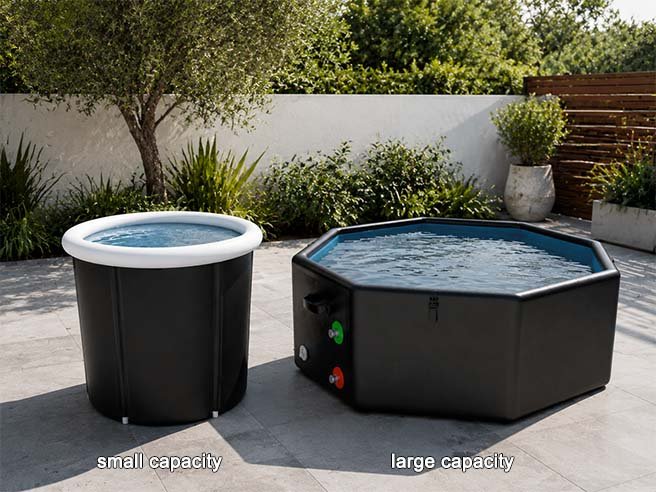
Water volume is one of the biggest factors in ice bath chiller energy consumption.
Cooling 150L is not the same as cooling 500L. More water means more heat to remove. More heat means longer runtime. Longer runtime means more electricity.
Simple.
But there’s a useful side note. Once a large tub is cold, it can sometimes hold temperature more steadily than a tiny tub because the water mass changes temperature slowly. Still, the first cooling cycle needs more power.
For example:
A 200L tub in an indoor room may cool fairly quickly with a mid-range chiller. A 500L tub placed outdoors in summer will need more machine power and more energy. Add direct sun, warm ground, and poor insulation, and the chiller starts working much harder.
That’s why commercial buyers should not choose the smallest chiller just to save money. It may save money on the invoice, but it loses money every month.
Ambient Temperature: The Silent Energy Thief
Ambient temperature means the temperature around the tub and chiller.
And yes, it matters a lot.
If your chiller sits in a cool indoor room, it can release heat more easily. If it sits outdoors in hot weather, the system has to work harder. The compressor runs longer. The fan runs more. The whole system feels the heat.
Sunlight is another sneaky problem. A black tub sitting under full sun can absorb heat like a frying pan. The water warms faster, and the chiller keeps fighting back.
You know what? Sometimes the best energy-saving move isn’t buying a bigger machine. It’s simply moving the tub into shade, adding a cover, improving airflow, or using better insulation.
Small change. Big difference.
Set Temperature: 4°C Is Not the Same as 12°C
The colder you set the water, the more energy the chiller usually needs.
Keeping water at 12°C is easier than holding it at 4°C. That lower temperature requires more compressor work, especially in warm rooms or outdoor spaces.
For most recovery users, common cold plunge temperatures sit around 10°C to 15°C. Some athletes prefer colder sessions, while beginners may start higher. The “best” temperature depends on tolerance, recovery goals, session length, and safety.
But from an energy point of view, every degree lower can add work.
So if you don’t need extreme cold, don’t force the machine to chase it every day. A stable 10°C to 12°C setup may give a strong recovery experience while keeping power use more reasonable.
Related reading: <Ice Bath Temperature Guide>.
Home Use Energy Cost: What Should You Expect?
For home users, the monthly electricity cost of an ice bath chiller is usually manageable when the system is sized well and used properly.
Let’s use a simple example.
Suppose your chiller averages 1 kWh per day during normal maintenance. If your electricity cost is $0.20 per kWh, that’s about $0.20 per day, or around $6 per month.
If your system averages 3 kWh per day, that becomes about $18 per month.
Of course, this changes based on local energy rates, weather, tub size, and use habits. But the important point is this: a chiller is usually much cheaper and cleaner than buying bags of ice over and over.
Ice feels cheap when you buy one bag. It doesn’t feel cheap after 30 days.
Gym and Recovery Center Energy Cost
For gyms, wellness studios, and recovery centers, energy use becomes more serious.
Why?
Because the tub is used more often, more bodies enter the water. Each person adds heat. The cover may stay open longer. Staff may clean and refill more often. The system may run many hours per day.
A commercial ice bath chiller needs enough cooling power to recover temperature quickly between users. If the water warms up after every session and takes too long to cool back down, the user experience drops fast.
Nobody wants to book a “cold plunge” and step into lukewarm water.
For commercial use, energy efficiency isn’t only about saving electricity. It’s about stable service quality, faster turnover, and less stress on the machine. A stronger, well-built chiller may cost more upfront, but it often makes more sense for daily business use.
For commercial setups, check <Best Ice Bath Chiller for Gyms & Recovery Centers>.
Does a Bigger Chiller Always Use More Electricity?
Not always. This sounds strange at first, but let me explain.
A bigger chiller may draw more power while running. However, it may finish cooling faster and rest more often. A smaller chiller may draw less power but run almost nonstop.
So the real question is not just “How many watts?”
The better question is:
How long does it take to do the job?
This is similar to driving uphill. A stronger engine may climb smoothly and finish the job without strain. A weak engine may scream the whole way and burn more fuel than expected.
For ice bath chillers, proper sizing is the sweet spot. Too small is stressful. Too large can be unnecessary. Right-sized is where energy, performance, and lifespan meet.
Ice Bath Chiller vs Bags of Ice: The Cost Story
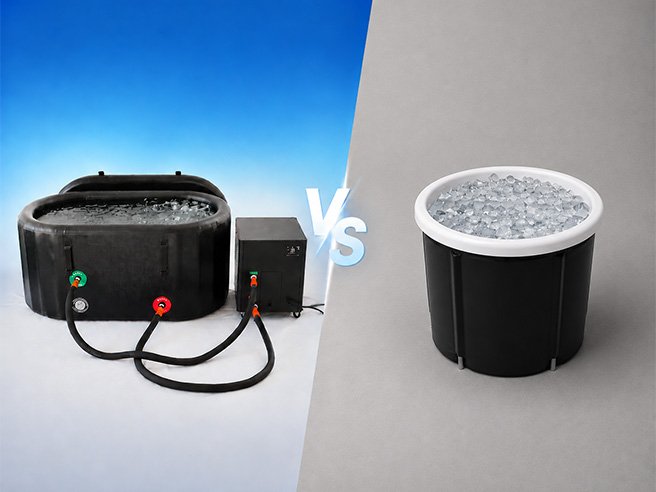
Traditional ice baths look simple, but the cost adds up fast.
You need to buy ice, transport it, store it, pour it, clean the melted water, and repeat the whole routine again. It’s fine once in a while. It’s annoying every week. For gyms, it becomes a labor problem too.
A chiller changes the setup.
Instead of throwing ice into the tub, you cool the same water again and again, with filtration and sanitation support depending on the system. That means lower daily hassle and more stable temperature control.
For serious users, the question often becomes less about “Can I afford a chiller?” and more about “How much time and ice money am I wasting without one?”
Related guide: <Ice Bath Chiller vs Traditional Ice Tub>.
What Makes an Ice Bath Chiller More Energy Efficient?
Energy efficiency depends on engineering, not just marketing words.
A good chiller should move heat out of water quickly, protect the compressor, control temperature smartly, and keep water flowing smoothly. When one part is weak, the whole system pays for it.
Important factors include:
- Compressor quality: A reliable compressor cools better and handles long use with less strain. Poor compressors may run longer, get hotter, and wear faster.
- Heat exchanger design: This part transfers heat from water to the cooling system. Better heat exchange means faster cooling and shorter runtime.
- Pump flow rate: Water must circulate well. If the flow is weak, cooling becomes uneven and inefficient.
- Filter condition: A dirty filter reduces water flow. Reduced flow makes the chiller work harder. Clean filters are boring, yes, but they save money.
- Tub insulation: A well-insulated tub loses cold more slowly. That means fewer compressor cycles.
- Cover quality: A good cover blocks heat gain and keeps debris out.
- Airflow around the chiller: Chillers need space to breathe. Blocked vents increase energy use and may shorten lifespan.
It’s not one magic feature. It’s the whole system working together.
Why Filtration Also Affects Energy Consumption
Many people think filtration only affects water cleanliness. Not quite.
Filtration also affects energy use because water flow affects heat transfer.
If the filter is clogged, the pump works harder. Water moves more slowly. The heat exchanger receives less water. The chiller may need more time to reach the set temperature.
That means more runtime.
So yes, maintenance is part of energy savings. Clean the filter. Check hoses. Keep hair and debris out of the system. Don’t let the machine suffer because of a five-minute job.
A system with proper filtration, UV sanitation, and smart water circulation can help keep water cleaner and performance steadier. For regular users, that’s not a luxury. It’s peace of mind.
Indoor vs Outdoor Use: Which Costs More?
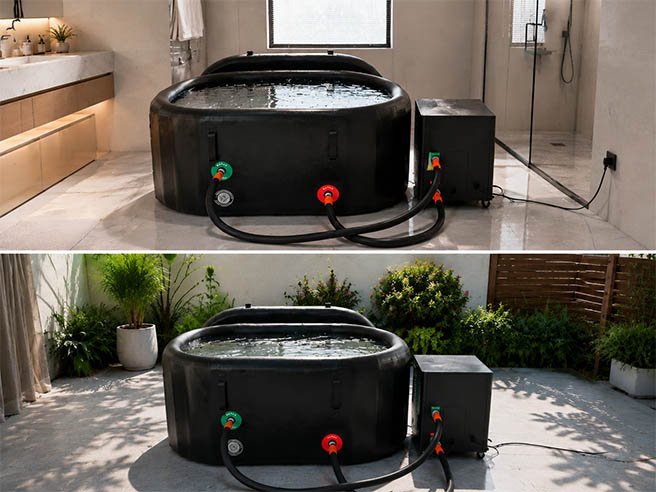
Outdoor use usually costs more.
Not always, but often.
Why? Because outdoor setups face sunlight, wind, rain, dust, insects, changing temperatures, and heat gain from the ground or deck. The chiller may also deal with higher ambient temperatures during summer.
Indoor setups are more stable. The room temperature changes less. The tub is protected from direct sun. The cover works better. The chiller breathes cleaner air.
That said, outdoor ice baths are popular for a reason. They feel great. Fresh air, morning light, that cold-water shock — it’s a whole mood.
Just plan correctly. Use shade, a cover, proper drainage, and a chiller rated for outdoor conditions. If your unit has waterproof protection such as IPX5, that’s a big plus for patios, balconies, and garden setups.
For more details, read <Indoor vs Outdoor Ice Bath Chillers>.
How to Reduce Ice Bath Chiller Electricity Cost
You don’t need complicated tricks. Most savings come from common sense.
Use a tub cover whenever the bath is not in use. Keep the tub out of direct sunlight. Clean filters on schedule. Set a practical temperature instead of chasing extreme cold every day. Place the chiller where it has airflow. Use insulated hoses if needed. Avoid unnecessary water changes when filtration and sanitation are working well.
Also, don’t oversize the tub if you don’t need the volume. A 500L tub looks impressive, but if one person uses it at home, you may be cooling more water than necessary.
Here’s the thing: efficiency is not only built into the machine. It’s built into the setup.
A good chiller in a bad setup wastes energy. A good chiller in a smart setup feels almost effortless.
Energy Consumption Checklist Before Buying
Before choosing an ice bath chiller, ask these questions:
- How many liters of water will the tub hold?
- Will the setup be indoors or outdoors?
- What water temperature do you want?
- How often will people use it?
- Do you need fast cooling or just daily maintenance?
- Is the tub insulated?
- Does the chiller include filtration and UV sanitation?
- Is the model suitable for your climate?
- Will it be used at home, in a gym, or in a commercial wellness space?
These questions sound basic, but they prevent expensive mistakes.
A home user with a 200L indoor tub may not need the same machine as a recovery center with a 500L tub and daily traffic. And a commercial buyer should care more about long-term stability than saving a small amount upfront.
So, Is an Ice Bath Chiller Expensive to Run?
Usually, no, not when it’s sized and installed correctly.
The higher cost is often the first purchase, not the daily electricity. Compared with repeated ice buying, messy refills, and unstable temperatures, a chiller often becomes the more practical choice for regular users.
But the wrong chiller can be expensive in another way. It may run too long, cool too slowly, make too much noise, or fail early under pressure.
That’s why the best energy-saving decision is choosing the right system from the start.
FAQs
1. How much electricity does an ice bath chiller use per day?
A home ice bath chiller may use roughly 1–3 kWh per day during normal temperature holding, depending on tub size, ambient temperature, insulation, and set temperature. The first cooling cycle usually uses more energy than daily maintenance.
2. Is a 1 HP ice bath chiller energy efficient for home use?
A 1 HP ice bath chiller can be energy efficient for larger home tubs, outdoor setups, or users who want faster cooling. For a small indoor tub, a lower-power model may be enough. The key is matching chiller power to water volume and use frequency.
3. Does colder water increase ice bath chiller power consumption?
Yes. Holding water at very low temperatures, such as 4°C to 6°C, usually requires more energy than keeping water around 10°C to 15°C. Lower temperatures make the compressor work harder, especially in warm rooms or outdoor areas.
4. Can a cover reduce ice bath chiller energy cost?
Yes. A good cover helps reduce heat gain, keeps debris out, and lowers compressor runtime. For long-term use, covering your cold plunge when not in use is one of the easiest ways to reduce ice bath chiller electricity cost.
5. Is an ice bath chiller cheaper than buying ice every day?
For regular cold plunge users, yes. An ice bath chiller usually costs less to run than buying bags of ice daily. It also saves time, keeps the temperature more stable, and gives a cleaner recovery setup when paired with proper filtration and sanitation.
Ready to Build a More Efficient Cold Plunge System?
If you’re comparing ice bath chiller energy consumption, don’t stop at watts. Look at tub size, cooling speed, water care, outdoor safety, and long-term machine stability. CHILLMEND designs ice bath chillers for home users, gyms, wellness centers, and OEM/ODM partners who need reliable cooling with smart energy performance.
Contact CHILLMEND today to choose the right ice bath chiller for your tub, market, and recovery business.
For Brands, Distributors & Commercial Buyers
If you are evaluating equipment for resale, private label or a commercial cold plunge project, compare more than cooling specifications. Review manufacturing capability, customization scope, compliance support, quality control, warranty and spare-parts availability.