
Article Outline
- What Is a Recovery Chiller for Ice Bath Systems?
- Why More Gyms Are Investing in Cold Recovery Equipment
- The Challenges of Running Ice Baths Without a Chiller
- Key Features to Look for in a Commercial Recovery Chiller
- Choosing the Right Cooling Capacity for Your Facility
- Water Quality Matters More Than You Think
- Indoor vs Outdoor Installation Considerations
- Operating Costs and Long-Term Value
- Why Reliability Is Critical for Commercial Facilities
- How CHILLMEND Supports Commercial Recovery Programs
- FAQs
- Contact CHILLMEND
Recovery Chiller for Ice Bath: Commercial Solutions for Gyms
Cold water immersion has moved far beyond professional sports teams. Today, commercial gyms, recovery studios, wellness clubs, and athletic training centers are adding ice bath systems to attract members and improve recovery services.
But here’s the thing—an ice bath is only as good as the cooling system behind it.
Dumping bags of ice into a tub may work occasionally at home. In a busy gym environment, however, it quickly becomes expensive, inconsistent, and difficult to manage. That’s why many facilities now rely on a recovery chiller for ice bath systems to maintain precise temperatures, reduce operating costs, and deliver a professional recovery experience every day.
Whether you’re opening a new recovery area or upgrading an existing setup, understanding how commercial ice bath chillers work can save both time and money.
What Is a Recovery Chiller for Ice Bath Systems?
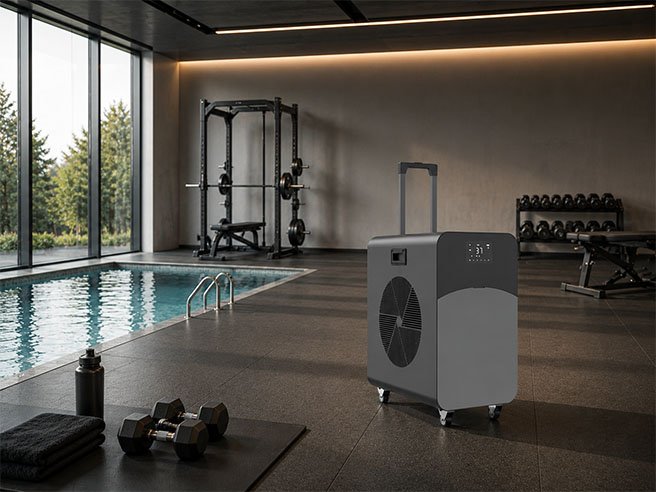
A recovery chiller is a dedicated cooling unit designed to continuously lower and maintain water temperature inside a cold plunge or ice bath.
Unlike traditional ice-based cooling, a chiller circulates water through a refrigeration system, removing heat and keeping temperatures stable throughout the day.
For commercial operators, this means:
- Consistent recovery temperatures
- Less labor
- Lower long-term costs
- Improved member experience
- Better hygiene when paired with filtration and UV systems
Think of it like the difference between using portable fans and installing a proper air-conditioning system. Both cool the environment, but only one delivers reliable performance day after day.
For gyms serving dozens of users daily, consistency matters.
Why More Gyms Are Investing in Cold Recovery Equipment
The recovery industry has changed dramatically in recent years.
Athletes, fitness enthusiasts, runners, CrossFit participants, and wellness-focused consumers are increasingly seeking recovery solutions alongside traditional training services.
Many gyms now offer:
- Cold plunge therapy
- Contrast therapy
- Sauna and cold plunge combinations
- Recovery memberships
- Dedicated wellness zones
Adding an ice bath recovery station creates a premium service that helps facilities stand out from competitors while generating additional revenue opportunities.
More importantly, members notice the difference.
Walking into a recovery area with crystal-clear cold water maintained at a stable temperature feels professional. A tub filled with partially melted ice bags? Not so much.
The Challenges of Running Ice Baths Without a Chiller
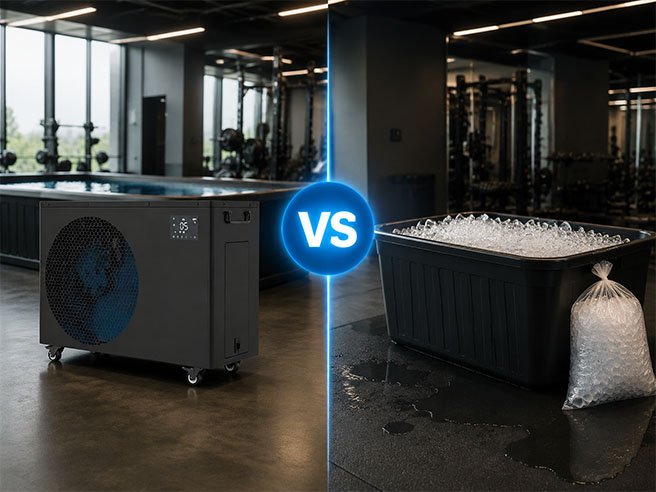
At first glance, using ice seems cheaper.
In reality, many gym owners discover the opposite.
A commercial facility may require significant amounts of ice every day, especially during warmer months. Costs accumulate quickly, and staff must continuously refill and monitor the tub.
Common issues include:
Temperature Fluctuations
Water may start at 10°C but rise several degrees after multiple users enter the tub.
The result?
An inconsistent recovery experience.
High Operating Costs
Buying ice every day becomes surprisingly expensive over the year.
Many facilities eventually spend far more on ice than they would have spent operating a professional recovery chiller.
Increased Labor Requirements
Employees must:
- Purchase ice
- Transport ice
- Fill tubs
- Remove excess water
- Monitor temperatures
Those hours add up.
Poor Member Experience
Users expect professional-grade recovery equipment.
Unstable temperatures can reduce confidence in the service and negatively affect customer satisfaction.
Key Features to Look for in a Commercial Recovery Chiller
Not all chillers are designed for commercial use.
A gym environment places far greater demands on equipment than occasional residential use.
When evaluating options, focus on the following features.
Powerful Cooling Performance
Commercial facilities often experience:
- Multiple users per hour
- Frequent temperature changes
- High ambient temperatures
- Extended operating schedules
A properly sized chiller should recover water temperature quickly after use.
Fast cooling recovery helps maintain consistent performance throughout the day.
Continuous Operation Capability
Some systems are designed for intermittent operation.
Commercial environments require equipment capable of operating continuously for long periods without performance degradation.
This becomes especially important for facilities offering cold plunge access from early morning until late evening.
Smart Temperature Control
Precise control helps maintain recovery protocols.
Modern systems often provide:
- Digital controls
- WiFi connectivity
- Mobile app management
- Scheduled operation
- Remote monitoring
These features simplify management while improving user experience.
Integrated Water Filtration
Clean water is just as important as cold water.
Commercial systems should include:
- Fine filtration
- Water circulation
- Hair collection systems
- UV sterilization options
These features help reduce maintenance requirements while supporting water quality.
Choosing the Right Cooling Capacity for Your Facility
One of the most common mistakes gym owners make is purchasing an undersized chiller.
A unit that works perfectly for a small home tub may struggle in a commercial setting.
Several factors affect sizing:
Tub Volume
Larger tubs require greater cooling capacity.
A 600-liter commercial tub demands significantly more cooling power than a small inflatable home unit.
User Frequency
A facility serving 50 users per day creates far more heat load than a private recovery room.
Every person entering the water raises the overall temperature.
Ambient Conditions
Outdoor installations often face:
- Direct sunlight
- Higher air temperatures
- Greater thermal load
These factors increase cooling demand.
Recovery Protocols
Facilities running contrast therapy programs usually require stronger cooling systems because water temperatures must recover rapidly between sessions.
This is one reason why many commercial operators choose higher-capacity chillers rather than entry-level models.
Water Quality Matters More Than You Think
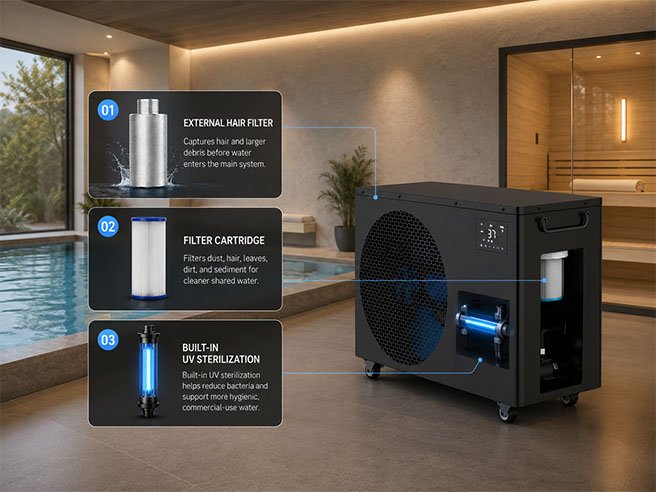
Let’s talk about a factor many buyers overlook.
Water quality.
Cold water alone doesn’t guarantee a great recovery experience.
Without proper treatment, commercial tubs can quickly develop:
- Cloudy water
- Unpleasant odors
- Increased maintenance needs
- Reduced user confidence
Professional recovery systems typically combine cooling with:
Mechanical Filtration
Removes hair, debris, and suspended particles.
UV Sterilization
Helps control microorganisms without excessive chemical use.
Continuous Circulation
Keeps water moving and improves filtration effectiveness.
The combination creates cleaner water and reduces maintenance frequency.
That’s a win for both facility operators and users.
Indoor vs Outdoor Installation Considerations
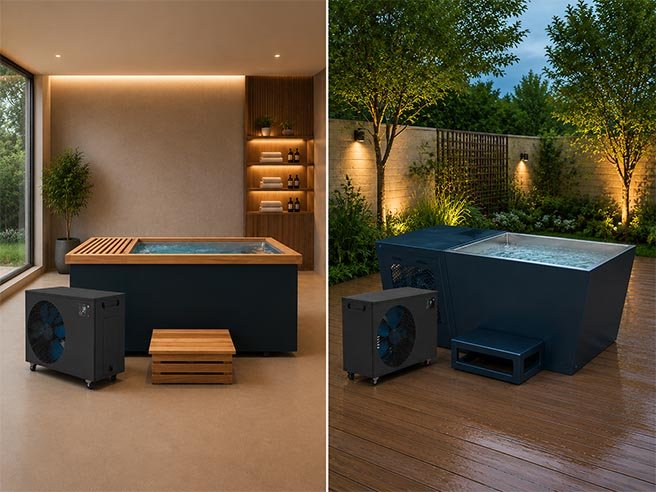
Many gyms are expanding beyond traditional indoor layouts.
Recovery zones now appear on:
- Rooftop wellness spaces
- Outdoor training facilities
- Poolside recovery areas
- Sports performance centers
While outdoor installations can look fantastic, they introduce additional challenges.
Weather Exposure
Commercial chillers should feature weather-resistant construction for outdoor use.
Heat Load
Outdoor temperatures can significantly increase cooling demand.
Ventilation
Adequate airflow around the chiller is essential for efficient operation.
Poor ventilation reduces performance and may shorten equipment lifespan.
Proper placement often has a greater impact on performance than many operators realize.
Operating Costs and Long-Term Value
A common question is simple:
“How much does a recovery chiller cost to operate?”
The answer depends on:
- Chiller size
- Ambient temperature
- Usage frequency
- Insulation quality
- Water volume
However, focusing only on the purchase price can be misleading.
A lower-priced unit may consume more electricity, require more maintenance, or struggle to maintain temperatures under heavy use.
Meanwhile, a higher-quality commercial system often delivers:
- Better efficiency
- Longer lifespan
- Reduced maintenance
- Improved customer satisfaction
Over several years, the total cost of ownership is frequently lower.
It’s similar to commercial gym equipment. Durable machines cost more initially but often provide better value over time.
Why Reliability Is Critical for Commercial Facilities
When a treadmill stops working, members may use another machine.
When a recovery chiller fails, the entire cold plunge experience can disappear.
For commercial operators, reliability directly affects:
- Member retention
- Facility reputation
- Revenue generation
- Maintenance costs
Look for systems that offer:
- High-quality compressors
- Titanium heat exchangers
- Commercial-grade components
- Easy access for servicing
- Available replacement parts
Reliability isn’t the most exciting specification on a brochure.
Yet it’s often the one that matters most after the purchase.
How CHILLMEND Supports Commercial Recovery Programs
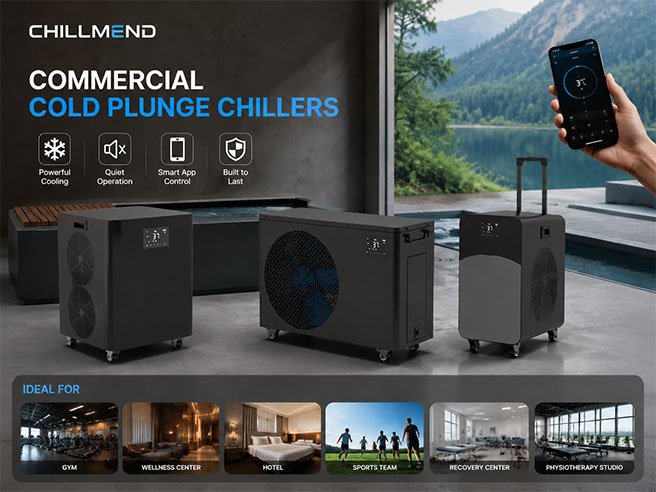
CHILLMEND develops commercial-grade ice bath chillers designed for gyms, wellness clubs, hotels, sports teams, rehabilitation centers, and recovery studios.
Key advantages include:
- Professional cooling performance
- Smart WiFi and App control
- Continuous-duty operation
- Titanium heat exchanger technology
- Integrated filtration options
- UV sterilization configurations
- Indoor and outdoor installation support
- OEM and private-label solutions
Whether you’re building a single cold plunge station or an entire recovery zone, selecting the right cooling system helps create a consistent and professional experience for every user.
FAQs
FAQ 1. What size recovery chiller do gyms typically need?
Most commercial facilities require a larger-capacity recovery chiller than residential users. The ideal size depends on tub volume, daily usage frequency, and environmental conditions. Facilities with heavy traffic often benefit from 1 HP or higher commercial systems.
FAQ 2. Can a commercial ice bath chiller run continuously?
Yes. A commercial recovery chiller for ice bath applications is specifically designed for extended daily operation. Many professional systems support continuous use throughout gym operating hours.
FAQ 3. Is a recovery chiller cheaper than buying ice every day?
For most gyms, yes. While the initial investment is higher, eliminating daily ice purchases often results in significant long-term savings, especially in high-usage environments.
FAQ 4. Do commercial recovery chillers include water filtration?
Many professional systems include integrated filtration, circulation, and optional UV sterilization. These features help maintain cleaner water and reduce maintenance requirements.
FAQ 5. Can a recovery chiller be used for contrast therapy programs?
Absolutely. A commercial recovery chiller is commonly paired with saunas and heat therapy systems. Strong cooling capacity allows water temperatures to recover quickly between users, making it ideal for contrast therapy applications.
Ready to Build a Professional Recovery Area?
Whether you’re operating a gym, wellness club, sports performance center, rehabilitation clinic, or luxury recovery studio, the right recovery chiller can dramatically improve user experience while reducing long-term operating costs.
CHILLMEND offers commercial ice bath chiller solutions designed for reliability, temperature stability, and continuous operation. Contact CHILLMEND today to discuss your facility requirements, receive expert sizing recommendations, and get a customized quote for your recovery project.