
Quick Outline (So You Know Where We’re Headed)
- Why noise matters more than people think
- What actually creates noise in an ice bath chiller
- Typical decibel ranges (home vs gym setups)
- Indoor vs outdoor placement—does it really help?
- Real-life noise comparisons (what it feels like)
- How to reduce chiller noise without overcomplicating things
- When noise becomes a problem—and when it’s just in your head
- FAQs
- Final thoughts + what to do next
Let’s Be Honest—Noise Is a Bigger Deal Than You Expect
You picture it already: a calm recovery session, maybe early morning, maybe after a brutal workout. Cold water, steady breathing, quiet focus.
Then… a hum.
Not loud exactly—but persistent. Mechanical. A little distracting.
Here’s the thing—ice bath chillers aren’t silent. And they’re not meant to be. But they’re also not nearly as disruptive as people fear. The truth sits somewhere in between, and that’s what we’re unpacking here.
Whether you’re setting one up in your apartment, garage gym, or a full commercial training space, understanding noise levels upfront saves you from regret later.
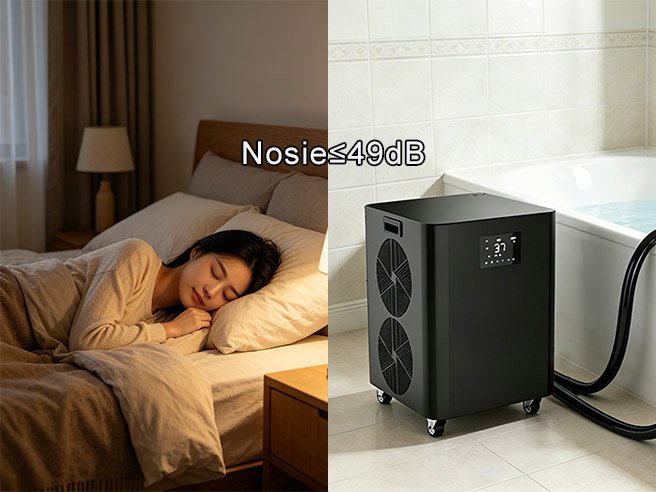
So, Where Does the Noise Actually Come From?
Before we talk numbers, let’s break this down in plain English.
An ice bath chiller makes noise for the same reason a refrigerator or air conditioner does—it’s moving heat. And that process involves a few key components working together.
The usual suspects behind the sound
- Compressor (the main culprit)
This is the heart of the system. It compresses refrigerant, and yeah—it hums. Sometimes a low buzz, sometimes a deeper vibration. - Cooling fan
Helps dissipate heat. Think of it like a mini outdoor AC unit fan—steady airflow noise. - Water pump
Circulates water between your tub and the chiller. Usually quieter, but not always silent. - Vibration through surfaces
This one surprises people. Sometimes it’s not the chiller—it’s the surface it’s sitting on amplifying the noise.
Put it all together, and you don’t get a roar—you get a layered mechanical hum. Kind of like background noise in a quiet office.
What Noise Level Should You Actually Expect?
Let’s talk numbers—but keep it practical.
Most ice bath chillers fall within a predictable range:
Typical Noise Levels, Based on actual test data of CHILLMEND ice bath chiller in an anechoic chamber
- Small home units (1/3 HP – 1/2 HP):
Around 40–50 dB - Mid-range chillers (1/2 HP – 1 HP):
Around 45–60 dB - Commercial-grade systems:
Around 55-65 dB
Now, what does that mean in real life?
Real-world comparisons
- 40 dB → Quiet library
- 50 dB → Light rainfall
- 60 dB → Normal conversation
- 70 dB → Vacuum cleaner (but less sharp)
So yeah—it’s noticeable, but it’s not overwhelming.
Honestly, most people stop noticing it after a few sessions. Your brain filters it out, like a fan running at night.
If noise level is your top priority when choosing an ice bath chiller, we highly recommend CHILLMEND’s ultra-quiet model: IB-Ultra 10. It will completely eliminate all your noise concerns.
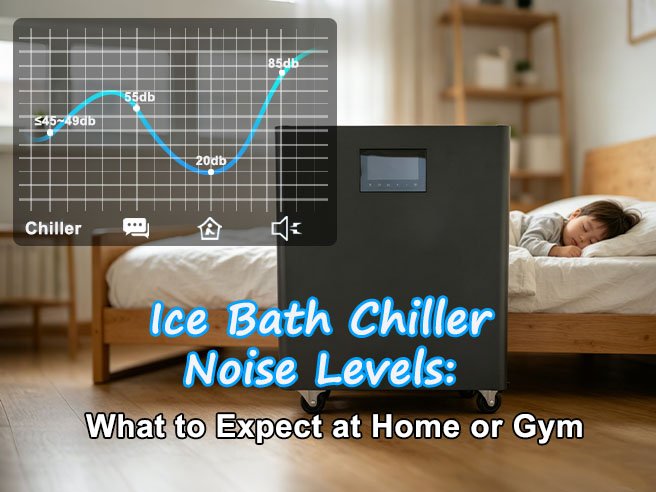
Home Setup vs Gym Setup—Why It Feels Different
Here’s where perception gets interesting.
At home, everything feels louder
In a quiet apartment or house, even a 45 dB hum can feel intrusive. Especially if:
- You’re using it early morning or late at night
- The room has hard surfaces (echo effect)
- You’re expecting silence
That expectation gap? That’s what throws people off.
In a gym, it blends in
In a gym environment, the same chiller sounds… almost invisible.
- Background music
- Equipment noise
- People moving around
The chiller just becomes part of the atmosphere. No one notices. No one cares.
So it’s not just about decibels—it’s about context.
Indoor vs Outdoor Placement—Does It Actually Reduce Noise?
Short answer: yes. But not always as much as you’d think.
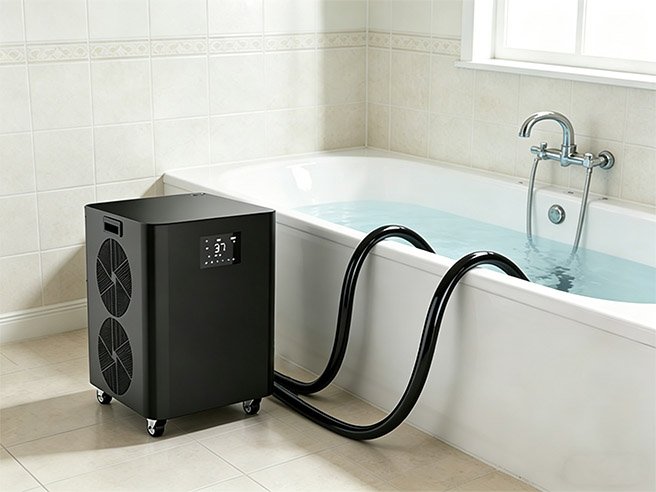
Indoor placement
Pros:
- Convenient access
- Controlled environment
- No weather exposure
Cons:
- Noise is more noticeable
- Heat buildup can make the unit work harder (and louder)
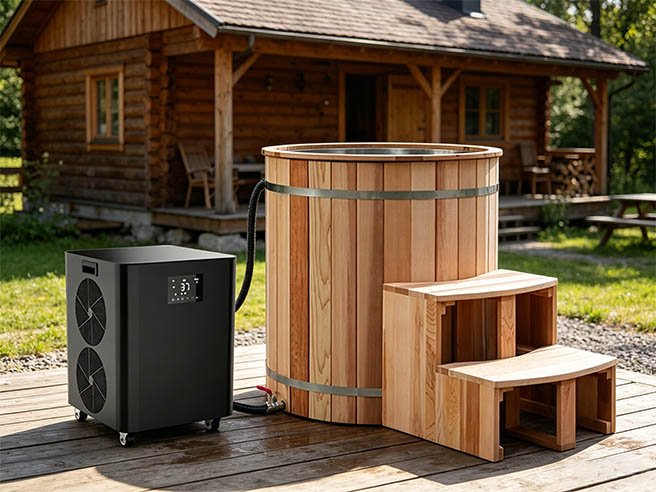
Outdoor placement
Pros:
- Noise is naturally reduced inside
- Better ventilation = more efficient cooling
- Less perceived disturbance
Cons:
- Requires proper setup (weather protection, drainage, etc.)
- Slightly more complex installation
Here’s the nuance: moving the chiller outside doesn’t eliminate noise—it just moves it away from you. Which, honestly, is often enough.
What Does It Feel Like During Use?
Let’s get real for a second.
When you’re sitting in freezing water, your focus shifts fast:
- Breathing
- Body tension
- Mental control
The chiller noise? It fades into the background.
Some users even say it becomes part of the ritual—a consistent, grounding sound. Not relaxing exactly, but familiar.
Kind of like the hum of a plane engine when you’re trying to sleep mid-flight. At first, it’s there. Then it’s just… there.
Ways to Reduce Noise (Without Overthinking It)
You don’t need to engineer a soundproof chamber. Small adjustments go a long way.
Simple, effective tweaks
- Use a rubber or foam pad underneath
Cuts vibration dramatically - Keep it off hollow surfaces
Avoid placing it on wooden platforms that amplify sound - Add distance
Even 1–2 meters makes a noticeable difference - Use barriers
A wall, fence, or even storage unit can deflect noise - Ensure proper leveling
Uneven placement = more vibration - Maintain it regularly
Dirty filters or worn components can increase noise over time
Honestly, most noise complaints come down to setup—not the machine itself.
When Should You Actually Be Concerned?
Not all noise is normal. Some sounds are red flags.
Watch out for:
- Loud rattling or clanking
- Sudden increases in volume
- High-pitched whining
- Irregular cycling sounds
These usually point to:
- Loose components
- Pump issues
- Compressor strain
- Airflow blockage
If it sounds wrong, it probably is.
The Mental Side—Yeah, It Matters
Here’s something people don’t talk about enough.
Noise tolerance is subjective.
One person calls it “barely noticeable.” Another calls it “annoying.”
Why?
- Sensitivity to sound
- Environment expectations
- Time of use
- Even mood
So if you’re someone who needs near silence to relax, you’ll want to prioritize quieter models or outdoor setups.
If not? You’ll probably adapt faster than you expect.
A Slight Contradiction (That Actually Makes Sense)
You’d think quieter is always better, right?
Not always.
Some ultra-quiet setups sacrifice cooling speed or efficiency. And if your water takes forever to reach the right temperature, that becomes a different kind of frustration.
So there’s a balance:
- Too loud → distracting
- Too quiet but weak → impractical
The sweet spot? Efficient cooling with tolerable noise.
FAQs — Let’s Clear Up the Common Questions
1. Are ice bath chillers too loud for apartments?
Not usually, but it depends on placement. Most units fall within 40–60 dB, which is similar to a refrigerator or light conversation. For apartments, using vibration pads and placing the chiller away from shared walls helps reduce disturbance.
2. How can I make my ice bath chiller quieter at home?
Focus on simple fixes: place it on a rubber mat, keep it level, avoid hollow surfaces, and increase distance from your tub. These small adjustments can significantly reduce perceived noise without complex modifications.
3. Is an outdoor ice bath chiller setup quieter than indoor?
Yes, outdoor placement reduces indoor noise perception. While the unit still produces the same sound level, distance and physical barriers make it much less noticeable inside your home.
4. Do more powerful ice bath chillers make more noise?
Generally, yes. Higher horsepower units tend to produce more noise due to stronger compressors and fans. However, modern designs often balance power and sound better than older models.
5. What is considered a quiet ice bath chiller?
A unit operating around 40–50 dB is considered quiet. This level is comparable to a quiet office or light rainfall, making it suitable for most home environments.
Final Thoughts—And What You Should Do Next
So, are ice bath chillers noisy?
Yes… but not in the way people fear.
They hum. They vibrate a little. They remind you they’re working. But they don’t dominate your space—unless something’s off with the setup.
And honestly, once you’re in that cold water, focused and steady, the noise becomes background. Just part of the process.
If you’re thinking about adding one to your home or gym, don’t let noise be the dealbreaker. Just plan for it. Set it up right.
And if you want a system that balances performance, durability, and controlled noise levels—reach out to CHILLMEND. We’ll help you find a setup that fits your space without turning your recovery time into a distraction.
Because recovery should feel intense—not irritating.