
Quick Outline (So You Don’t Get Lost)
- What’s the real difference between indoor and outdoor ice bath chillers?
- Why your environment matters more than the product itself
- Performance, durability, and installation differences
- Cost considerations (short-term vs long-term)
- Who should choose indoor vs outdoor systems
- Practical buying tips (from a manufacturer’s perspective)
- FAQs to clear common doubts
Indoor vs Outdoor Ice Bath Chillers
Let’s be honest for a second.
Most people don’t get this decision right the first time.
They focus on horsepower, cooling speed, or price—but ignore where the chiller will actually live. And that? That’s often what determines whether your setup runs smoothly… or becomes a constant headache.
So, indoor vs outdoor ice bath chillers—what’s the real difference? And more importantly, which one fits your situation?
Let me break it down in a way that actually makes sense.
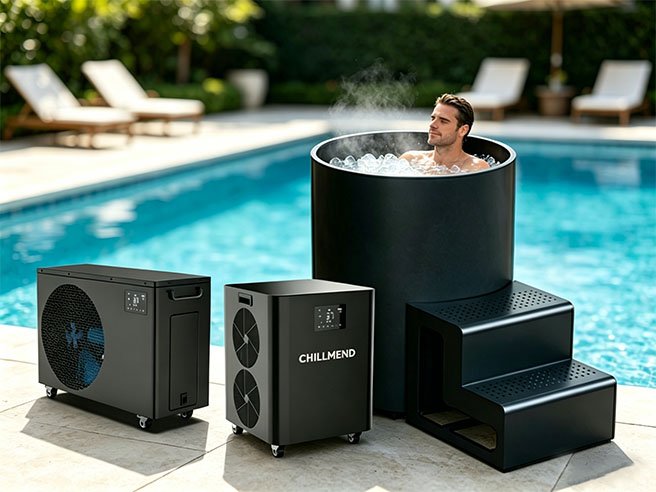
Indoor Ice Bath Chillers: Quiet, Controlled… But Not Always Easy
Indoor chillers sound convenient—and they often are. But they come with their own quirks.
Why people love indoor setups
- Stable environment = stable performance
Inside your home or gym, temperature doesn’t swing wildly. That means your chiller works under predictable conditions, which usually translates to smoother cooling and less strain on the system. - Easier daily use
No stepping outside in winter. No worrying about rain. Everything is right there—plug, fill, chill, done. - Better for personal users
If you’re setting up a recovery corner in your garage or spare room, indoor makes total sense.
But here’s the catch…
- Heat buildup is real
A chiller doesn’t just cool water—it releases heat. Indoors, that heat has nowhere to go unless you’ve got proper ventilation. Otherwise, your room slowly turns into a sauna (not ideal when you’re trying to cool down). - Noise can sneak up on you
Compressors aren’t silent. In a quiet home environment, even a “low-noise” unit can feel noticeable. - Space constraints
You need clearance for airflow, drainage, and maintenance. The water pipes must not be bent and should be laid flat to prevent poor water flow from burning out the water pump. Not always easy in tight indoor spaces.
👉 Honestly, indoor setups feel great… until ventilation becomes a problem.
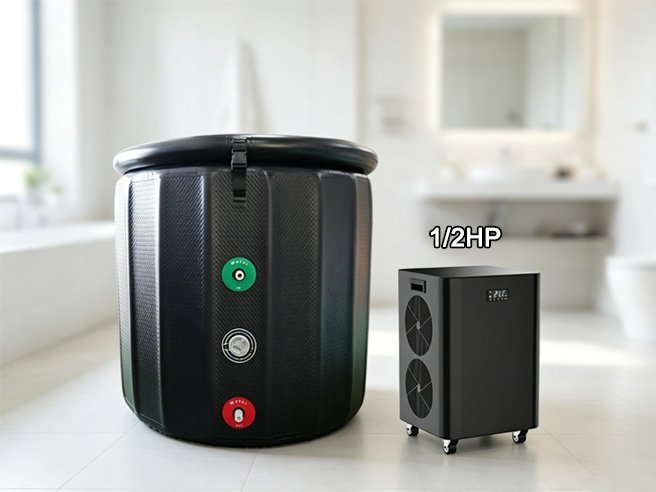
Outdoor Ice Bath Chillers: Rugged, Powerful… But Exposure Matters
Now let’s step outside.
Outdoor chillers are often what you’ll see in commercial gyms, spas, or serious athlete setups.
Why outdoor systems shine
- Heat dissipation is effortless
Outside air handles the heat exchange naturally. Your unit runs cooler, more efficiently, and often lasts longer. - More space = more flexibility
Bigger units, higher horsepower, better cooling capacity—no walls limiting you. - Less noise concern
Let’s face it, outside noise is… well, outside.
But it’s not all perfect
- The weather is the boss now
Rain, sun, humidity, even salt air if you’re near the coast—these all affect longevity. - You need proper protection
A “weatherproof” unit doesn’t mean invincible. Covers, drainage, and positioning still matter. - Installation can be trickier
Longer hoses, insulation needs, and sometimes power supply challenges.
👉 Outdoor setups feel effortless… until the environment starts fighting back.
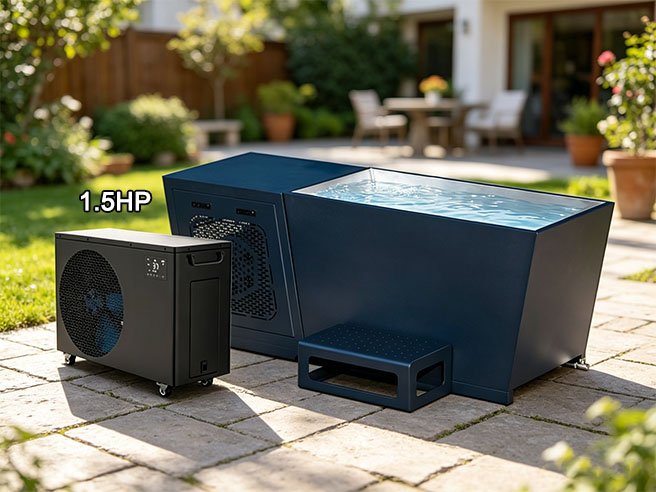
Performance Face-Off: Indoor vs Outdoor
Here’s where things get interesting.
You might assume outdoor chillers always perform better—but that’s not entirely true.
Indoor performance
- More consistent cooling due to stable ambient temperature
- Slightly higher efficiency in mild climates
- Risk of overheating if ventilation is poor
Outdoor performance
- Better heat exchange in open air
- Handles heavy-duty usage better (especially commercial)
- Performance can drop in extreme heat or cold
Here’s the twist:
A poorly ventilated indoor setup can perform worse than an outdoor one.
And an unprotected outdoor unit can degrade faster than an indoor one.
So… it’s not just where you put it. It’s how well you prepare that environment.
Cost Talk (Because It Always Comes Down to This)
Let’s not pretend price doesn’t matter.
Indoor costs
- Lower installation complexity
- Possible added cost for ventilation or cooling systems
- Slightly higher long-term energy use if heat accumulates
Outdoor costs
- Possible higher upfront setup (weatherproofing, insulation)
- Lower operational strain → better long-term efficiency
- Maintenance may increase due to exposure
You know what’s funny?
People often try to “save money” by skipping environmental prep…
and end up paying more in repairs or inefficiency.
So… Which One Should You Actually Buy?
Let’s simplify it.
Choose indoor if:
- You’re a personal user
- You have limited outdoor space
- You can ensure good ventilation
- You want convenience and comfort
- The single-cooling models IA-03 and IA-05 of the CHILLMEND cold plunge chillers are highly suitable for indoor use.
Choose outdoor if:
- You run a gym, spa, or commercial facility
- You need higher cooling capacity
- You want long-term durability under heavy use
- You can properly protect the unit from the weather
- The intelligent all-in-one models of CHILLMEND cold plunge chillers, including Model IB-Pro H10, IB-Pro C10, IC-Pro H15 and IC-Ultra 15, are all highly suitable for outdoor use.
A Slightly Uncomfortable Truth (From Experience)
Here’s something most sellers won’t tell you:
👉 There’s no “one best option”—only the one that matches your environment.
We’ve seen customers install powerful chillers indoors… only to struggle with heat buildup.
We’ve also seen outdoor units fail early—not because of quality, but because they were exposed without protection.
So the real question isn’t:
“Indoor or outdoor?”
It’s:
“Where will this system perform best in your setup?”
Practical Buying Tips (You’ll Thank Yourself Later)
- Don’t underestimate ventilation (for indoor)
- Don’t overestimate “weatherproof” (for outdoor)
- Slightly oversize your chiller if usage may grow
- Think long-term operating cost, not just purchase price
- Plan your layout before you buy—not after
And yeah… this sounds basic. But it’s where most mistakes happen.
FAQs
1. Is an indoor ice bath chiller less powerful than an outdoor one?
Not necessarily. Power depends on the unit design and horsepower, not just placement. However, indoor setups may feel less effective if ventilation is poor, which affects cooling efficiency.
2. Can I use an outdoor ice bath chiller indoors?
Technically, yes—but it’s not ideal. Outdoor units often release more heat and may be louder, making indoor use uncomfortable without proper airflow adjustments.
3. Do outdoor ice bath chillers need protection from the weather?
Yes. Even “weatherproof” units benefit from covers, shading, and proper drainage. Long-term exposure to rain and sun can reduce lifespan.
4. What is the best setup for a home ice bath system?
For most home users, an indoor setup with good ventilation or a semi-outdoor covered space works best. It balances convenience with performance.
5. How do I choose between indoor and outdoor ice bath chillers for a gym?
If you’re running a gym or recovery center, outdoor systems are usually better. They handle higher usage, dissipate heat more effectively, and keep indoor spaces comfortable.
Ready to Choose the Right Setup?
Here’s the thing.
Buying an ice bath chiller isn’t just about specs—it’s about fit. The right setup should match your space, your usage, and your long-term goals.
At CHILLMEND, we don’t just sell chillers—we help you design a system that actually works in real conditions. Whether you’re building a home recovery corner or outfitting a commercial facility, we’ll guide you step by step.
👉 Contact CHILLMEND today and get a tailored recommendation that saves you time, money, and a whole lot of trial and error.