
Quick Outline (So You Know Where This Is Going)
- Why your use case matters more than the brand name
- The key specs that actually affect performance (and your wallet)
- Best water chiller setups for home users, athletes, and commercial gyms
- Common mistakes people don’t realize they’re making
- How to choose without overpaying (or underbuying)
Why “Best” Depends on You (Not the Internet)
Here’s the thing—when people search for the “best water chiller for ice bath,” they’re usually hoping for a single answer. One perfect machine. One safe choice.
Honestly? That doesn’t exist.
A chiller that works beautifully for a solo athlete doing 10-minute recovery sessions can struggle badly in a busy gym where the tub runs all day. And that expensive, overpowered unit you saw online? It might actually be overkill for your setup—burning more electricity than needed.
So instead of chasing “the best,” you’re better off asking:
Best for what situation?
Let me explain.
What Actually Matters (And What Doesn’t)
Before we break down the expert picks, let’s talk about what really affects performance. Because a lot of people get distracted by flashy features.
The Specs That Truly Matter
- Cooling Capacity (HP)
This is your engine. A 1 HP chiller cools faster and handles larger water volumes than a 1/3 HP unit. Simple—but crucial. - Water Volume Compatibility
A 300L tub vs a 1000L commercial tank? Completely different requirements. - Ambient Temperature
Outdoor setup in summer heat? Your chiller is working overtime. - Filtration + Sterilization
You don’t just want cold water—you want clean water. Systems with multi-stage filters + UV make a huge difference. - Energy Efficiency
This one sneaks up on you. Over months, electricity costs matter more than you think.
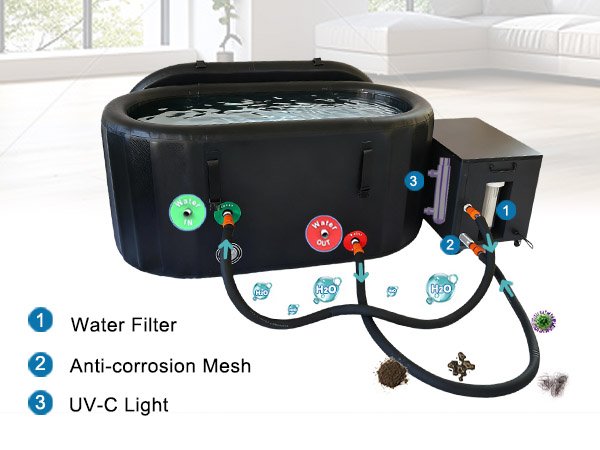
Best Water Chiller for Home Ice Baths (Casual & Daily Users)
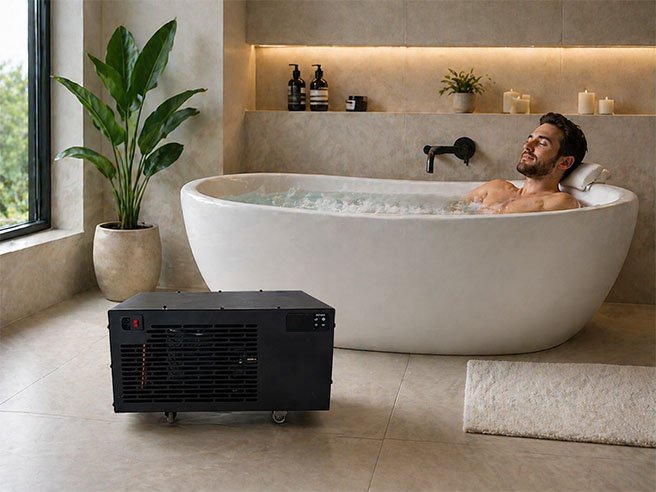
Let’s say you’re using an ice bath 3–5 times a week. Maybe after workouts, maybe just to feel alive again (we’ve all been there).
Here’s what works best:
- Recommended Power: 1/3 HP – 1/2 HP
- Water Volume: 200–400L
- Key Focus: Quiet operation, energy efficiency, ease of setup
You don’t need a beast machine here. In fact, going too big can be counterproductive—higher cost, more noise, unnecessary power draw.
A compact system with stable cooling is ideal. Especially if you’re placing it indoors or on a balcony.
And honestly? Noise matters more than people expect. That constant hum can get annoying fast.
Best for Athletes & Serious Recovery Setups
Now we’re stepping it up.
If you’re training hard—maybe twice a day, maybe pushing recovery cycles—you need consistency. Fast cooldown. Stable temperature. No waiting around.
- Recommended Power: 1 HP
- Water Volume: 300–600L
- Key Focus: Fast cooling, temperature stability, durability
This is where many users underestimate their needs.
You know what happens with underpowered chillers?
They eventually reach temperature… but take forever. And after each session, recovery time is slow.
A 1 HP system changes that completely. It keeps water ready, session after session.
Also, this is where build quality starts to matter more. Compressors, internal flow design, and heat exchange efficiency aren’t just specs on paper. They show up in real performance.
Best for Commercial Gyms & High-Usage Environments
Alright—this is a different game.
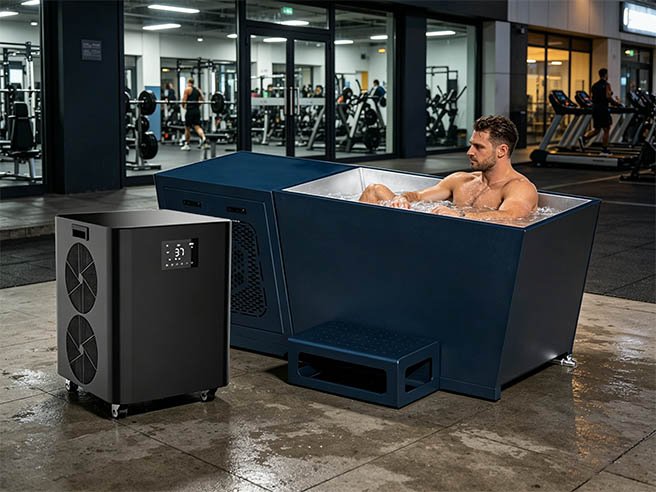
Multiple users. Continuous operation. Hygiene requirements. Downtime is not an option.
- Recommended Power: 1.5 HP+
- Water Volume: 600–1000L+
- Key Focus: Continuous cooling, sanitation, reliability
This is where cheaper units fail. Not immediately—but over time.
A commercial setup needs:
- Strong compressor (long-hour operation)
- Efficient heat dissipation
- Advanced filtration (3-stage or more)
- UV sterilization (non-negotiable, honestly)
And here’s a subtle point people overlook:
Stability matters more than peak power.
You don’t just need cold water—you need consistent cold water across dozens of sessions.
Common Mistakes (That Cost You Later)
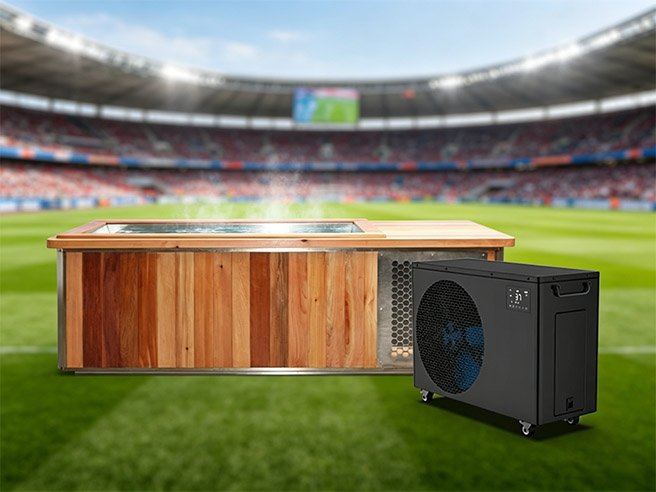
Let’s keep this real. These mistakes show up all the time.
1. Buying Based on Price Alone
Cheap upfront can mean expensive long-term—especially with energy use and maintenance.
2. Ignoring Climate
A chiller that works fine indoors might struggle outdoors in summer heat.
3. Underestimating Usage Frequency
Occasional use vs daily heavy use = completely different machine needs.
4. Skipping Filtration
Cold water doesn’t mean clean water. This becomes obvious… fast.
So… How Do You Actually Choose?
Here’s a simple way to think about it:
- Light use → prioritize efficiency + compact size
- Moderate use → balance power + durability
- Heavy use → prioritize reliability + sanitation systems
Don’t overcomplicate it. But don’t underthink it either.
A Quick Word on Long-Term Cost
This part doesn’t get talked about enough.
A slightly more expensive chiller that’s 30–50% more energy efficient can save you a lot over time. Especially if you’re running it daily.
The same goes for maintenance. Systems with better filtration and stable compressors just… require less attention.
And that peace of mind? Hard to quantify—but you’ll feel it.
FAQs: Best Water Chiller for Ice Bath
1. What size water chiller do I need for a home ice bath?
For most home users, a 1/3 HP to 1/2 HP chiller works well for tubs between 200 and 400 liters. If you want faster cooling or live in a hot climate, consider upgrading to 1HP.
2. Is a 1 HP chiller enough for serious athletes?
Yes, a 1 HP ice bath chiller is typically ideal for athletes using 300 to 600L tubs. It provides faster cooling and better temperature stability for frequent sessions.
3. Can I use a small chiller for a large ice bath?
You can—but you probably shouldn’t. A small chiller will take much longer to cool the water and may struggle to maintain temperature, especially with repeated use.
4. Do I really need filtration and UV sterilization?
If you’re using the ice bath regularly, absolutely. A system with filtration and UV helps keep the water clean for longer and reduces the need for frequent changes.
5. How much electricity does an ice bath chiller use?
It depends on the model, but energy-efficient systems can run for long periods using around 2–3 kWh per day under stable conditions. Efficiency becomes more important the more you use it.
Ready to Choose the Right Chiller?
If you’re still weighing your options, here’s a thought—don’t just look at specs. Look at how the system fits your actual use.
At CHILLMEND, we design ice bath chillers specifically for real-world scenarios—whether that’s a compact home setup or a high-demand commercial environment. From energy-efficient systems to durable, low-maintenance designs, the focus is simple: reliable cold therapy without the headaches.
If you want tailored advice or a recommendation that actually matches your setup, reach out. We’ll help you get it right the first time.