
Let’s be honest—ice baths used to feel like a hassle. Bags of ice, constant refilling, guessing temperatures… not exactly relaxing. But things have changed. Modern ice bath chillers have quietly (pun intended) transformed cold therapy into something far more consistent—and, surprisingly, convenient.
If you’re setting up a recovery corner at home, the right chiller can make all the difference. Quiet operation matters. Efficiency matters even more. And if you’ve ever had a loud compressor ruin your post-workout calm, you already know why.
So, let’s break it down properly—what actually makes a great home ice bath chiller, and which types are worth your attention.
Quick Look: What This Guide Covers
- What makes a chiller “home-friendly”
- Noise vs performance (and why they often clash)
- Different types of chillers explained simply
- Real-world selection tips based on use cases
- Common mistakes people don’t realize they’re making
What Makes an Ice Bath Chiller “Home-Friendly”?
Here’s the thing—what works in a commercial gym doesn’t always translate well to your balcony or bathroom.
A home-friendly chiller usually nails three things:
- Low noise output (you don’t want it sounding like an AC unit from 2005)
- Compact size (space is always tighter than you expect)
- Energy efficiency (because running it daily adds up)
But there’s a subtle trade-off most people overlook.
High cooling power often means higher noise. So manufacturers have to balance compressor strength with sound insulation, airflow design, and even vibration control. That’s where quality really shows.
Quiet vs Powerful: Why You Rarely Get Both… Unless You Do
Let me explain.
A powerful chiller (say, 1 HP and above) can drop water temperature fast—even in summer. But traditionally, that comes with more noise.
However, newer designs are getting smarter:
- Better compressor isolation
- Thicker acoustic casing
- Smarter fan speed control
- Reduced vibration via internal structure tweaks
So yes, you can find chillers that are both powerful and quiet—but they’re usually engineered more carefully (and honestly, priced a bit higher too).
Types of Ice Bath Chillers for Home Use
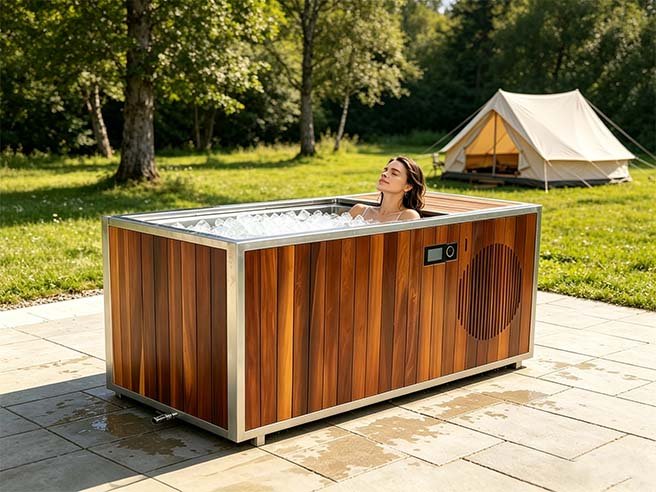
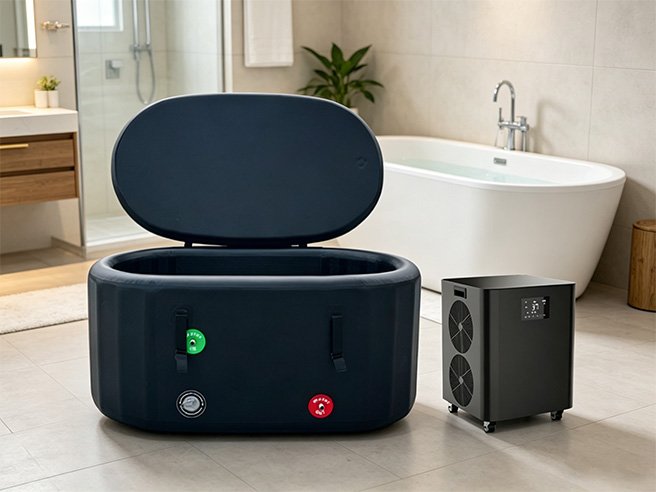
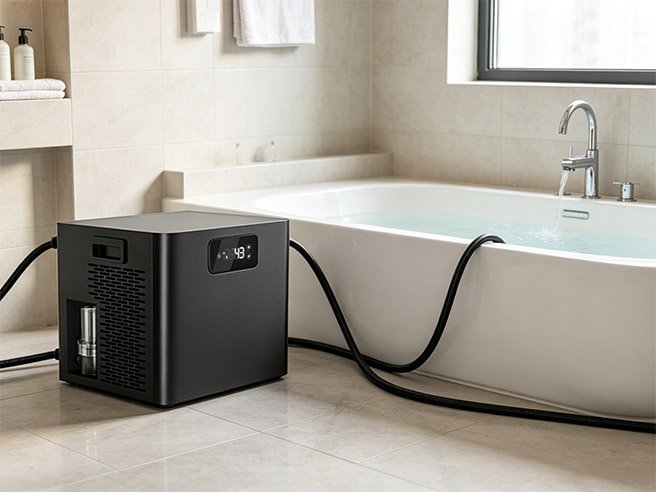
1. Plug-and-Play Integrated Systems
These are the “just turn it on” solutions.
They combine the tub, chiller, pump, and filtration into one clean system. No guesswork, no DIY plumbing headaches.
Why people love them:
- Super easy setup (literally minutes)
- Clean look (no exposed pipes everywhere)
- Optimized flow and cooling efficiency
But…
- Less flexible if you want to upgrade parts
- Higher upfront cost
Honestly, if you value simplicity over tinkering, this is hard to beat.
2. External Water Chillers (Most Popular Option)
This is where most home users land.
You pair a standalone chiller with your own tub—could be inflatable, stainless steel, or even a converted bathtub.
Why it works well:
- Flexible setup
- Easier to transport or reposition
- Better price-to-performance ratio
You can choose power levels like:
- 1/3 HP → light personal use
- 1/2 HP → regular use
- 1 HP → fast cooling, hotter climates, or shared use
And yes—this is usually where you’ll find the best balance of quiet + efficiency.
3. DIY or Modified Cooling Systems (Use With Caution)
You’ve probably seen these online—people hooking up aquarium chillers or hacking together cooling loops.
It can work… but here’s the catch:
- Limited cooling power
- Not designed for human-scale water volumes
- Often struggles in warm environments
- Questionable durability
If you’re experimenting, fine. But for consistent daily use? It gets frustrating quickly.
Real Selection Tips (That Actually Matter)
Instead of chasing specs blindly, think in scenarios.
If You Want a Quiet Indoor Setup
- Stick to ≤ 50 dB models
- Look for compressor insulation design
- Avoid oversized units (they cycle noisily)
If You Live in a Hot Climate
- Go at least 1HP
- Ensure continuous cooling capability
- Check real cooling time—not just “rated power.”
If You Use It Daily (Athletes, Recovery Focus)
- Prioritize filtration + UV sanitation
- Stable temperature control matters more than peak power
- Energy efficiency becomes a long-term cost factor
If You Care About Long-Term Cost
- Look beyond the price tag
- Energy consumption + maintenance frequency matter more
Funny enough, many people overspend on power they never actually use… while ignoring filtration—which they definitely need.
Common Mistakes (That Cost You Later)
Let’s keep this real.
- Buying too small → slow cooling, constant frustration
- Ignoring noise → regret after first indoor use
- No filtration → water becomes unusable quickly
- Chasing the cheapest option → ends up replacing it in months
You know what? The cheapest setup often becomes the most expensive one in the long term.
So… What’s the “Best” Choice?
There isn’t a single best unit—it depends on how you plan to use it.
But for most home users, the sweet spot looks like this:
- External chiller
- Around 1/2 HP to 1 HP
- Built-in filtration + sanitation
- Designed specifically for ice baths (not repurposed equipment)
That combination hits the balance of quiet, efficient, and reliable—without overcomplicating your setup.
CHILLMEND can provide such equipment, which has earned extremely high recognition among consumers. Recommended home models: Model: IA-05(1/2HP),
IB-H10(1HP), IB-C10(1HP), IB-Pro C10(1HP)
FAQs: Ice Bath Chillers for Home Use
1. What is the quietest ice bath chiller for home use?
The quietest models usually operate below 50 dB and feature insulated compressors and vibration control. Look for units specifically designed for indoor use rather than generic water chillers.
2. How powerful should a home ice bath chiller be?
For most users, 1/2 HP is enough. If you live in a hot climate or want faster cooling, a 1HP ice bath chiller is a better choice.
3. Are ice bath chillers energy efficient?
Yes—modern systems are designed for continuous operation with optimized energy use. High-quality units can run for hours without excessive power consumption, especially when maintaining temperature rather than cooling from scratch.
4. Can I use an aquarium chiller for an ice bath?
Technically, yes, but it’s not ideal. Aquarium chillers lack the power and durability needed for large water volumes and frequent use.
5. Do I need filtration in an ice bath chiller system?
Absolutely. Without filtration (and ideally UV sanitation), water quality degrades quickly. A proper system keeps water clean for extended use and reduces maintenance.
Final Thoughts — And a Quick Reality Check
Setting up an ice bath at home shouldn’t feel like a science project.
The right chiller quietly does its job—cooling fast, staying stable, and not demanding your attention every day. That’s really what you’re paying for: consistency.
If you’re serious about recovery—or planning to offer cold therapy commercially—getting the right system upfront saves time, money, and a lot of frustration later.
Ready to Upgrade Your Setup?
At CHILLMEND, we design ice bath chillers specifically for real-world use—quiet operation, efficient cooling, and built to last under daily conditions.
Whether you’re setting up a personal recovery space or sourcing for your business, we can help you find the right configuration without overcomplicating things.
Reach out to CHILLMEND today and get expert guidance tailored to your setup.