
Article Outline
- What Makes a Portable Ice Bath Tub with Chiller Different?
- Why Portable Cold Plunge Systems Are Gaining Popularity
- Key Features to Look for in 2026
- Best Portable Ice Bath Tub with Chiller Options
- Inflatable vs Hard-Shell Portable Systems
- How to Choose the Right Size and Cooling Capacity
- Running Costs and Energy Efficiency
- Setup, Maintenance, and Daily Use
- Who Benefits Most from Portable Ice Bath Systems?
- Final Thoughts
- FAQs
Portable Ice Bath Tub with Chiller: Best Options
Cold water therapy has moved far beyond professional sports facilities. These days, you’ll find portable ice bath systems in home gyms, apartments, recovery studios, garages, and even on outdoor patios. What changed? A big part of the answer is convenience.
A few years ago, taking an ice bath meant hauling bags of ice from the store, waiting for the water temperature to drop, and repeating the process every time you wanted a recovery session. It worked, but it wasn’t exactly practical.
Today, a portable ice bath tub with chiller can automatically cool water to your target temperature and maintain it throughout the day. No ice bags. No constant refilling. Just consistent cold therapy whenever you need it.
Whether you’re a runner preparing for race season, a CrossFit enthusiast chasing faster recovery, or simply someone exploring cold plunge benefits, portable systems have become one of the most practical wellness investments available in 2026.
What Makes a Portable Ice Bath Tub with Chiller Different?
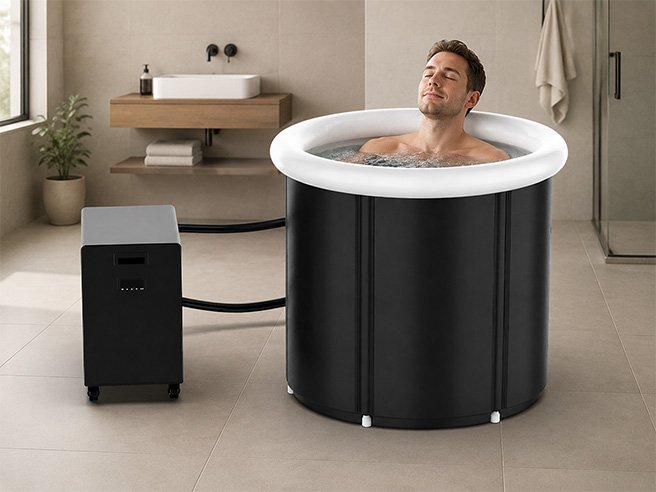
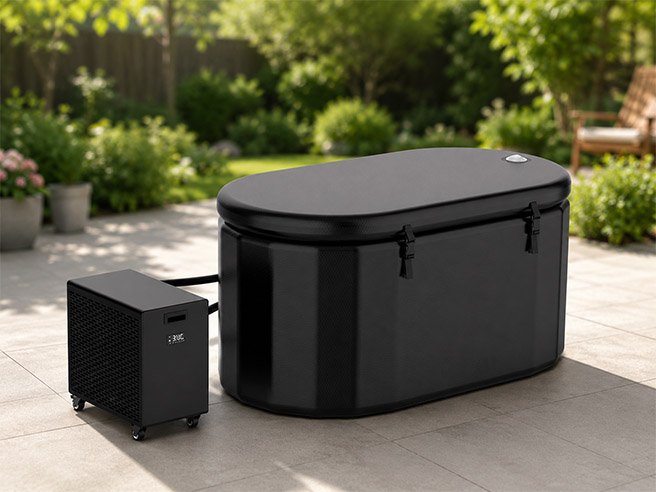
A portable ice bath tub with chiller combines two essential components:
- A lightweight, movable cold plunge tub
- An external water chiller that cools and circulates water
The idea sounds simple, but the experience is completely different from a traditional ice bath.
Instead of manually adding ice every session, the chiller continuously lowers and maintains the water temperature. Many modern systems can reach temperatures as low as 3°C–5°C, while advanced models can even approach 0°C conditions.
Think of it like the difference between hand-washing dishes and using a dishwasher. Both get the job done, but one saves a lot more effort.
For athletes training several times a week, that convenience quickly becomes invaluable.
Why Portable Cold Plunge Systems Are Gaining Popularity
The trend isn’t slowing down.
Portable systems have become popular because they solve several common problems:
Easy Installation
Many systems use quick-connect hoses and plug-and-play operation. In most cases, setup takes less than 30 minutes.
Space Flexibility
Not everyone has room for a permanent cold plunge installation. Portable tubs can be placed in:
- Home gyms
- Bathrooms
- Balconies
- Garages
- Backyards
- Recovery clinics
Lower Initial Investment
Compared with built-in cold plunge systems, portable setups generally cost less while delivering similar recovery benefits.
Mobility
This is where portable units really shine.
Sports teams, event organizers, physiotherapists, and mobile wellness providers can transport systems between locations with minimal effort.
Key Features to Look for in 2026
Not all portable ice bath systems are created equal.
Before purchasing, consider these factors carefully.
Cooling Performance
Cooling power directly affects how quickly water reaches your desired temperature.
A typical guideline:
| Model | Chiller Size | Recommended Tub Volume |
|---|---|---|
| CHILLMEND IA-03 | 1/3 HP | 100–250 L |
| CHILLMEND IA-05 | 1/2 HP | 150–350 L |
| CHILLMEND IB-Pro C10 | 1 HP | 200–500 L |
| CHILLMEND IC-Ultra 15 | 1.5 HP+ | 400 L+ |
If you’re planning daily use, slightly oversizing the chiller often improves performance and efficiency.
Filtration System
Clean water matters.
Look for systems with:
- Water filtration
- Hair trap protection
- UV sterilization
- Easy cartridge replacement
Without filtration, water quality can deteriorate surprisingly fast.
Smart Controls
Many 2026 models now offer:
- WiFi connectivity
- Smartphone control
- Temperature scheduling
- OTA software updates
- Automatic diagnostics
These features may sound fancy, but they genuinely make ownership easier.
Noise Levels
Nobody wants a noisy machine running beside a recovery area.
Quality chillers typically operate below 50 dB, roughly comparable to background conversation.
Best Portable Ice Bath Tub with Chiller Options
The best choice depends largely on your goals.
For Home Recovery
A compact inflatable tub paired with a 1/3 HP or 1/2 HP chiller offers a balance between affordability and convenience.
Ideal for:
- Beginners
- Apartment users
- Personal wellness routines
- Small outdoor spaces
For Serious Athletes
A larger insulated tub combined with a 1 HP chiller delivers faster cooling and more consistent temperatures.
Best for:
- Endurance athletes
- Strength training recovery
- Daily cold plunge users
- Multi-user households
For Mobile Recovery Businesses
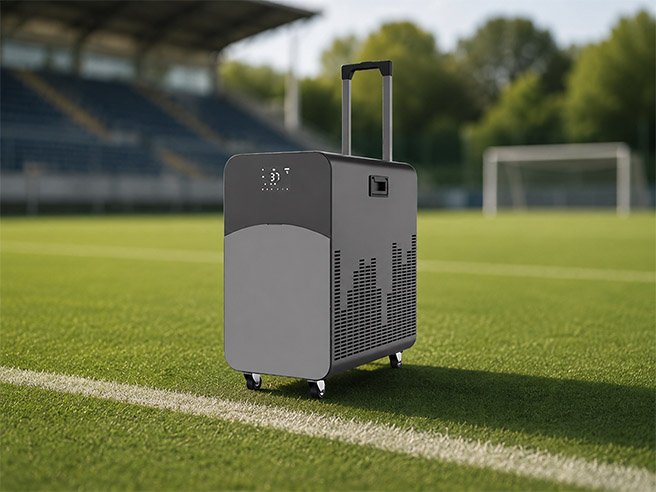
Portable trolley-style chillers have become increasingly popular.
These systems typically feature:
- Built-in wheels
- Telescopic handles
- Quick deployment
- Compact transport footprint
They’re especially useful for sporting events, tournaments, and traveling recovery services.
For Professional Facilities
Recovery centers and sports clinics often choose larger systems with:
- Higher cooling capacity
- Advanced filtration
- Continuous operation capability
- Commercial-grade construction
These systems can support heavy daily usage without sacrificing performance.
Inflatable vs Hard-Shell Portable Systems
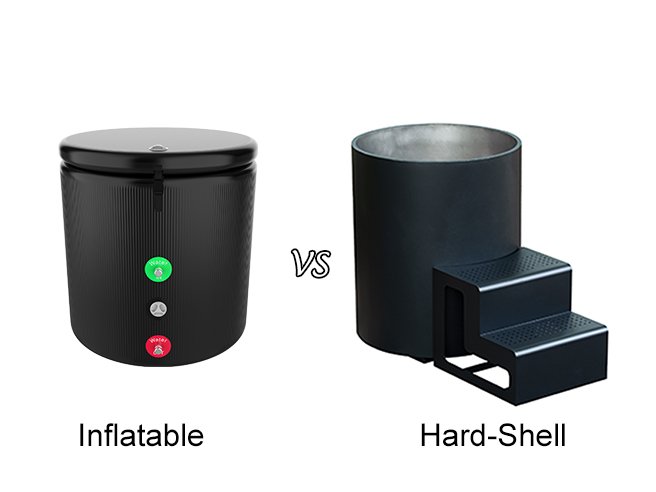
Here’s where many buyers hesitate.
Both options have advantages.
Inflatable Ice Bath Systems
Advantages
- Lightweight
- Easy storage
- Lower cost
- Quick transport
Limitations
- Less insulation
- Slightly shorter lifespan
- More vulnerable to punctures
Hard-Shell Portable Systems
Advantages
- Better insulation
- Premium appearance
- Greater durability
- More stable water temperatures
Limitations
- Heavier
- Higher purchase cost
- Less compact for transportation
Honestly, for most home users, an inflatable tub paired with a reliable chiller delivers excellent value.
For commercial applications, hard-shell models often justify their additional cost through durability alone.
How to Choose the Right Size and Cooling Capacity
Many people focus only on the tub size.
That’s a mistake.
The relationship between tub volume, ambient temperature, and chiller capacity matters far more.
A larger tub contains more thermal mass, which means it takes longer to cool.
For example:
- A 200-liter tub may cool relatively quickly.
- A 500-liter tub requires significantly more cooling energy.
- Outdoor installations in summer place additional demand on the system.
Here’s the thing: buying the smallest chiller that technically works can sometimes lead to slower cooling and longer operating times.
A slightly larger unit often provides better long-term satisfaction.
Running Costs and Energy Efficiency
One of the biggest misconceptions about cold plunge systems is that they consume huge amounts of electricity.
In reality, modern chillers have become remarkably efficient.
Factors affecting operating costs include:
- Ambient temperature
- Water temperature target
- Insulation quality
- Frequency of use
- Chiller efficiency
Well-insulated tubs with quality covers can dramatically reduce energy consumption.
It’s similar to leaving your home’s front door open during winter. Even the best heating system struggles when insulation is poor.
The same principle applies to cold plunge systems.
A good insulated cover may save more money over time than upgrading to a larger chiller.
Setup, Maintenance, and Daily Use
One reason portable systems continue gaining fans is simplicity.
A typical setup process includes:
- Position the tub.
- Connect the hoses.
- Fill with water.
- Plug in the chiller.
- Set the desired temperature.
That’s usually it.
Routine maintenance remains straightforward:
- Check the hair filter for clogging every two days.
- Replace filter cartridges periodically.
- Check water quality weekly.
- Clean the tub surface regularly.
- Inspect hose connections occasionally.
Many users spend less than 10 minutes per week maintaining their system.
Not bad considering the hours of recovery access it provides.
Who Benefits Most from Portable Ice Bath Systems?

The answer is broader than many people expect.
Portable cold plunge systems are commonly used by:
- Marathon runners
- Triathletes
- Cyclists
- CrossFit athletes
- Professional sports teams
- Physiotherapy clinics
- Wellness centers
- Biohacking enthusiasts
- Busy professionals
Even people with no competitive athletic goals often incorporate cold exposure into their general wellness routine.
Recovery isn’t only about performance anymore. For many users, it’s become part of a daily health ritual.
Final Thoughts
Portable ice bath tubs with chillers have evolved significantly in recent years. What once required constant ice purchases and time-consuming preparation can now be managed with automated temperature control and smart monitoring.
The right system depends on your available space, recovery goals, budget, and usage frequency. Some users need a lightweight inflatable setup for occasional sessions, while others require a commercial-grade solution capable of supporting daily athletic recovery.
If you’re looking for a reliable portable cold plunge solution, CHILLMEND offers a wide range of portable ice bath chillers, inflatable tubs, trolley-style recovery systems, and professional-grade cold plunge equipment designed for athletes, wellness facilities, and recovery-focused businesses. Contact the CHILLMEND team today to discuss the ideal portable ice bath tub with chiller for your specific application and receive expert recommendations tailored to your recovery goals.
FAQs
1. What is the best portable ice bath tub with chiller for home use?
For most home users, a portable inflatable ice bath paired with a 1/3 HP to 1 HP chiller provides an excellent balance of cooling performance, affordability, and ease of setup. The ideal choice depends on tub volume and desired water temperature.
2. How cold can a portable cold plunge tub with chiller get?
Most portable ice bath chillers can maintain water temperatures between 3°C and 10°C. Advanced systems designed for extreme cold therapy may reach near-freezing conditions under suitable operating environments.
3. Do I need to add ice when using a portable ice bath chiller?
No. A dedicated portable ice bath chiller continuously cools the water automatically, eliminating the need for regular ice purchases and manual temperature management.
4. How much electricity does a portable ice bath tub with chiller use?
Power consumption varies depending on chiller size, climate conditions, insulation, and operating temperature. Modern energy-efficient systems generally cost much less to run than most users expect, especially when paired with insulated covers.
5. Can a portable ice bath tub with chiller be used outdoors?
Yes. Many portable cold plunge systems are designed for outdoor use. However, choosing a weather-resistant chiller, protecting electrical connections, and using an insulated cover will help maximize performance and equipment lifespan. All CHILLMEND ice bath chillers are suitable for outdoor use. Every model has passed the IPX5 test with official certification, thanks to its waterproof construction and corrosion-resistant materials.